
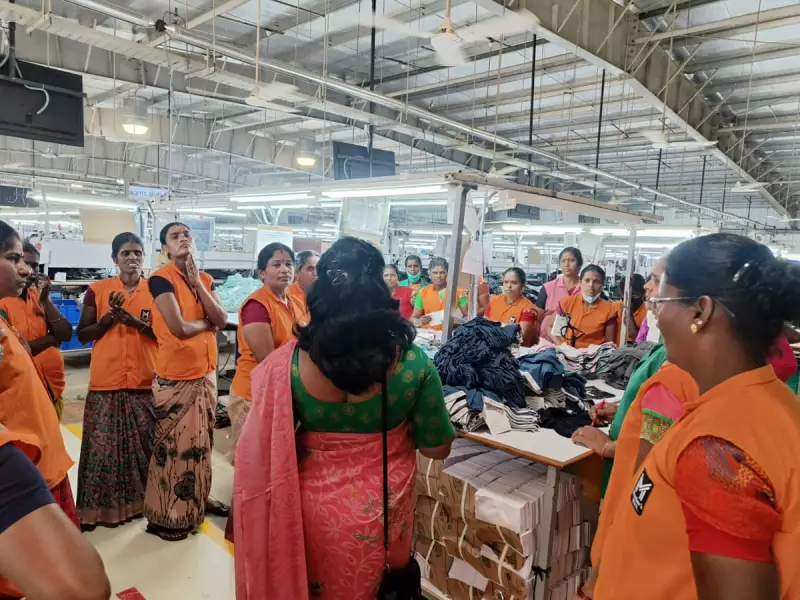
The brutal murder of a young garment worker in southern India has catalysed a historic, legally-binding agreement to protect women from violence and harassment in factories, though the pioneering facility now struggles to secure orders from major global brands.
A Crime That Shook an Industry
On 5 January 2021, the body of Jeyasre Kathiravel, a 21-year-old Dalit woman, was discovered on farmland near Dindigul in Tamil Nadu. She had failed to return home after a shift at Natchi Apparels, a factory then supplying the H&M Group. Her supervisor, V Thangadurai, was arrested and confessed to her rape and murder.
Fellow workers revealed Thangadurai had sexually harassed and intimidated Kathiravel with impunity for months prior to the killing. Her death exposed a culture of systemic abuse and so-called "production tortures" that left many women in distress.
The Fight for Justice and a Groundbreaking Accord
In response, the Tamil Nadu Textile and Common Labour Union (TTCU) – an independent, female-led and majority-Dalit union – launched a "Justice for Jeyasre" campaign. International workers' rights groups, including the Asia Floor Wage Alliance (Afwa) and Global Labor Justice, joined the fight.
Following an investigation by the Worker Rights Consortium that corroborated the allegations, the TTCU negotiated with Natchi's parent company, Eastman Exports. The result was the Dindigul Agreement to End Gender-Based Violence and Harassment, signed in 2022.
"Later, we came to know that mid-management never took this issue to the top management," said Thivya Rakini, TTCU’s president. "A lot of labour groups and international feminist groups stood in solidarity with us."
Funding Change and a Transformed Workplace
Although H&M had dropped Natchi as a supplier, the brand, along with Gap Inc and PVH Corp (owner of Calvin Klein), signed supporting agreements. They provided $300,000 (£223,000) to fund the accord's implementation until its conclusion in October 2024, after a seven-month extension.
The money paid for unionists on the factory floor, trained shop-floor monitors, and established an independent grievance mechanism. Workers report a dramatic change. "We women were never respected. Now we are no longer harassed," said Jeyalakshmi, a cutter with seven years at Natchi. "Actually, the men are scared of us now because the grievance mechanism is very strong."
Alagesan Senniappan, a senior vice-president at Eastman, called it a win-win, citing increased trust and productivity. "We plan to keep working closely with TTCU, and we have already implemented the key learnings from the agreement across our other factories," he stated.
A Pyrrhic Victory? The Struggle for Orders
Despite the success of the agreement, Natchi Apparels has faced severe commercial headwinds. After H&M's last shipments left in June 2021, employment halved to under 1,700 workers. By April 2024, it had only recovered to 1,800 workers, or 55% of its pre-murder workforce.
Professor Sarosh Kuruvilla of Cornell University, who studied the deal, said there is "overwhelming evidence" it worked, but the factory has been unable to replace H&M with a similar "high-volume, high-value" buyer. He cited several possible reasons: a damaging 2022 U.S. withhold release order over forced labour allegations, persistent negative online search results, high U.S. tariffs, and brand reluctance to source from unionised factories.
"There are lots of brands that will not source from a factory where there’s a collective bargaining agreement... because they think that’s not a good thing," Kuruvilla explained.
Nandita Shivakumar, former Afwa campaigns coordinator, expressed cynicism about the industry's willingness to change without catastrophe, referencing the watered-down EU corporate sustainability due diligence directive. "Unless there is some massive tragedy, nobody will do anything," she said.
The Dindigul agreement stands as a powerful model for worker-led change, born from profound tragedy. Yet, it also highlights the stark challenge of aligning ethical practice with commercial survival in the global garment industry.




