
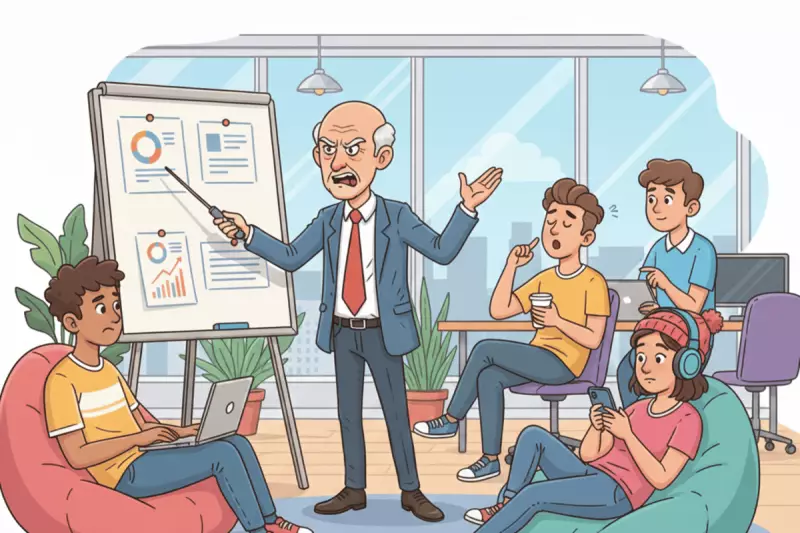
For many managers, particularly millennials, leading Generation Z employees can feel like a daunting challenge. This cohort, often unfairly labelled as lazy or entitled, is reshaping workplace expectations. However, new research suggests their demands are not only clear but also reasonable.
What Gen Z Professionals Really Want From Leadership
Genevieve Houriet Segard, adjoint director of the EDHEC Business School New Gen Talent Centre, analysed nearly 2,000 responses from recent business and engineering school graduates. The findings paint a consistent picture of what defines a "good boss" for today's young professionals.
The cornerstone of effective management for this generation is clarity and transparency. Young graduates highly value managers who explain the "why" behind tasks, provide clear goals, and show how individual work contributes to the broader mission. This understanding creates essential meaning and direction at the start of a career.
Furthermore, they respond to leadership by example, not authority. They seek bosses who demonstrate competence, steadiness, and a genuine understanding of the work. Perhaps the most critical finding is the need for trust. Micromanagement is the single biggest demotivator for Gen Z, who thrive on autonomy. Effective trust means balancing delegation with support, offering clear structure alongside freedom.
The Pillars of a Supportive Environment
Active listening is a powerful tool. Gen Z employees want managers who are attentive to workloads, mindful of pressure, and willing to adjust priorities. Genuine check-ins build psychological safety and prevent small issues from escalating.
Regular, constructive feedback is another non-negotiable. It fuels their growth, builds confidence, and signals investment in their development. Similarly, consistent recognition, even if simple, holds far more value than occasional grand gestures.
Ultimately, young professionals want a manager who acts as both a guide and a mentor. They seek support in career exploration, shared insights, and advocacy. By providing clarity, trust, attentive listening, and consistent support, leaders can foster an environment that encourages both professional growth and loyalty.
Beyond the Office: Gen Z's Demand for Purpose
This generation's expectations extend far beyond daily tasks. Through her work in higher education, Houriet Segard observes that Gen Z is deeply civically engaged and intends to bring their values into the workplace.
They expect companies to take these values seriously. Her research indicates that 98 per cent of students believe companies have a meaningful role in addressing global challenges, while 80 per cent of business school students say societal impact is decisive when choosing an employer.
They are unlikely to tolerate leadership that sidesteps diversity, equity, and inclusion (DEI), walks back climate commitments, or treats sustainability as a mere slogan. Their expectations are high because they firmly believe business has a responsibility to contribute to solutions, not just to profits.
This demand for meaning is paired with a clear focus on mental well-being and work-life balance. Houriet Segard personally advocates for stepping back to recharge, citing her annual participation in the olive harvest in Provence as a vital reset.
EDHEC's Sailing Legacy: A Lesson in Student Drive
At EDHEC Business School, where Houriet Segard is based, the student-run Course Croisière sailing club exemplifies the professionalism and drive of this generation. Founded in 1968 to democratise sailing, the event now attracts legendary skippers and hundreds of international students, including from Oxford and Cambridge, while remaining entirely student-led.
In a personal recommendation, Houriet Segard also highlights Olivier Norek’s "The Winter Warriors", a gripping account of the 1939 Russo-Finnish conflict, which she finds resonant for young readers attentive to modern geopolitics.




