
Dudley's Youth Struggle in Britain's Jobs Crisis
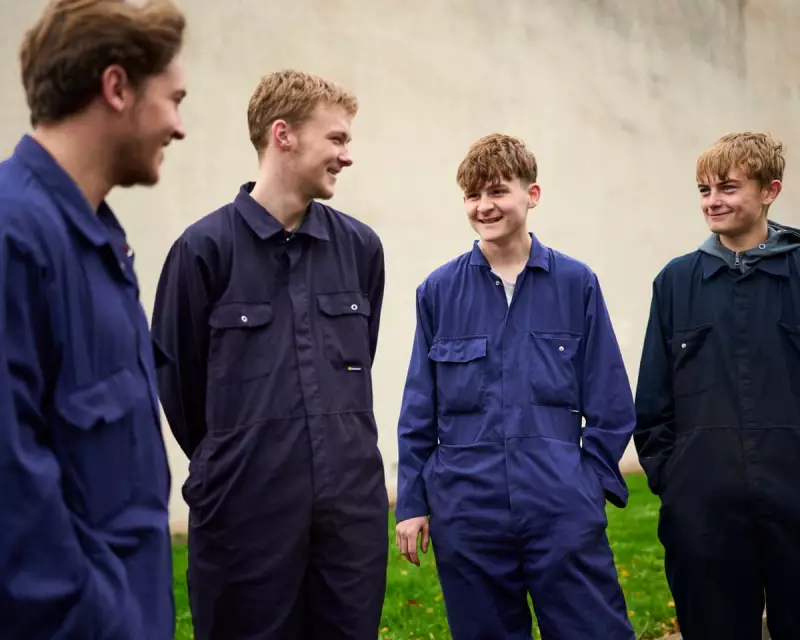
On a rainy day in Dudley, automotive students at the local College of Technology gather under trees during their break, clad in blue overalls and hoping their qualifications will lead to stable employment. Yet in the heart of the Black Country, their optimism meets harsh reality.
Almost one in five school-leavers in this West Midlands town are not in education, employment or training (NEET), the highest rate in England. Across Britain, nearly one million young people aged 16-24 find themselves in this precarious position.
'Like Finding a Needle in a Haystack'
Seventeen-year-old trainee mechanic Alex Jones captures the frustration felt by many: 'Trying to find a part-time job is like trying to find a needle in a haystack.' His classmate Thomas adds that employers often prioritize experience over qualifications, while Derek Fowkes notes that many teenagers end up working in fast-food chains like KFC or McDonald's.
The situation has become so critical that Chancellor Rachel Reeves faces pressure to deliver on her promised 'youth guarantee' announced at Labour's party conference in September. With the autumn budget approaching, she must balance tough tax rises and spending cuts against the urgent need to tackle rising youth unemployment.
Economic Consequences and Government Response
Former John Lewis chair Charlie Mayfield highlighted the staggering economic impact in his Keep Britain Working review. Young people leaving the workforce in their 20s can lose over £1 million in lifetime earnings and cost the state a similar amount, creating what he describes as 'colossal' social consequences.
However, Reeves faces criticism that her economic policies have worsened the situation. The £25 billion increase in employer National Insurance contributions and 6.7% minimum wage rise have reportedly dampened hiring demand, particularly in sectors like hospitality, leisure and retail that typically employ younger workers.
Matthew Hunter, industrial director of MET Recruitment in Dudley, observes the local impact firsthand: 'The effect it's had on SMEs has been phenomenal. When it came out in the budget, people hadn't planned for it. And all of a sudden, it was like: 'boom' - it's costing more now to employ people.'
Structural Challenges and Potential Solutions
The West Midlands, including Dudley, has been selected for 'youth guarantee trailblazer' schemes with £45 million funding to link health and employment support. Two local programmes - ICAN and Step up Dudley - will support 90 young people.
Richard Parker, Labour mayor of the West Midlands, acknowledges the deep-rooted challenges: 'The impact of deindustrialisation four decades ago wasn't just those jobs going, but for subsequent generations. They're structural and deeply embedded issues.'
For some young people like 23-year-old Jake Rowe, such programmes have made a difference. After more than a year on universal credit, he found employment in children's services at Dudley council through the ICAN programme.
Yet the scale of the challenge remains immense. The Bank of England warns unemployment could soon exceed 5%, which would be the highest rate in a decade excluding the pandemic period. The Youth Futures Foundation estimates that matching Netherlands' NEET rates could add £86 billion to the UK economy long-term.
As the automotive students complete their qualifications, they remain cautiously hopeful despite Dudley's challenges. Aaron Hackett reflects: 'It can definitely be hard to find work sometimes, especially being a young person with no experience. But studying this course, it's one of the best trades. There are lots of places you can go.'




