
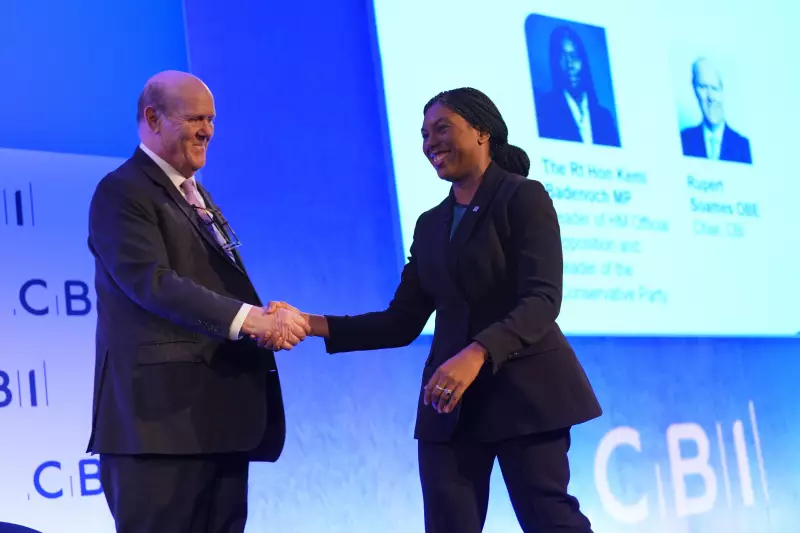
The outgoing chair of the Confederation of British Industry (CBI), Rupert Soames, has launched a stinging critique of the Labour government's flagship Employment Rights Bill, labelling it as fundamentally 'incoherent' with its own stated economic goals.
In his closing speech at the CBI's annual conference on Monday 24 November 2025, Soames directly questioned the government's performance and its 'flakey majority' after its first year in power. He took particular aim at policies he argued would raise costs for businesses at a time when ministers have pledged to cut the regulatory burden by 25 per cent over the next five years.
A Strategy of Contradictions
Soames told assembled business leaders that the government's 'actions do not match the intentions or the words'. He highlighted a core contradiction: while the government rightly wants to get one million young people not in education, employment, or training into work, its new bill would 'significantly increase the cost of employing people, particularly the young'.
'At its heart, there is an incoherence in government strategy,' Soames declared. He argued that moving people from benefits to employment is the best way to improve the nation's finances and public welfare, yet the bill would 'massively increase the regulatory burden and the risk of employment' and introduce 'a whole new regulator'. Earlier that day, he had described the legislation as 'one of the most damaging pieces of legislation' he had encountered in his career.
Government Defence and Consultation Promise
The criticism from the CBI came after Business Secretary Peter Kyle addressed the same conference. Kyle urged business leaders to contribute to the 26 consultations the government plans to open in response to the bill.
He defended the bill's passage through Parliament, despite a 'ping-pong of amendments' between the House of Lords and the House of Commons, and assured bosses their concerns would be considered. Kyle stated his commitment to listening to 'both sides and all sides' and vowed not to 'pit employer against employee'.
Addressing research suggesting the bill could slow hiring and raise business costs by up to £5bn, Kyle argued that 'regulation has to keep up' and that the government's goal was to provide foundations for growth and higher productivity. He concluded that 'all of the conjecture' about the bill's impact was based on areas where consultation had not even begun.
Cross-Party Criticism and the Road Ahead
The opposition Conservative party echoed the CBI's concerns. Tory leader Kemi Badenoch, speaking shortly after Kyle, joined business bosses in condemning the workers' rights reforms as 'anti-business' and 'anti-growth'.
Badenoch asserted that the bill 'does not add a single unit of productivity' and called for it to be dropped in the upcoming Budget, describing that move as 'the cheapest pro-growth measure in the Red Book'. This cross-party and business-led criticism sets the stage for a significant political battle as the government attempts to steer its contentious employment reforms into law.




