
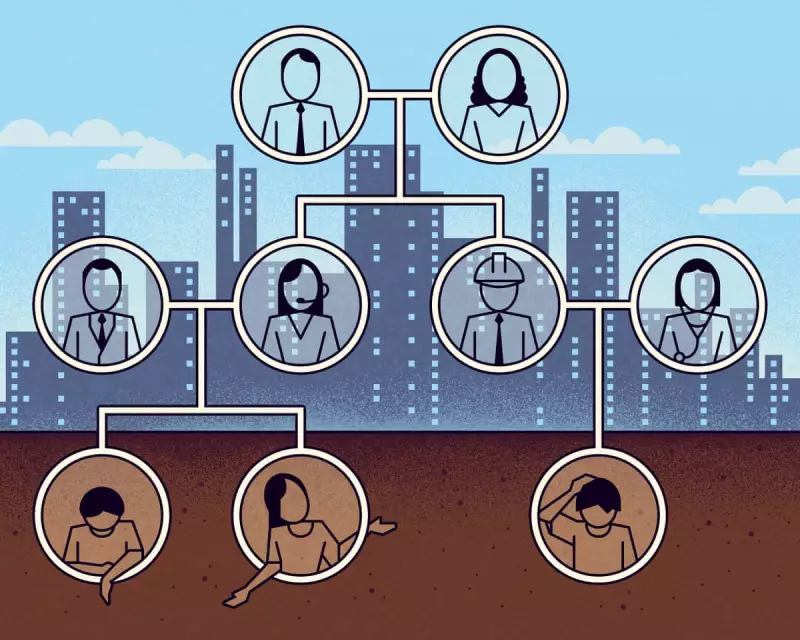
The United Kingdom is facing a deepening and often overlooked crisis as nearly one million young people find themselves stranded on the margins of the economy. Official statistics reveal that 946,000 individuals aged 16 to 24 are now classified as Neets – not in education, employment, or training.
A Generation Held Back by Crisis and Technology
Experts warn that the situation is systemic, exacerbated by the long shadow of the Covid-19 pandemic and the rising tide of automation. Roman Dibden, chief executive of the Manchester-based employment charity Rise Up, describes a 'Covid generation' struggling with profound anxiety and a lack of confidence. "They’ve not developed those things. And that’s a huge barrier," he stated, referring to basic social skills many take for granted.
The problem is compounded by a brutal job market and a complex benefits system. Young people report applying for 150 to 200 jobs with no success, leading to disillusionment. The interview process itself has become dehumanising, with some candidates facing AI bots instead of human recruiters in sectors like banking.
Systemic Failures and Flawed Solutions
According to analysts from the Institute for Fiscal Studies and the Resolution Foundation, the roots of the Neets emergency run deep. The education system continues to prioritise academic success over vocational routes, while further education colleges, crucial for second chances, suffer from years of underfunding.
Government responses have been criticised for relying on punitive measures. Plans for obligatory work placements for those on universal credit for over 18 months come with the threat of benefit sanctions. This approach of "whip-crack conditionality" is seen as doing little to address the core issues while making young lives more precarious.
The Double Disruption of Big Tech
Emerging technologies pose a dual threat. As companies like Shopify mandate that managers justify why a human is needed over AI, entry-level jobs are vanishing. One tech founder was quoted saying, "There’s just no reason to deal with young employees" for junior coding roles.
This automation of traditional starter jobs coincides with the corrosive effect of digital platforms on the social skills necessary for workplace success. The consequence is a generation caught between a fractured education system and a rapidly contracting job market, leading to justifiable anxiety about their future prospects.




