
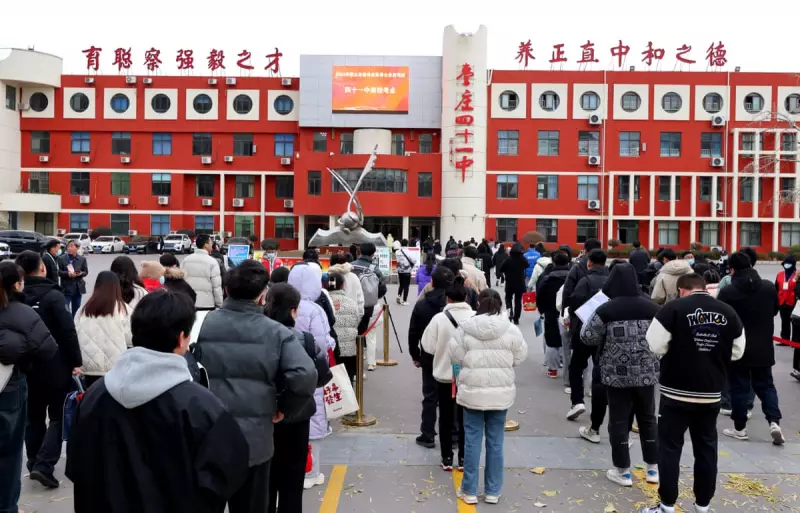
A staggering 3.7 million people in China are preparing to sit for the national civil service examination this weekend, setting a new record for the number of applicants. This immense turnout underscores a significant cultural and economic shift, as millions seek the security of a government position amidst a challenging economic landscape.
The Allure of the 'Iron Rice Bowl'
The appeal of public sector employment, often referred to as the 'iron rice bowl' – a metaphor for a job for life – has intensified. While salaries are often lower than in the private sector, and some local authorities have struggled with wage payments, the unparalleled job security is a powerful draw. This marks a move away from the entrepreneurial spirit of xiahai, or 'jumping into the sea' of commerce, towards a desire for shangan, or 'landing ashore' in the stable public sector.
The competition is exceptionally fierce. With only 38,100 vacancies available nationwide, this equates to an average of 97 applicants for every single post. Some roles are even more sought-after; one immigration officer position in Ruili, Yunnan province, attracted a remarkable 6,470 approved applicants.
Changing Demographics and Economic Pressures
In a significant policy change, the government has raised the age limit for applicants. The general age limit has been increased from 35 to 38, while the cap for those with postgraduate degrees has moved from 40 to 43. This change, announced in October, aligns with recent adjustments to China's retirement age, which is being gradually raised to address the pressures of an ageing population and a strained pension system.
This extension is particularly welcomed by those seeking to avoid the so-called 'curse of 35', a well-documented phenomenon where private companies are often reluctant to hire people past their mid-thirties. However, for older candidates, such as a 35-year-old mother who shared her rigorous study schedule on social media, preparation is a gruelling balance of work, childcare, and late-night revision, often on just four to five hours of sleep.
The economic context is a key driver. China's general unemployment rate stands at 5.1%, but the figure for 16- to 24-year-olds (excluding students) is a worrying 17.3%. After the pandemic and amid ongoing trade tensions, weak consumer demand has battered the economy. This has led many young people to adopt a 'lie flat' attitude, rejecting high-pressure jobs they feel are beneath their qualifications.
As George Magnus, a research associate at Oxford University’s China Centre, explained, "The occupational structure of China’s job market has shifted markedly... towards low-pay, low-skill in the gig and informal sectors... With 12 million grads coming on to the market each year … the preference for secure government sector jobs isn’t hard to understand." Next year, China is expecting a record 12.7 million new graduates to enter this competitive job market.
A Notoriously Gruelling Test
The civil service exam itself is known for its extreme difficulty. It tests candidates on a vast range of subjects, including law, physics, biology, politics, and reasoning. Since last year, a new section on political theory has been added, which officially "focuses on candidates’ ability to analyse and solve problems using the Party’s innovative theories." This includes detailed knowledge of President Xi Jinping's major speeches and Communist party plenums.
The record number of applicants for this year's exam is a potent indicator of the current economic anxieties in China. For millions, the dream of a stable, lifelong career in the public sector is worth the immense effort and overwhelming odds.




