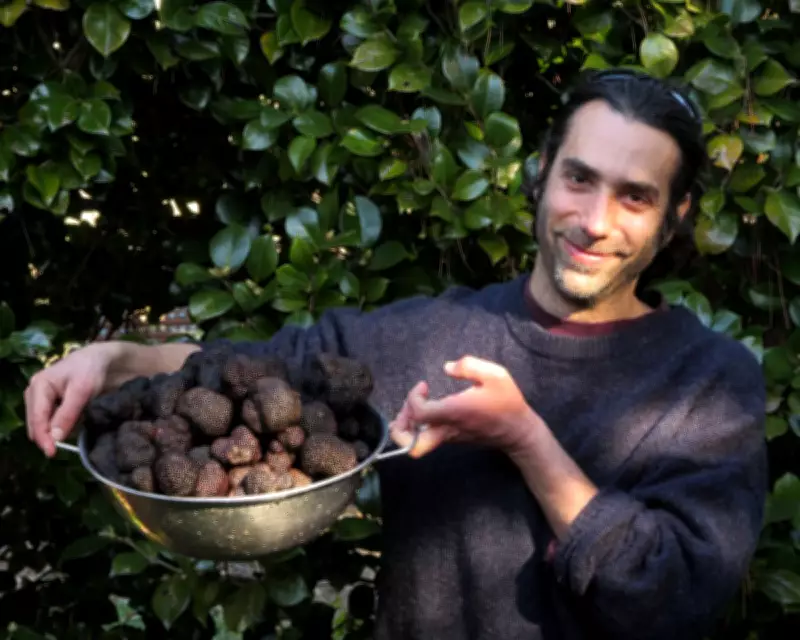
Australia has become the world's fourth-largest producer of black truffles, despite the fungi not being native to the continent. Since the first oak and hazelnut trees were planted in the 1990s, the local industry has flourished, now ranking as the largest producer outside Europe. Scientists have now identified key environmental factors contributing to this success.
Rapid Growth of the Truffle Industry
Black truffles, including the prized French Périgord variety, were introduced to Australia relatively recently. The first host trees were planted in Tasmania in 1995, with the first harvest in 1999 and exports beginning in 2007. In under three decades, Australia has become the fourth-largest producer globally, after Spain, France, and Italy. Today, there are over 400 truffle orchards and half a million host trees across every state and territory except the Northern Territory, according to the Australian Truffle Growers Association.
Research into Environmental Factors
Scientists from Michigan State University investigated whether environmental factors played a role in this success. They analyzed truffles and soils from 24 orchards in France, Spain, Italy, and Australia. Associate Professor Gregory Bonito, a mycologist and study author, noted that understanding truffles is challenging because most activity occurs underground. The research, published in Applied and Environmental Microbiology, involved collecting soil samples and analyzing fungal and bacterial diversity, as well as the truffle microbiome.
Reduced Competition Boosts Truffles
The results suggested that reduced competition from similar fungi is a key factor. DNA sequencing identified 4,415 genetically distinct fungi in Australian soils, compared to 6,575 in European soils. Australian truffle orchards had 75% fewer species of mycorrhizal fungi, which produce truffles, giving black truffles a greater monopoly. This reduced competition allows black truffles to thrive more easily.
Grower Insights
Local growers are already examining the findings. Stuart Dunbar of Yarra Valley Truffles, who holds the record for the largest cultivated truffle at 1.5 kg, emphasized that successful crops depend on many factors, including temperature, soil structure, water, and expert timing. He explained that truffles aim to be eaten by animals like pigs to spread their spores. Early harvesting can ruin truffles, as he learned with a 124-gram truffle that shattered when cut. Light, fluffy soils are crucial for healthy truffles, and the fungi themselves help create alkalinity by drawing calcium and lime from the soil.
Biological Role of Truffles
Dr. Gian Benucci, a co-author of the paper, highlighted that truffles play a vital biological role for their host trees. They act as the backstage crew, transporting nutrients and creating environmental conditions for the canopy to thrive, in exchange for photosynthetic carbon. While biology is key to Australia's trufficulture success, other factors such as climate, good truffle stock, research, and an innovative attitude also contribute.
Similar Microbiome Across Continents
One surprising finding was that the microbiome of black truffles, including bacteria that contribute to their aroma, remained strikingly similar across Australia and Europe, despite vastly different soils. Bonito noted that this similarity is fascinating. Researchers occasionally tasted the truffles; Bonito recalled being sent home with samples from Peter Marshall's Australian truffle farm, where he and his family cooked them with eggs or ate them fresh, even enjoying a family dinner with as much truffle as desired on pasta.