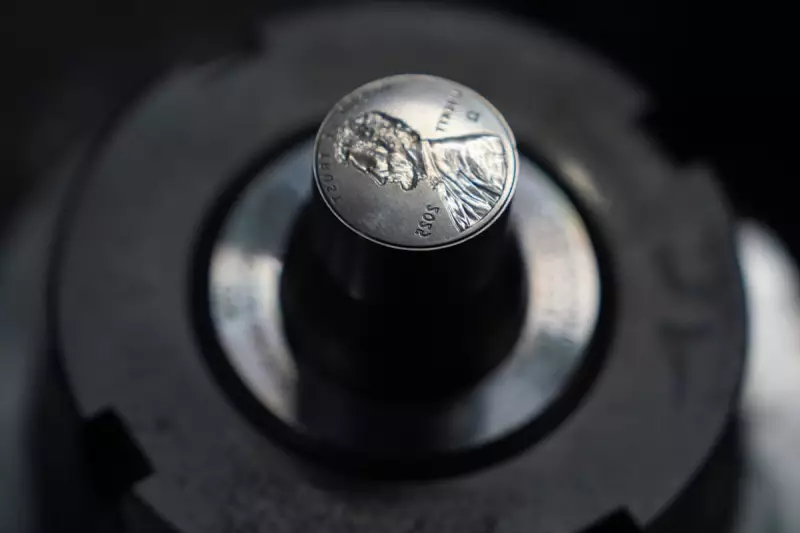
The United States Mint in Philadelphia is preparing to strike its last circulating penny, marking the end of an era for American currency. This historic move comes after an executive order from President Donald Trump to cancel the one-cent coin, a decision driven by its escalating production costs.
The Final Strike for an American Icon
The US Mint has been producing pennies at its Philadelphia facility since 1793, just one year after Congress passed the foundational Coinage Act. Today, billions of these coins remain in circulation, yet they have become largely obsolete in an economy dominated by digital transactions and cashless payments.
President Trump justified the cancellation in a February online post, stating, "For far too long the United States has minted pennies which literally cost us more than 2 cents. This is so wasteful!" His criticism was well-founded; the cost to produce a single penny had climbed to nearly four cents, making its continued minting financially unsustainable.
Retailer Chaos and Public Nostalgia
The abrupt phase-out has created significant challenges for retailers across the nation. With supplies running low in recent weeks, shop owners were left scrambling without federal guidance on handling transactions.
Some businesses chose to round prices down to avoid short-changing customers, while others pleaded for exact change. More creative solutions emerged, with some establishments offering prizes like a free drink in exchange for a pile of pennies.
Jeff Lenard of the National Association of Convenience Stores expressed frustration last month, noting, "We have been advocating abolition of the penny for 30 years. But this is not the way we wanted it to go." This sentiment highlights the difficult transition for an industry caught off-guard.
Meanwhile, public sentiment for the coin remains. Many view pennies as lucky charms or fun collectables, often storing them in drawers or glass jars as keepsakes rather than spending them.
The Financial and Historical Context
The financial rationale for ending penny production is clear. The US Treasury Department expects to save approximately $56 million per year on materials alone by ceasing production.
Interestingly, the penny is not the only US coin costing more than its face value to produce. The nickel costs nearly 14 cents to make, while the diminutive dime is a relative bargain at less than six cents. The quarter costs nearly 15 cents to produce.
This shift represents a dramatic change from the coin's historical value. Back in 1793, a single penny could purchase a biscuit, a candle, or a piece of candy. Its journey from practical currency to largely symbolic token reflects the evolution of the American economy itself.