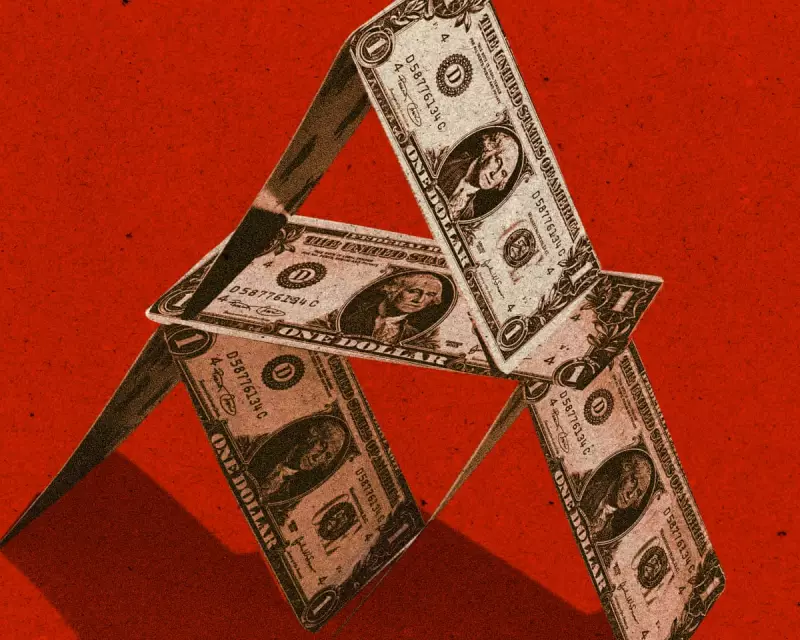
The Contradictory World of Trump's Dollar Policy
Magical thinking appears central to understanding the Trump administration's approach to economic policy, particularly when it comes to the US dollar's role in global finance. The White House seems to believe that opposing policies can somehow work in harmony while individual measures can achieve multiple contradictory objectives simultaneously.
This approach faces its ultimate test with the administration's dollar policy, where a significant dose of hocus pocus would be required to make it serve American interests effectively. The fundamental contradiction lies in the administration's simultaneous desire to maintain dollar supremacy while apparently working to undermine it.
The Internal Conflict Over Dollar Supremacy
President Donald Trump has publicly warned countries against replacing the dollar as their primary reserve currency, threatening consequences for those who attempt to do so. Some administration members have even advocated for encouraging more nations to adopt the dollar outright.
However, Stephen Miran, the president's chief economic adviser currently on leave to serve as a Federal Reserve board member, presents a contrasting view. Miran argues that the dollar's position as the world's main reserve currency represents an undue burden for the United States and serves as a principal driver of the substantial trade deficit that Trump frequently criticises.
In writings from last year, Miran contended that America runs large current account deficits not because it imports excessive goods, but because it must export Treasury bonds to provide other countries with assets for their reserve holdings. This dynamic leads to what he describes as "persistent dollar overvaluation that prevents the balancing of international trade."
The Global Consequences of Dollar Weakening
The potential for the Trump administration to effectively debase the dollar exists, whether through deliberate policy choices or sheer incompetence. Some analysts suggest this process may have already begun, though the outcomes are unlikely to align with administration expectations.
If US Treasury bonds lose their status as safe, liquid assets for reserve holdings, the global impact would be significant. No credible alternatives currently exist to replace the dollar's role. The euro's potential as a rival has been hampered by Europe's fragmented capital markets, with no euro T-bond emerging a quarter century after the currency's launch.
Meanwhile, the Chinese renminbi cannot assume a leading global financial role while China maintains capital controls that restrict money from flowing freely across its borders.
The dollar's value extends beyond its function as a financial haven. Recent research indicates that approximately two thirds of countries worldwide stabilise their currencies against the dollar to insure against global economic shocks. Because the US market is so substantial, dollar valuation affects traded goods prices, with appreciation shocks raising these prices accordingly.
The Cost to American Interests
Undermining the dollar would carry enormous costs for the United States. The nation would likely lose global influence alongside its primary tool for economic coercion—the ability to restrict enemies' access to the financial system.
More significantly, America would relinquish what former French president Valery Giscard d'Estaing famously termed the "exorbitant privilege" of dollar dominance. While Miran correctly observes that the dollar's reserve status attracts substantial investment into Treasury bonds, this represents a substantial benefit rather than a burden.
This status enables the US government to fund its massive debt—currently standing at 120% of GDP—at comparatively low interest rates. The privilege also means that the United States earns more on its foreign asset holdings than foreigners earn on their American investments.
Reducing the US current account deficit would become considerably more challenging if America lost its reserve status, as the interest rate advantage would shrink or disappear entirely.
The Trade War's Impact on Dollar Stability
President Trump's trade war threatens to reduce the dollar's insurance capabilities. By restricting US imports, the administration's tariff barriers will weaken the relationship between the dollar and traded goods prices—diminishing its value as a hedge against economic shocks.
As Tarek Hassan of Boston University notes, "We're basically reducing the impact that we have on the world market, and by reducing the impact that we have on the world market, we also reduce the dollar safety property."
This development gives countries and investors less incentive to peg their currencies to the greenback or hold dollar assets. Hassan estimates that tariffs imposed thus far have raised US interest rates by approximately half a percentage point—a significant amount given that rates currently sit in the 3-4% range.
Recent months have seen developing countries shifting away from dollar debt, turning instead to currencies with lower interest rates like the Swiss franc and renminbi.
Market Reactions and Future Prospects
The potential for the president's trade war to undermine dollar pre-eminence became starkly apparent in April when Trump first announced his "reciprocal" tariffs. US stocks, bonds, and the dollar all plunged simultaneously, behaving like risky emerging market assets rather than safe havens.
This broke the established rule of modern finance that systemic shocks—whether originating in the US or developing nations—typically benefit Treasury bonds and the dollar as global safe havens where governments, investors, and ordinary people park money during periods of uncertainty.
While markets have since stabilised, with investors appearing to forgive Trump for inconsistent policymaking—possibly because he ultimately walked back many tariffs—the warning signs remain clear. The likelihood of Treasury bonds losing their status as the world's safest asset appears to be increasing.
The consequences of such a shift remain uncertain. Other currencies might fill some of the void, with Europe's joint rearmament effort potentially creating opportunities for euro-wide bonds to compete with US Treasury bonds in foreign exchange reserves. However, insurance against economic and financial shocks would likely become more expensive, and global welfare would undoubtedly suffer.
The Trump administration might initially welcome a cheaper dollar, which could translate into a smaller US trade deficit. However, any celebration would probably be short-lived, as this outcome would come at what could only be described as an exorbitant cost to American economic leadership and stability.