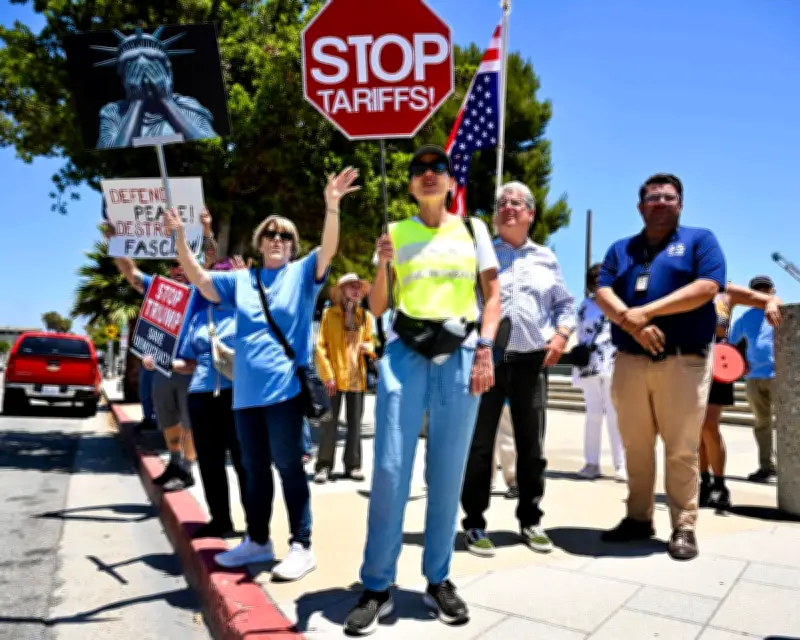
A protest against tariffs took place in the San Pedro neighborhood of Los Angeles, California, on 28 June 2025. Photograph: Keith Birmingham/Pasadena Star-News via Getty Images.
In two weeks, I will address a group of companies in the packaging industry about issues affecting their businesses this year. I plan to discuss the economy, navigating higher costs, leveraging new tax legislation, AI, and strategies for finding and retaining workers in a volatile job market.
What I will not discuss? Tariffs.
That was not the case a year ago. At that time, tariffs were the hot topic everyone wanted to explore. How will tariffs affect my business? Should I raise prices? Will my company suffer? Are the tariffs legal? When will they end? Over the past year, many of those questions have been answered.
Donald Trump’s tariff increases impacted some businesses, particularly those heavily reliant on materials from China and India, but most seemed to weather the storm. Many of my clients and audience members even used the tariff news as an opportunity to increase prices beyond the cost of the tariffs, pocketing extra profit. Others waited out the legal process, and after the Supreme Court overturned the president’s illegal use of the International Emergency Economic Powers Act, they are now awaiting refunds.
Now, tariffs are back in the news. Facing the July expiration of Trump’s temporary 10% global tariff, the administration announced plans to assess new tariffs ranging from 10% to 12.5% on 60 countries, including trading partners from the UK and EU to China, India, and Australia, for allegedly trading in goods using forced labor, a strategy under Section 301 of the Trade Act of 1974.
Should I mention this in my presentation to the packaging association? Not really, unless I want to bore everyone. At this point, for most businesses, tariffs are a non-issue.
The business owners in my audience are mostly profitable this year, thanks to a resilient consumer economy and continued growth. Many continue to hire. Their customers have been conditioned to expect price increases if needed, but some businesses may not need them, taking advantage of new tax deductions and productivity gains from technology and AI.
They have also seen that the supposed king in the White House has limits. He has been struck down multiple times in courts over foreign aid funding, birthright citizenship, national guard deployment, and renaming the Kennedy Center, and has been forced to comply with a judiciary and legislative branch that have curtailed many of his imperial plans. Ask any business owner about these new tariffs, and they will likely say they expect them to be opposed, litigated, and overturned.
The king’s last tariff adventure involved illegal assessments, and due to the Supreme Court's rebuke, the palace is complying with the actual law, with tariff refunds flowing back to businesses, albeit with some hiccups.
Businesses now view tariffs as a short-term problem. The Trump era is almost half over, and any new tariffs, even after inevitable challenges, can be easily overturned by the next administration. It is unclear whether JD Vance or Marco Rubio feel as strongly about tariffs as their boss does. However, no Democratic challenger supports them, so the long-term outlook for Trump’s tariffs is poor.
Even so, the president will claim his tariffs were successful. He will say trillions of new investments were made in the US by foreign companies seeking to avoid levies, bringing jobs and opportunities. He will point to increased manufacturing activity as evidence. He will ignore the datacenter boom and AI economy, attributing GDP and stock market gains to tariffs and his economic policy.
His political opponents will argue differently. They will say they challenged the king and won, that no man is above the law, and that a president’s policies cannot go unchecked. They promise to reverse tariff damage once they regain power.
But business people do not really care. They cared when Trump imposed 50% tariffs on goods they buy, when policy upset trading partners, and when the president’s actions went unchecked. All that has changed. Despite protests and rhetoric, the country has no king—only a president whose every move is scrutinized and held in check by courts and Congress. His new tariffs are a small fraction of what he wanted, insufficient to significantly affect profitability, hiring, or investment plans for most businesses. They are simply not as big a concern as before, which is why I will barely mention them in my speech.