Trump Nominates Kevin Warsh as Federal Reserve Chair in Bid for Loyal Leadership
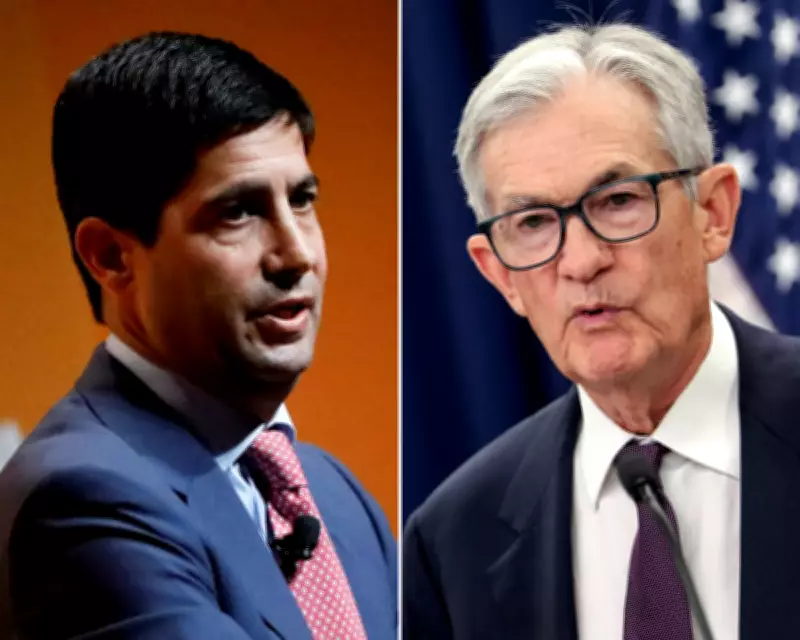
In a significant move that underscores ongoing tensions between the White House and the central bank, former President Donald Trump has nominated Kevin Warsh, a former Federal Reserve governor, to replace Jerome Powell as chair of the Federal Reserve. The announcement, made on Friday, marks a stark shift from Trump's earlier praise for Powell, whom he once hailed as providing "strong, sound and steady leadership" but now criticises as "a moron" and "incompetent".
A Strategic Pick Amidst Political Pressure
Trump's selection of Warsh comes after years of public attacks on Powell, who has resisted the president's demands for aggressive interest rate cuts. Powell's second term as Fed chair is set to expire in May, and his refusal to align with Trump's economic directives has led to a fractured relationship. The president has openly expressed frustration, stating he would "love to fire his ass", but the Fed's independence has so far shielded Powell from direct dismissal.
With Warsh, Trump believes he has found a candidate who will offer the loyalty he seeks. In a social media post, Trump praised Warsh, saying, "I have known Kevin for a long period of time, and have no doubt that he will go down as one of the GREAT Fed Chairmen, maybe the best." He added that Warsh is "central casting" and will "never let you down".
Warsh's Policy Stance and Market Reaction
Kevin Warsh has a reputation as a hawkish figure in monetary policy, traditionally favouring higher interest rates to combat inflation, even at the risk of increased unemployment. During his tenure as a Fed governor, he frequently emphasised inflation concerns, even during economic downturns. However, in recent months, Warsh has publicly aligned more closely with Trump's views, advocating for rate cuts in a Wall Street Journal op-ed that praised the president's "pro-growth policies".
This shift has raised eyebrows among analysts. Researchers at Renaissance Macro Research noted, "His dovishness today stems from convenience. The president risks getting duped." Despite these concerns, global markets remained broadly steady following the nomination, and figures like Mark Carney, former governor of the Bank of England and Bank of Canada, have welcomed the move.
Challenges Ahead: Senate Confirmation and Fed Independence
Warsh's nomination is not a guarantee of his appointment. He must still be confirmed by the US Senate, where support may be complicated by ongoing controversies. Republican senator Thom Tillis has stated he will block the confirmation until a Department of Justice criminal investigation into Powell is resolved, highlighting the political hurdles ahead.
Even if confirmed, Warsh will face the delicate task of balancing political expectations with the Fed's need for independence. The central bank's credibility relies on its perceived autonomy from political interference, a point Powell emphasised in a recent press conference. He warned that if the Fed were used to sway elections, "it would be hard to restore the credibility of the institution".
Structural Protections and Future Uncertainty
The Federal Reserve has built-in safeguards to insulate it from political pressure. Interest rate decisions are made by the Federal Open Market Committee (FOMC), which includes 12 voting members, seven of whom are Fed governors serving 14-year terms. Trump has attempted to remove one governor, Lisa Cook, but the US Supreme Court appears poised to protect her position.
Adding to the uncertainty, Powell's term as a Fed governor extends until 2028, and he has not commented on whether he will step down from the board after his chairmanship ends. This leaves open the possibility of his continued influence within the institution, further complicating the transition.
As the nomination process unfolds, the focus will remain on whether Warsh can navigate these challenges while maintaining the Fed's critical role in guiding the world's largest economy. The outcome will have profound implications for monetary policy, market stability, and the enduring principle of central bank independence in the United States.