The human and economic cost of Vladimir Putin's war in Ukraine is pushing Russia towards a precipice, with a collapsing economy and soaring social tensions threatening the Kremlin's stability. Despite a fleeting opportunity for a reprieve via a controversial deal reportedly offered by Donald Trump, Putin's refusal to compromise appears to be accelerating a domestic crisis.
The Crumbling Foundations of the Russian Economy
After two years of artificial growth driven by massive defence spending, Russia's economic reality is stark. State revenue from oil and gas, which can constitute up to half of the total, has fallen by 27% year-on-year, pushing the nation towards recession. Inflation has climbed to 8%, while the central bank's key interest rate sits above 16% in a desperate attempt to control prices.
The budget deficit is widening, and more than half of Russia's liquid sovereign wealth fund has been depleted since the full-scale invasion began in 2022. To fund the ongoing conflict, the state has incurred huge debts, seen foreign investment plunge, and imposed soaring consumer taxes. Even the price of vodka, a cultural staple, has risen by 5%, symbolising the widespread pain felt by ordinary Russians.
Strategic Weaknesses Exposed and Geopolitical Decline
Ukraine's military has successfully identified and exploited critical vulnerabilities within Russia's war machine and economy. Drone strikes have repeatedly hit oil refineries, pipelines, and the so-called "shadow fleet" of tankers used to circumvent sanctions, with a third vessel set ablaze in the Black Sea just last week. Attacks on energy facilities deep inside Russia are causing fuel shortages and operational panic.
Simultaneously, Russia's geopolitical influence is plummeting. Bogged down in Ukraine, Moscow has been powerless as key allies like Syria seek warmer relations with the West. Its partnership with China has been fundamentally altered, with Russia reduced to a dependent junior partner. A recent visit by Putin to India highlighted this new reality, as the country, under US pressure, now boycotts Russian oil.
Social Fractures and the Human Toll
The war's social impact is profoundly divisive. A recent report from the London School of Economics, titled Against the Clock: Why Russia’s War Economy is Running Out of Time, found that while the conflict has "dramatically improved" the incomes of the top 20% of Russians, it has devastated the majority. For most citizens, real incomes have plummeted by between 16% and 42%.
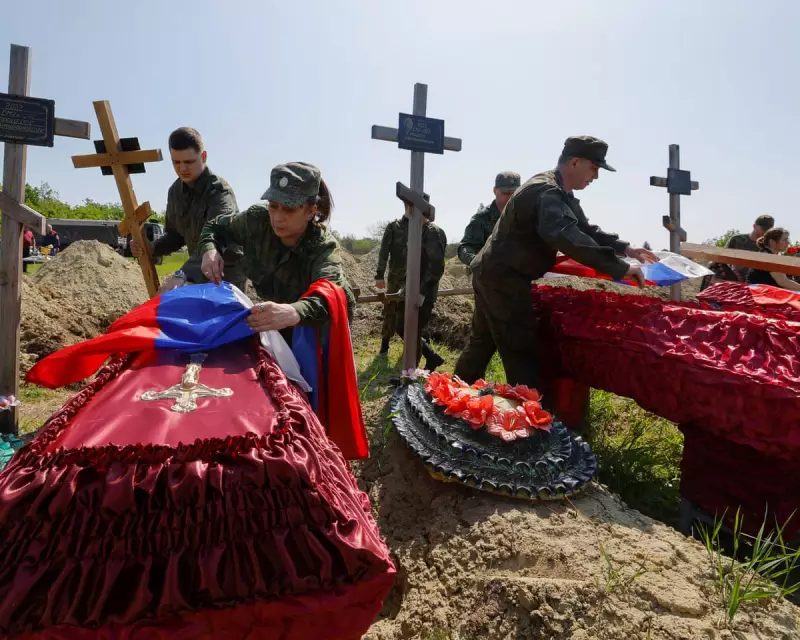
The human cost is staggering. Independent analysis suggests Russian military casualties have reached approximately one million since the invasion began, with over 280,000 killed or injured in just the first eight months of 2025. The Kremlin's reliance on volunteers from poor regions, where frontline life expectancy can be as low as 12 days, underscores a chilling indifference. Recent budget cuts have even led to reductions in the promised death benefits paid to families.
A Missed Lifeline and a Bleak Future
This deteriorating context makes Putin's reported rejection of a Trump-brokered "peace" deal appear increasingly perilous. The proposed agreement, which would have rewarded Russian aggression with Ukrainian territory and compromised Kyiv's sovereignty, offered a potential lifeline. It could have fractured NATO, relieved economic pressure, and destabilised the Ukrainian government.
Instead, Putin's commitment to a maximalist victory has locked Russia into a protracted conflict it cannot afford. Experts warn that the massive war spending only temporarily masks decades of social and economic neglect. When the fighting eventually stops, Russia could face a "vast social crisis." The LSE report cites the 2023 Wagner Group mutiny as a precursor, predicting that worsening conditions could intensify "intra-elite and intra-regime" tensions.
With the economy buckling under the strain of war, and the Russian people bearing the brunt of the sacrifice, the foundations of Putin's power are being eroded. The question is no longer if Russia can win the war, but how long its society and economy can survive the cost of his ambition.