The Heart of Ruapehu: An Engine Stalls
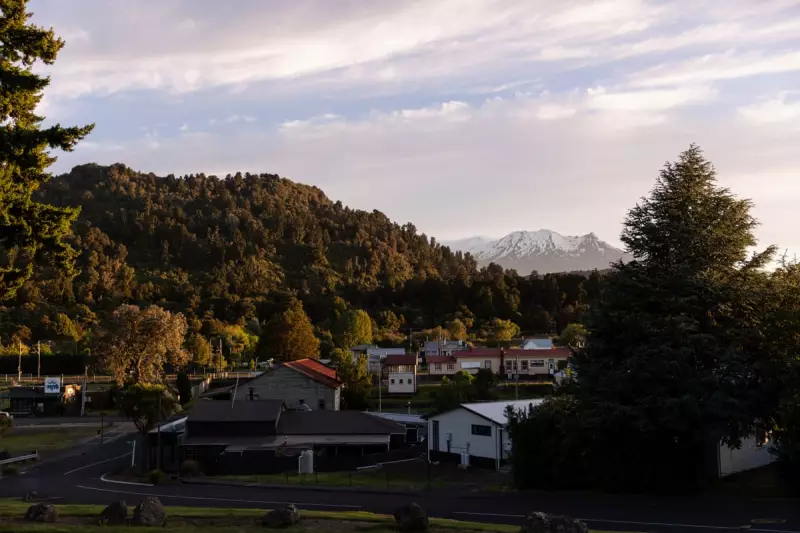
For decades, the twin pillars of Mount Ruapehu's snowy slopes and the steady hum of the local pulp mills anchored the community in New Zealand's central North Island. These were the twin centres of gravity that drew people to the Ruapehu region and gave them reason to stay. Today, that foundation is crumbling, leaving in its wake a stark question for the entire nation: how to stop rural areas from being hollowed out as residents pack their bags for new lives elsewhere.
The decline began with the mountain itself. Global warming has disrupted snow patterns on Mount Ruapehu, New Zealand's largest active volcano, leading to shorter ski seasons and subsequent layoffs. Another local institution, the nearly century-old Chateau Tongariro hotel, shut its doors in 2023, its earthquake-prone structure now sitting empty in the mountain's shadow.
A Devastating Blow to the Community
The most severe shock, however, arrived in October 2024. After almost 50 years in operation, Winstone Pulp International announced the closure of its two mills near the town of Ohakune, citing cripplingly high energy prices. The move resulted in more than 230 direct job losses, with a devastating ripple effect through scores of supporting businesses. Most affected were workers from Ohakune, with a population of 1,360, and the nearby settlement of Raetihi, home to 1,140 people.
"The mill closure was a stab to the heart," says Janelle Finch, a local business owner in Ohakune. "A lot of our friends had to move out of town … it had this chain effect." By late November, the visible scars were clear: dozens of empty shops and residential streets lined with 'For Sale' signs.
A National Trend of Regional Decline
Ruapehu's plight is not isolated. Since 2023, multiple towns across New Zealand have suffered similar mill and factory closures, leading to over 1,000 redundancies. Companies consistently point to high energy costs, weaker demand, and rising operational expenses.
Economist Shamubeel Eaqub notes that while some rural areas have rebounded through immigration and dairy, regions reliant on one or two industries are uniquely vulnerable. "When that engine of economic activity gets turned off, it can be quite damaging for those places," he explains.
The consequences extend beyond economics into the social fabric. Helen Leahy, chief executive of the local Ngāti Rangi iwi (tribe) trust, emphasises that the mill closures meant "community disintegrating and that whole connection to place." With nearly 50% of the local population being Māori, many indigenous workers faced a painful choice between their ancestral lands and economic survival. Leahy reports that 10-15% of the displaced mill workers relocated their families to Australia.
Official statistics reveal seven of New Zealand's 16 regions experienced a net population loss in the year to June 2025. Leading sociologist Professor Paul Spoonley warns the country is entering a "new era" of regional stagnation, driven by lower immigration, poor services, and ageing populations. He predicts a future where 40% of New Zealanders live in Auckland, creating a profound imbalance between major cities and regional centres.
The Australian Magnet and Government Response
New Zealand's population growth is slowing, and a struggling economy is fuelling an exodus. In the year to October, 71,400 people left the country, with nearly 60% moving to Australia, attracted by higher wages and residency rights. "[Australia] is richer, it's got a deeper labour market, has more career opportunities – why wouldn't you go?" asks Eaqub.
The government, represented by Regional Development Minister Shane Jones who declined an interview, has focused on broader economic management. Finance Minister Nicola Willis has argued that growing the economy is the solution to stem the flow of people leaving. However, local leaders feel abandoned. Ruapehu District Mayor Weston Kirton calls the government's failure to shield the mills from energy price hikes "reckless," noting that state-owned power companies profited as the mills closed.
Community Spirit: The Third Centre of Gravity
Amid the hardship, a fierce local pride and community bond are emerging as a new force keeping some families rooted. For Raewyn Sinclair and her partner Corey Brown in Raetihi, life is a relentless cycle of multiple jobs since Brown lost his mill position. They scrutinise every expense, often working from 5am until after midnight. "Everyone's really struggling," Sinclair admits. "We're working around the clock just to make do."
Yet, she speaks of a powerful community where "everyone looks out for everyone." This spirit, she believes, is the region's potential lifeline. "There is heaps of potential for this place to take off, we've got a lot of spirit here," Sinclair says. "It's home, I wouldn't want to be anywhere else."
Austin Hobson, who runs a brewery in Ohakune, echoes this sentiment of collective resilience. "It's been really tough – but we've all survived things together and we're still here because we support each other in whatever way we can." For communities like Ruapehu, this enduring connection to people and place may be the most vital resource in their fight for survival against the forces of economic change and depopulation.