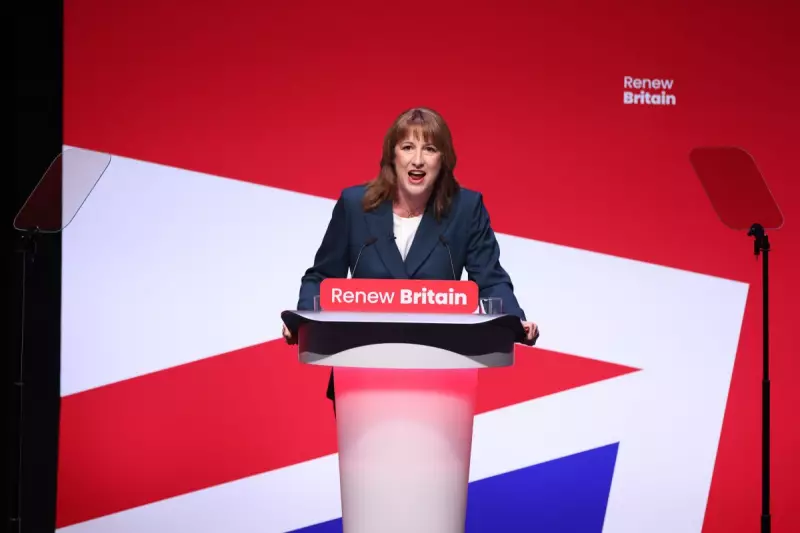
Chancellor Rachel Reeves has been advised to harness the power of storytelling to revitalise the UK economy, following a sharp decline in consumer confidence and persistent economic unease.
The Power of Economic Narratives
Leading economist Paul Ormerod, an honorary professor at the Alliance Business School, University of Manchester, argues that convincing stories rather than complex mathematical models often drive economic behaviour. This perspective is gaining traction among top economists, including Nobel Laureate Robert Shiller, who published his influential Narrative Economics paper in the American Economic Review in 2017.
Ormerod points to recent evidence showing this theory in practice. The S&P Consumer Confidence Index fell sharply at the start of the week, with the official press release citing a pervasive sense of unease across British households. This psychological factor directly translates into reduced consumer spending, creating a tangible economic impact.
Learning from Keynes and Economic History
The concept isn't new. In his seminal work, The General Theory, John Maynard Keynes introduced the memorable concept of animal spirits to describe the psychological drivers behind economic decisions. He argued that even well-designed fiscal stimulus could fail if it damaged business and public confidence.
Ormerod emphasises that Reeves, who often highlights her economic background, should revisit Keynes's writings. The text of Keynes's major work is littered with references to psychology, showing his deep understanding that economic outcomes are not purely mechanical.
Historical examples underscore the power of narrative. Robert Shiller's research demonstrates how narratives were crucial during major events like the Great Depression of the 1930s and the financial crisis of the late 2000s.
Narratives in Modern Politics
The article highlights that a narrative's success depends on its persuasiveness, not its accuracy. Ormerod cites the example of Zohran Mandani's mayoral campaign in New York, where a narrative of left-wing success spread despite the candidate receiving only just over 50 per cent of the vote in a traditionally strong Democrat city.
Conversely, the current UK government has struggled to establish its preferred narrative. Since the July 2024 general election, attempts to blame previous Conservative administrations for various issues, from public finances to small boats, have failed to resonate with the public.
Ormerod contrasts this with successful Labour predecessors. Clement Attlee in 1945 built a vision around the NHS and welfare state. Harold Wilson in 1964 championed the white heat of technology, and Tony Blair in 1997 captured the mood with Cool Britannia.
The columnist concludes that the Starmer government's main failure stems from its inability to construct a convincing narrative, while Chancellor Reeves has allowed a damaging negative story to take root. Ormerod first warned in October 2024 that this would depress the economy, a prediction he believes subsequent events have confirmed. What the UK economy needs now, he argues, is a positive narrative to boost the animal spirits essential for recovery.