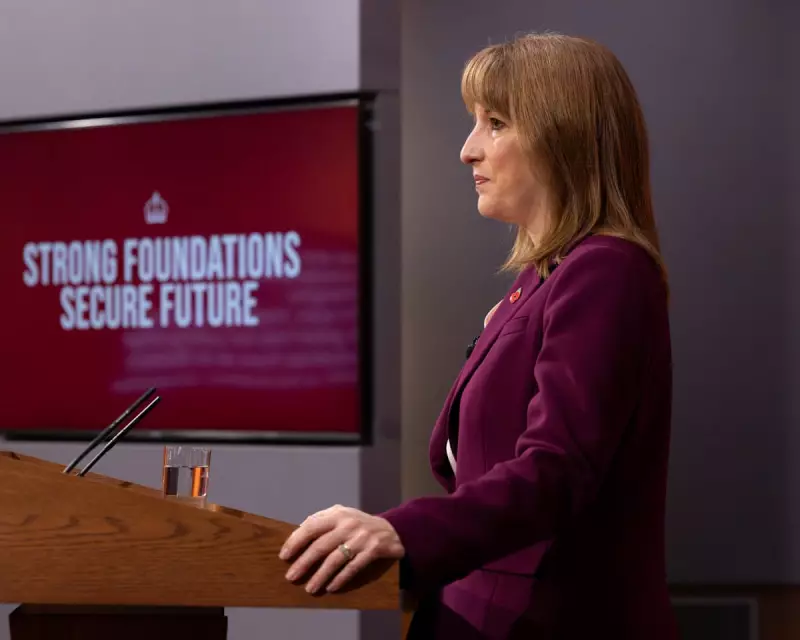
Chancellor Boxed In Ahead of Crucial Autumn Budget
Chancellor Rachel Reeves finds herself in a precarious position as she prepares to deliver her autumn budget on 26 November, with the UK economy showing worrying signs of stagnation. The latest economic figures reveal growth slowed dramatically from 0.3% in the second quarter to just 0.1% in the third quarter, creating what experts describe as a potential "doom loop" scenario for the nation's finances.
The Growth Crisis Deepens
Recent Office for National Statistics data paints a concerning picture of Britain's economic health. The economy actually shrank in September and flatlined in August, while real GDP per head - a crucial measure of living standards - showed no growth in the latest quarter. The situation was exacerbated by a cyber-attack on Jaguar Land Rover that had severe consequences across the automotive sector.
Manufacturing output in the car industry collapsed by 28.6% during the third quarter, with the JLR incident alone reducing quarterly GDP figures by 0.16 percentage points. The attack forced production suspensions at UK factories for several weeks, crippling hundreds of smaller firms in the West Midlands supply chain.
Fiscal Tightrope Walk
The chancellor faces an unenviable challenge: stronger public finances require a stronger economy, yet the tax rises and spending cuts needed to meet her self-imposed fiscal rules could further squeeze economic activity. City analysts estimate Reeves needs to address a shortfall of up to £30bn against these rules, creating intense pressure on budget decisions.
Compounding the problem are underlying economic weaknesses that have become all too familiar. Consumers continue to struggle with high living costs, business investment remains weak, and the global backdrop offers little support amid Donald Trump's erratic trade wars. Business investment actually fell by 0.3% in the quarter and has increased by only 0.7% over the past year.
Labour's Self-Inflicted Wounds
Some of the government's current difficulties stem from its own policies. The employers' national insurance increase introduced in last year's budget has weighed heavily on hiring and added to business costs at a time when companies are already grappling with sticky inflation and subdued demand.
Meanwhile, continual speculation about the UK's fiscal position has contributed to reluctance among both businesses and households to spend, creating a cycle of uncertainty that further dampens economic activity.
Glimmers of Hope Amid the Gloom
Despite the challenging backdrop, there are some positive indicators. The cyber-attack on JLR was hopefully a one-off event, and the government did play a role in promoting economic resilience by providing a £1.5bn loan guarantee to help the company and its suppliers, though the money ultimately went unused.
Zooming out from the third quarter, economists note that a slowdown in the second half of the year has become something of a pattern for the UK economy in recent years. Despite the recent weakness, Britain remains the fastest-growing G7 economy apart from the United States, a position the International Monetary Fund predicts the country will maintain next year.
With unemployment at its highest level in four years and inflation now likely having peaked, expectations are mounting for the Bank of England to cut interest rates at its December policy meeting. Such a move would provide relief to hard-pressed households and businesses alike - and the chancellor will be hoping for it as much as anyone.
As Rachel Reeves stands at the dispatch box on 26 November, she faces the delicate task of rebuilding confidence while operating within severe fiscal constraints. With the economy in such a tight spot, finding a path through this economic maze may prove the defining challenge of her chancellorship.