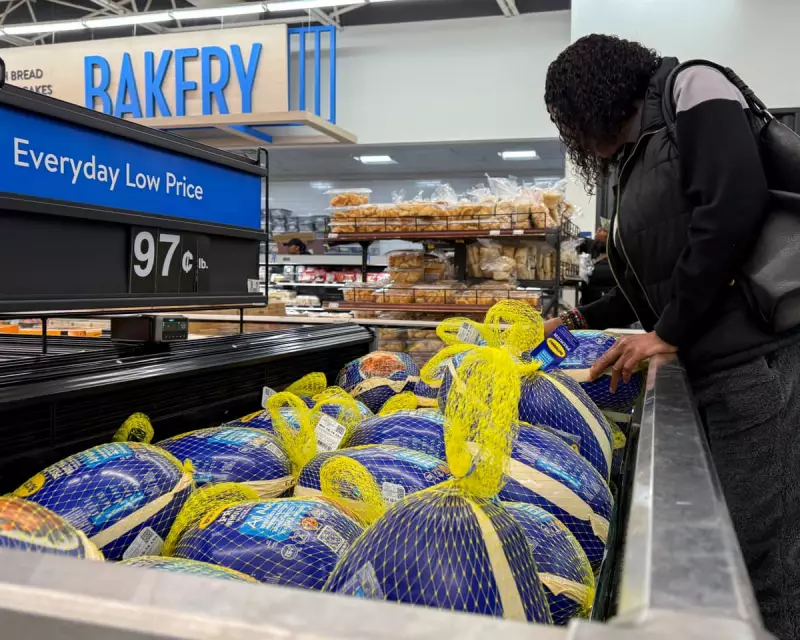
With Thanksgiving approaching, American consumers face a confusing landscape of holiday food prices amid ongoing inflation concerns. While former President Donald Trump promotes Walmart's budget meal deals as evidence of his economic success, economists reveal a far more complex reality behind the cost of the traditional feast.
The Political Battle Over Thanksgiving Costs
Donald Trump has recently pointed to Walmart's Thanksgiving promotion as proof that grocery prices are declining under his leadership. The retail giant announced in October that its carefully curated Thanksgiving meal for ten people would cost under $4 per person with promotions. "Grocery prices are way down," Trump declared during a speech earlier this month, while the White House issued statements calling the promotions proof that America is "winning the war on high prices."
However, this optimistic portrayal conflicts with consumer experiences and economic analyses. Multiple polls indicate Americans remain deeply concerned about inflation and the rising cost of living, with many households feeling significant financial pressure as they prepare for holiday celebrations.
Economic Reality: A Mixed Plate of Prices
Food economists present a nuanced picture that varies dramatically depending on shopping strategies and product choices. David Ortega, a food economist at Michigan State University, explains that "the cost of a Thanksgiving meal is really going to depend on what you put in your basket and also where you're going to shop. For some people, it may be cheaper than last year. For others, they may get sticker shock."
Conflicting reports highlight this uncertainty. The Wells Fargo Agri-Food Institute suggests a standard Thanksgiving menu could be 2-3% cheaper this year, particularly for shoppers choosing store-brand items. Conversely, an analysis by Groundwork Collaborative, the Century Foundation and the American Federation of Teachers found Thanksgiving food prices nearly 10% higher overall, especially for name-brand products.
The Turkey Trick: Understanding 'Loss Leaders'
Thanksgiving pricing strategies revolve heavily around what economists call "loss leaders" - products sold at a loss to attract customers who will then purchase other items. The Thanksgiving turkey typically serves this role, with retailers accepting minimal profits or even losses on the centrepiece protein to draw shoppers into their stores.
Professor Ricky Volpe of California Polytechnic State University notes that "there's no better way to advertise and market low prices and affordability than to set a really, really low price on whole turkeys." Despite wholesale turkey prices increasing, retail prices are expected to remain stable or even decrease as supermarkets compete for holiday shoppers.
Walmart's much-publicised Thanksgiving basket reflects this promotional strategy, though careful examination reveals significant changes from previous years. The 2025 basket is smaller and contains more Walmart-brand items than the 2024 version, with substitutions that reflect broader economic pressures.
Tariff Impacts and Future Price Pressures
The subtle alterations in Walmart's Thanksgiving offering reveal deeper economic forces at work. The retailer swapped Ocean Spray's jellied cranberry sauce for fresh cranberries and reduced the number of Campbell's cream of mushroom soup cans - changes that analysts link to Trump's 50% tariffs on steel and aluminum imports.
Groundwork Collaborative's analysis noted dramatic price increases for aluminum-dependent products: canned cranberry sauce costs rose over 22%, canned creamed corn increased 21%, and Reynolds Wrap heavy-duty aluminum foil jumped 40%.
Professor Volpe warns that the full impact of these tariffs may not yet be visible in food prices. "Think about how many major pieces of capital equipment will need to be replaced throughout the food supply," he said, noting that everything from farm equipment to processing machinery and transportation requires significant steel imports. Many food companies are currently absorbing these costs rather than passing them to consumers, hoping the tariffs might be temporary.
Broader Economic Forces at Play
Beyond tariffs, multiple factors continue influencing food prices. Climate-related events including droughts have affected cattle supplies, pushing beef prices upward. Disease outbreaks impact various crops, from leafy greens to oranges used for juice production.
Professor Ortega emphasises that consumer perceptions reflect cumulative inflation effects rather than single-year changes. "Food prices are more than 25% higher than five years ago," he notes, explaining why many shoppers remain sensitive to price changes despite recent stabilisation in some categories.
As Americans sit down to their Thanksgiving meals, the cost of their celebration represents more than just seasonal promotions - it reflects complex global supply chains, political decisions, and economic forces that will continue shaping grocery bills long after the holiday decorations come down.