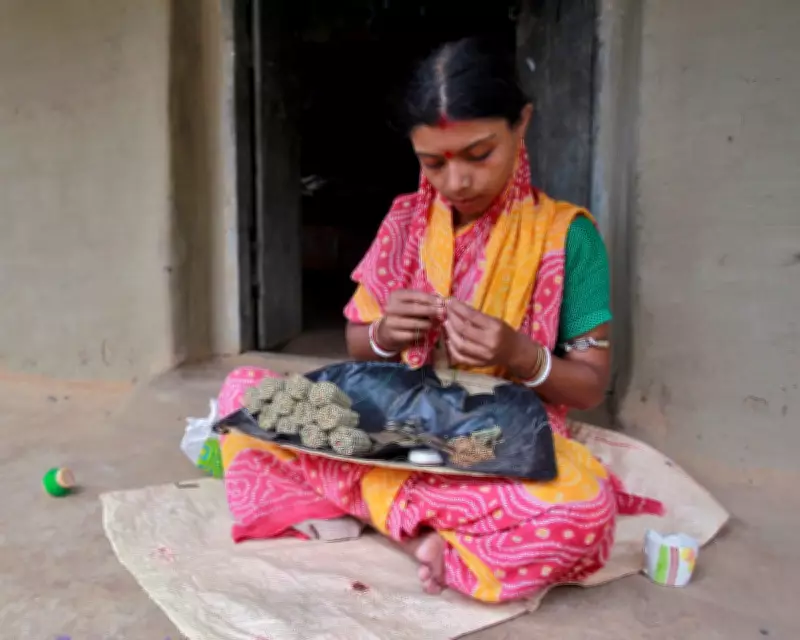
In India, many women and girls work informally as bidi cigarette makers without contracts, pay slips or access to welfare schemes. Shazia Khanum, a 16-year-old bidi roller in Karnataka's Yarab Nagar, rolls 300 to 500 cigarettes daily for about £1. Her workplace lacks toilets and sanitary facilities, forcing her to use a makeshift curtained space during menstruation.
The Melbourne Declaration: A Distant Promise
Last week, world leaders gathered in Australia to launch the Melbourne Declaration for Gender Equality, a framework for gender-responsive funding and policy reform. The declaration calls for governments to ensure local civil society is resourced, protected, and connected, and for those most affected by injustice to be central to gender equality work. However, for girls like Khanum, these promises seem distant.
India's Informal Sector Reality
Khanum is not an outlier but a statistic: 61% of female workers in India's non-agriculture sector are employed informally, and 80% of South Asian women work outside formal protections. She has no contract, payslips, or welfare access. India's e-Shram portal has registered over 300 million informal workers, but outreach is lacking. Despite informal sector contributing about 45% of GDP, ground-level engagement remains poor.
Bridging the Gap
Maliha Khan of Women Deliver emphasizes that holding leaders accountable means ensuring public systems recognize everyone's reality. For Khanum to benefit, she needs direct access to cash and healthcare, either through NGOs or community health workers. The declaration's success will be measured by its translation into policy, financing, and practice for invisible women workers.
As applause filled Melbourne conference halls, Khanum remained at her workbench, unaware of debates about fixing the system that failed her. Her ambitions are simple: better pay and a proper toilet.
Elsewhere, an artist chronicles the DRC's blood-soaked history in embroidery, a new maternal hospital opens in the world's largest refugee camp, and a jailed mother and daughter speak about prison's impact. In Iran, Parisa Azadi captures protest footage using instant photography, burning prints as an act of mourning after state massacres.
Upcoming Events
An exhibition of 100 Palestinian tatreez embroideries documenting genocide in Gaza will be at Venice Biennale from 9 May to 22 November. Nairobi Litfest 2026 (8-10 May) features musicians, activists, and scientists. Dominican artist Hulda Guzmán's solo exhibition opens 23 May at Turner Contemporary. A discussion on feminism for a world on fire takes place at Brighton festival on 21 May.