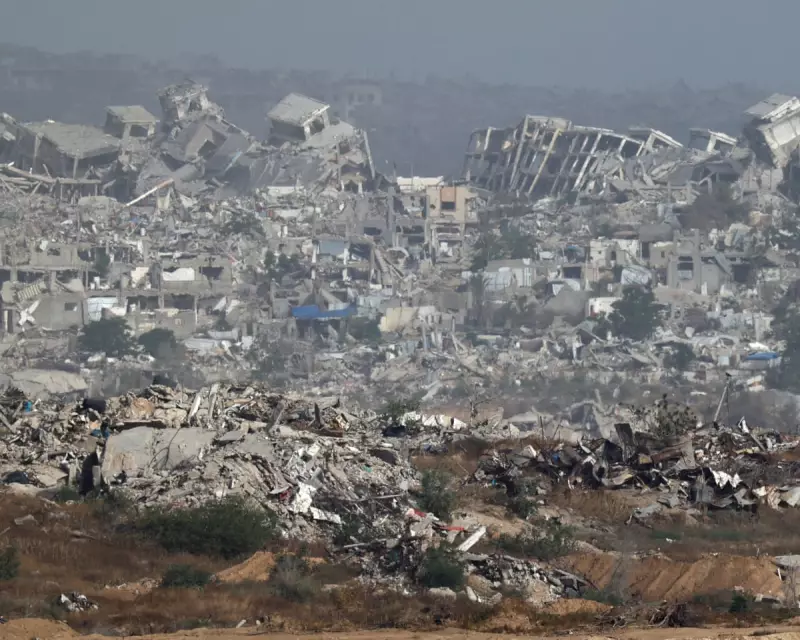
The United Nations has declared that rebuilding the Gaza Strip will require more than $70 billion (£53 billion) over several decades, describing the situation created by Israel's military operations as a 'human-made abyss'.
Economic Collapse and Human Cost
A new report from the UN's trade and development agency (Unctad) states that Israel's war in Gaza has 'significantly undermined every pillar of survival' for the territory's 2.3 million inhabitants. The entire population now faces what the UN terms 'extreme, multidimensional impoverishment'.
The economic figures are staggering. Gaza's economy contracted by a massive 87% over 2023-2024, reducing its gross domestic product (GDP) per capita to just $161, placing it among the lowest globally. The report also highlighted that the West Bank's economy has been 'decimated' by violence, settlement expansion, and restrictions on worker mobility.
Decades of Development Erased
The economic collapse has been so severe that it has reversed decades of developmental progress. By the end of 2024, the Palestinian GDP had fallen back to its 2010 level, while GDP per capita returned to that of 2003. This effectively erases 22 years of development in less than two years.
'Even with substantial aid, recovery to pre-October 2023 GDP levels could take decades,' the report concluded. The Palestinian government's ability to respond is crippled by plummeting revenues and the withholding of fiscal transfers by Israel, limiting essential services and investment in recovery.
Humanitarian Crisis and Ceasefire Challenges
The human toll continues to mount. The Gaza health ministry reported that at least 342 Palestinians have been killed by Israeli fire since a US-brokered ceasefire came into effect in October. Israel states that three of its soldiers have been killed by militant gunfire in the same period.
Humanitarian conditions remain dire. The World Food Programme (WFP) reports that most households in Gaza cannot afford basic food items. Diets are dominated by cereals and pulses, with very limited access to meat, vegetables, and fruit. Cooking gas is scarce, forcing many to burn discarded plastic for fuel.
The ceasefire, though fragile, has held. Hamas has released all 20 living hostages it was holding and returned the remains of all but three of the 25 dead hostages. In exchange, Israel has released nearly 2,000 prisoners and returned the bodies of hundreds of dead Palestinians.
The conflict was triggered on 7 October 2023, when Hamas-led militants killed about 1,200 people, mostly civilians, and abducted 251 during a surprise incursion into Israel. The ensuing Israeli offensive and subsequent strikes have killed more than 69,000 Palestinians, mostly civilians, with thousands more bodies believed buried under rubble.