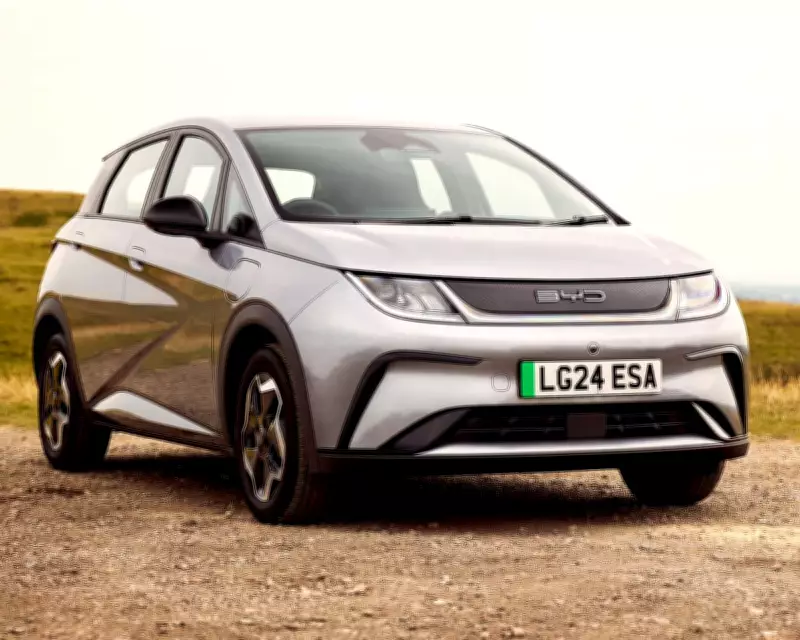
The European Union is experiencing a prolonged "China shock" as a flood of Chinese electric vehicles into Europe helped push Beijing to a record surplus with the bloc. New data shows that China's trade surplus—where its exports to the EU exceeded imports from the bloc—reached $83 billion (£61 billion) in the first three months of 2026.
Record Surplus Driven by EV Sales
China sold goods worth approximately $148 billion to the EU in the first quarter, but imported only $65 billion from the bloc, according to an analysis of 2026 customs data by the Mercator Institute for China Studies (Merics). The surplus for the whole of 2025 stood at €360 billion. The record was driven in part by Europeans' apparently unstoppable appetite for Chinese cars, including BYD, which has declared its ambition to become the world's largest automaker.
Sales of Chinese electric and hybrid cars almost doubled from $11 billion (£8.1 billion) in the first three months of 2025 to $20.6 billion for the same period this year. This accounted for a third of the value of all Chinese EV exports. When the UK, Norway, and Switzerland are included, Europe accounts for 42% of Chinese sales of EVs, which saw a 50% surge in March in the wake of the Iran war.
China's Economic Resilience Amid Geopolitical Tensions
Merics, which crunched the numbers along with Chinese trade site Soapbox, stated that China's economy has so far shown resilience in the face of the Iran war, posting the "largest quarterly growth figures since 2022." Soapbox figures released last week showed that exports from the EU to China fell by 16.2% in February, with pork shipments notably in decline. Although China imports a large share of its oil from the Gulf—where traffic through the crucial Strait of Hormuz has ground to a near standstill—it has been less impacted than other Asian countries and has been able to tap into substantial reserves. "So far, China's trade with the world has been barely affected by the conflict in the Middle East," Merics said.
EU's 'Made in Europe' Strategy and Chinese Retaliation Threats
In February, the think tank Bruegel said the EU was "experiencing a severe and accelerating 'China shock'" with Xi Jinping's new five-year plan showing no signs of change in export policy in Beijing. The bloc has proposed a "Made in Europe" industrial strategy in an attempt to protect "strategic sectors" of European industry. China has warned the EU that it will retaliate with "countermeasures" if the new laws discriminate unfairly against Chinese exports to the bloc. China's Ministry of Commerce said the EU Industrial Accelerator Act would result in discrimination that "runs counter to basic market economy principles such as commercial voluntariness and fair competition." The UK has also complained that it discriminates against British car exports.
EU Defends Trade Measures
A spokesperson for the European Commission said the proposed legislation complies with World Trade Organization rules, and China benefits from access to "one of the most open markets in the world," expecting the "openness to be mutual." The commission's deputy chief spokesperson, Olof Gill, said policy proposals "are carefully calibrated to achieve certain economic and wider goals for our citizens, for our businesses" and that the EU is "happy to engage" with China on any issue. Over the last three years, the EU has deployed a "good cop, bad cop strategy" with Beijing, with EU leaders courting investment but at the same time arguing for a rebalancing or "derisking" of the trade relationship.
German Chancellor Criticizes Trade Imbalance
In February, German Chancellor Friedrich Merz said the yawning trade gap was "not healthy" and that he wanted to reduce the trade deficit that had "quadrupled" in five years. Brussels has tried to dampen imports of Chinese cars, imposing tariffs of up to 35% on some brands in 2024. It has also introduced initiatives to help EU companies reduce reliance on rare earths, such as permanent magnets used in everything from car window locking systems to fridge and washing machine doors. The new customs data showed that China still accounts for 93% of permanent magnets, with import volumes increasing 18% year-on-year. There are no rare earth mines in Europe, but high hopes rest on LKAB, a state-owned iron ore mine in the Swedish Arctic, which could be close to making extraction and processing viable.
Industry Leaders Question EU Trade Measures' Effectiveness
Industry leaders have noted how ineffective the EU's trade measures can be. The boss of Europe's first plant producing lithium hydroxide, a key ingredient in car batteries, warned that the EU may as well "be a province of China" due to its reliance on Chinese imports.