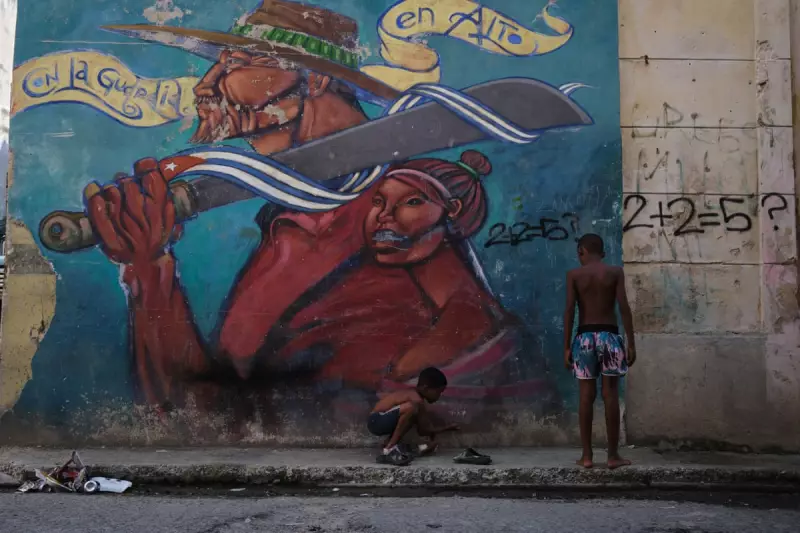
Cuba is grappling with a profound national emergency, a convergence of crises so severe experts label it a 'polycrisis'. At its heart is a staggering population exodus, with one in four Cubans having left the island in just four years, fuelled by economic ruin, political disillusionment, and the world's longest-standing trade embargo.
A Nation Emptying Out
Independent demographic studies paint a dire picture. Cuba's population is likely now below 8 million, a catastrophic 25% drop since 2020. This represents an average loss of about 820,000 people annually, the fastest population decline globally. Researchers Juan Carlos Albizu-Campos Espiñeira and Dimitri Fazito de Almeida Rezende found the population is far below the government's 2015 projection of 11.3 million for 2024, even falling short of forecasts for 2050.
The exodus is stripping the country of its youth and vitality. Most leaving are aged 15-59, with 77% of reproductive age and 57% women. They finance their escape through personal savings and family networks, navigating complex routes through Latin America, Europe, and beyond. Concurrently, the country has recorded more deaths than births for five consecutive years, with fertility below replacement levels since 1978. Today, one in four Cubans is over 60, straining social and economic prospects further.
Juan Carlos Alfonso Fraga, deputy director of Cuba's National Office of Statistics and Information (Onei), concedes a "profound, very complicated demographic change" but cites a lower official decline of 14%. He attributes the crisis squarely to the 68-year US economic embargo, which has battered Cuba's finances and trade for over six decades.
Economic Freefall and Social Erosion
The economy is in its gravest state since the 1959 revolution, worse than the 'Special Period' following the Soviet Union's collapse. The UN forecasts a 1.5% economic decline for 2025, placing Cuba alongside Haiti as the only Latin American nations in recession. Of 15 main economic sectors, 11 are in decline, including sugar (down 68%), fishing (down 53%), and agriculture (down 52%). Tourism earnings have plummeted by 60%.
In Havana, the crisis is visceral. Rubbish piles up in streets due to failed collection, crumbling colonial buildings collapse, and sporadic protests erupt. A stark economic divide is evident: tourists access dollar stores while locals face severe shortages and unliveable wages. A mechanical engineer's state salary of 6,000-7,000 pesos (approx. £12-£14) is untenable, pushing graduates like 23-year-old Cristian Cuadra into informal work like driving for ride-hail service La Nave to save money to leave.
"If you have the opportunity, you leave – there's no future here," says Cuadra, who is applying for Spanish citizenship. "I don't believe in the revolution – it's not worth supporting something that doesn't produce results."
Economist Juan Triana Cordoví points to a stagnant state-focused model and heavy misinvestment, with 35% of total investment over ten years directed to tourism and real estate while agriculture and energy were neglected. The resulting brain drain has emptied classrooms and hospitals. "When you lose an engineer, you lose 22 years of investment. It's very difficult to recover from that," he states.
Internal Strain and the Shadow of Repression
Disillusionment is pervasive, particularly among the young for whom emigration is an "almost universal aspiration," according to exile Hatri Echazabal, 29, who undertook a perilous journey from Cuba to Spain. The government faces more open criticism over chronic power cuts—sometimes lasting 22 hours in Santiago de Cuba—fuel shortages, and the collapse of once-prized public services in health and education.
The state's response to dissent remains harsh. Following the historic 11J protests in July 2021, the largest since the revolution, the Díaz-Canel government cracked down. Human Rights Watch reports at least 700 people imprisoned, facing lengthy sentences amid allegations of torture and denial of medical care. Prominent dissident José Daniel Ferrer García, now exiled in Miami, warns that the regime jails any potential organiser immediately, weakening internal opposition.
Despite the overlapping crises, experts are divided on the regime's imminent collapse. Some, like former US negotiator Ricardo Zúñiga, note that worsening conditions have not historically triggered change, and elite circles show no sign of initiating internal reform. Others, like researcher Mayra Espina, warn the country is at a "point of no return," with risks of violent upheaval unless significant changes are made.
Helen Yaffe of Glasgow University contextualises the crisis within decades of US strategy designed to induce hardship, but acknowledges a decline in revolutionary fervour. Yet, she insists many Cubans still seek improvement from within the system. The regime's chosen commentator, political scientist Guillermo Suárez Borges, points to historical resilience, asking: "Was Cuba at a breaking point after the Soviet collapse? ... People continue to resist."
For the hundreds of thousands who have left, like Maykel Fernández, 35, now in Charlotte, USA, return is unimaginable under the current system. "Young people don't necessarily care much about what is happening in Cuba," he says. "I say sincerely, from the bottom of my heart: return to Cuba? Not even dead." As the polycrisis deepens, Cuba's future hinges on whether internal reform can outpace the speed of its emptying homeland.