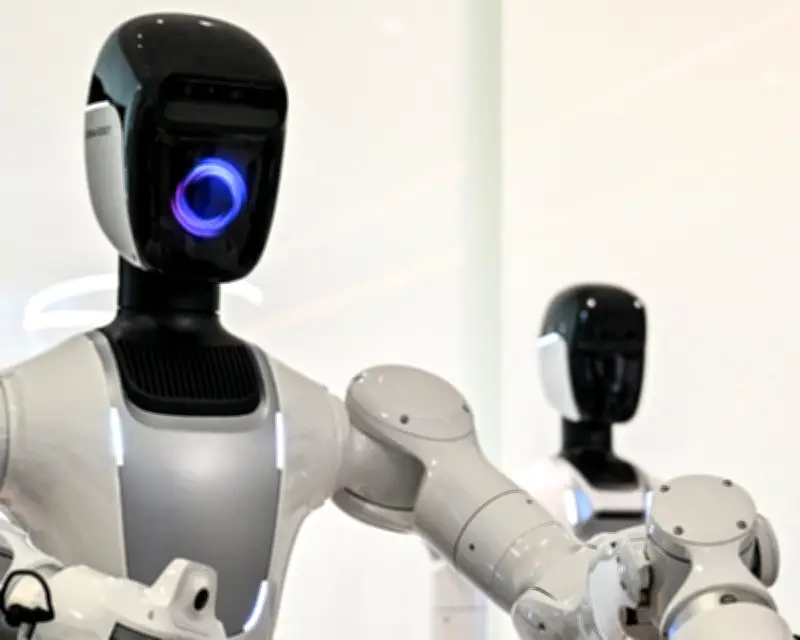
Just because a robot may technically be able to perform a task, does it mean we should accept that it should? This question is at the heart of a new book by FT journalist Sarah O'Connor, We Are Not Machines, which examines how artificial intelligence is changing jobs and potentially altering human nature itself.
Robot Magician Rejected for Lack of Humanity
A robot magician named D4YRL was recently denied membership in the Magic Circle because it failed to engage the audience's emotions like a human performer. This incident highlights the growing need to define what it means to be human as robotics and AI advance rapidly.
The Impact on Workers
O'Connor spent time with Amazon employees whose tasks are constantly monitored, and with workers in India and Costa Rica who train AI systems by watching hours of video footage. She asks, "We think we're robotising our work, but what if we're robotising ourselves?"
Translators now spend their days correcting mediocre AI-generated text for lower pay, a job known as machine translation post-editing. One translator, Petr, lamented, "I want to have something creative, but I'm not sure that I can have a creative job that's not endangered. Everywhere you step, there's AI."
Evidence of Cognitive Decline
O'Connor reviews evidence that humans may be reading, thinking, and understanding less as they rely on technological shortcuts, potentially changing the nature of human intelligence. She argues that just because a robot can perform a task doesn't mean it should.
She illustrates this with a Dutch nurse caring for an elderly patient, providing humour and empathy that a robot carer could not. "Technology is designed by people, made by people, and adopted by people. It is perfectly reasonable to say 'yes' to some uses and 'no' to others," O'Connor writes.
Bargaining Power Matters
O'Connor finds stark differences in how technology affects workers depending on their bargaining power. In Sweden, unions and employers worked together to introduce autonomous trucks in a mine. Hollywood writers used their leverage to control AI use in creative processes.
For most workers, governments may need to set boundaries. In the UK, the Trades Union Congress and the Institute for Public Policy Research have called for employees to negotiate before new technology is deployed, though ministers may be cautious due to enthusiasm for AI's productivity potential.
Elon Musk's Growing Power
O'Connor also highlights the disproportionate influence of tech billionaires like Elon Musk. The SpaceX IPO consolidated Musk's economic power, and a paper by Alessio Terzi shows SpaceX has 75% of the market for sending payloads into space, potentially exceeding the East India Company's dominance.
Terzi warns, "History tells us that power and exploitation become so entrenched that states are finally forced to intervene, by which time the costs of doing so are vast." Musk envisions humanoid robots and opposes unions, claiming they create "a lords and peasants kind of thing."
The Fight for the Future of Work
O'Connor concludes that policymakers and the public should not accept without question the vision of relentless AI and robotics. "The future of work can be more worthy of the human mind, more careful of the human body, more satisfying to the human soul, but not without a fight," she writes.