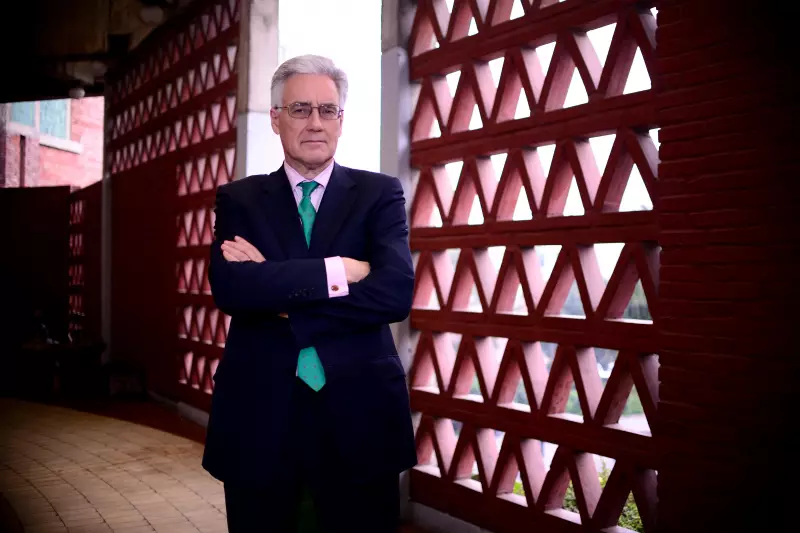
As the chair of the Financial Services Authority (FSA) during the peak of the 2008 global financial meltdown, Lord Adair Turner possesses an intimate understanding of how financial systems collapse. Now, more than fifteen years later, he sees warning lights flashing again, this time in the exuberant fields of artificial intelligence and the opaque world of private credit.
From the Ashes of 2008
Lord Turner can still recall, with precise detail, the career-defining month of September 2008. Just five days before his official start date as FSA chair, the American banking giant Lehman Brothers collapsed with $600 billion under management. He was urgently asked to begin his role immediately that Saturday. "We couldn't have a weekend with nobody in charge," he recounted to City AM.
His baptism by fire was immediate. That Sunday, Bradford and Bingley building society failed. The following weekend, Icelandic banks toppled, swiftly followed by Ireland's lenders. "You could just see it was like one of those giant snowballs rolling down a hill," Turner said, describing the relentless contagion.

The crisis culminated in a historic face-off a fortnight later. In one room sat Turner, then-Chancellor Alastair Darling, and Bank of England Governor Mervyn King. Opposite them were the CEOs of Britain's biggest banks, including RBS's Fred 'the shred' Goodwin, each revealing the staggering liquidity injections they needed to survive. "It was two and a half weeks of extraordinary history, adrenaline – and a huge crisis," Turner reflected.
Crypto: A Modern-Day Tulip
This experience forged a worldview that marvels at market innovation but detests pure financialisation. It's a perspective that led him to famously label much City activity as "socially useless". It also explains his current role as chair of the fintech bank Oaknorth, which he sees as practising valuable, real-economy lending to fund restaurants, manufacturing, and property.
This stands in stark contrast to his view on cryptocurrencies. Over a three-minute critique, his disdain was palpable. "I think cryptocurrency is pure financial engineering for its own sake," he stated. "It won't help us deliver an improved health service… or better property developments."
He dismissed the asset's value as a hedge against potential government debt debasement, arguing that property and equities are natural hedges. "Whereas crypto is just a free floating thing. It's a tulip in 1635," he concluded, drawing a direct parallel to the classic historical example of a speculative bubble.
Vigilance in US Credit and AI Hype
Oaknorth, which recently acquired a US regional bank, is now navigating the world's largest economy. Turner, a perpetual student of financial crises, is watching recent tremors in US banking and private credit with hypervigilance. "We're keeping a close eye on the changing nature of the US credit market," he confirmed, noting it shows signs of potentially overheating.
He pointed to a $150 million loss disclosed by JPMorgan from its exposure to the collapsed subprime auto lender Tricolor Holdings. This, alongside other debt-related failures, echoes the early portents he witnessed in 2008. However, for now, he does not foresee a repeat of a full-blown systemic crisis, citing the contained nature of recent bank collapses like Silicon Valley Bank.
He is similarly calm about the AI investment boom. Even a major correction on the scale of the dot-com bubble, he argues, would likely cause an equity market bloodbath but not trigger a wider financial crisis, which typically stems from credit cycles in property and complex, unmonitored interconnectedness.
The foundation of this confidence lies in the regulatory reforms he helped enact. The core lesson from that September in 2008, looking into the eyes of failing bank CEOs, is that capital is paramount. "Capital in banks is a bloody good thing," he smiled. "I played my role in making sure that we have a hell of a lot more capital in banks than we had before. And if they put nothing on my gravestone other than that, I'd be happy."