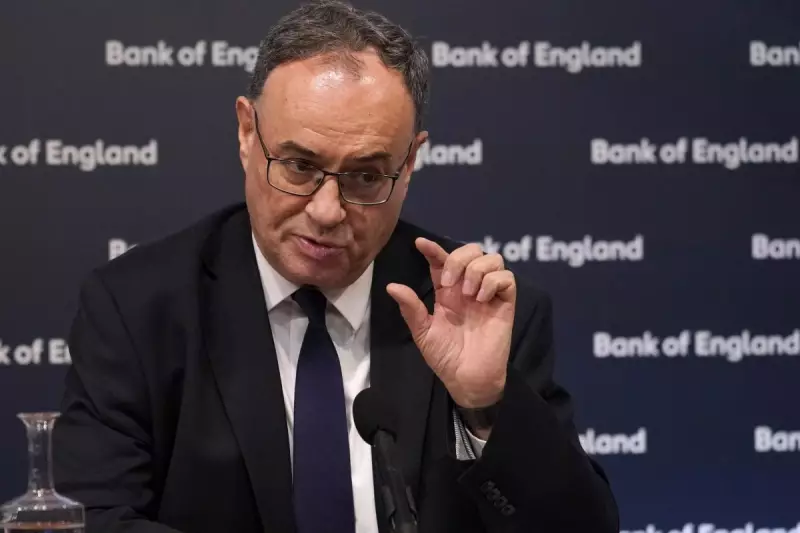
In a dramatic policy reversal, the Bank of England has unveiled plans to relax its stance on stablecoins, marking what experts describe as a "watershed moment" for Britain's ambitions to become a global digital assets hub.
A Major U-Turn on Digital Assets
The central bank's new consultation paper represents a significant softening of position from Governor Andrew Bailey, who had previously stated he would need "a lot of convincing" about stablecoins' usefulness. The shift comes amid growing pressure for the UK to capture a share of the £200 billion global stablecoin market.
Brett Hillis, partner and crypto regulation expert at Reed Smith, commented: "This could be a watershed moment in the UK's push to become a digital assets hub." He noted that movement in other jurisdictions, particularly the United States with its GENIUS Act, had made Britain "feel the pressure" to enhance its attractiveness to digital asset businesses.

From Fire Sales to Financial Backstops
The most significant change addresses a critical weakness in the previous regulatory framework. Under the old rules, stablecoins operated under a strict 1:1 backing requirement, meaning every digital coin had to be backed by a pound of assets, with portions held as cash for immediate redemption.
This created vulnerability during financial panics, where issuers might be forced into fire sales of safe assets at massive losses, potentially breaking the 1:1 peg and causing coin values to fall below £1.
The new proposal offers a solution: if a fundamentally sound issuer faces market panic preventing asset sales, the Bank could provide emergency cash liquidity loans. This financial stability backstop aims to ensure coins can meet redemption demands without collapsing their value.
Revenue Generation and Industry Response
Another major shift addresses industry complaints about profitability. The Bank's 2023 discussion paper had suggested stablecoin issuers would deposit funds into Bank of England accounts that pay no interest, making it difficult to cover operating costs.
The new framework allows issuers to use 60% of cash to purchase short-term UK government debt, which pays guaranteed interest, transforming the model from no-revenue to cash-generating. The remaining 40% must still be held in Bank accounts.
Tom Duff Gordon, vice president of international policy at Coinbase, welcomed the move but urged increasing the cap to 80%. He noted the consultation shows "the evolution in [the Bank's] thinking" and demonstrates they have "genuinely listened to the industry."
The policy shift follows criticism from various quarters, including Reform UK's Nigel Farage and Richard Tice, who had branded Governor Bailey a "dinosaur" for his previous views on digital assets. It also represents another area of divergence from the Treasury, with Chancellor Rachel Reeves having promised to drive forward blockchain technology developments in her 2025 Mansion House speech.