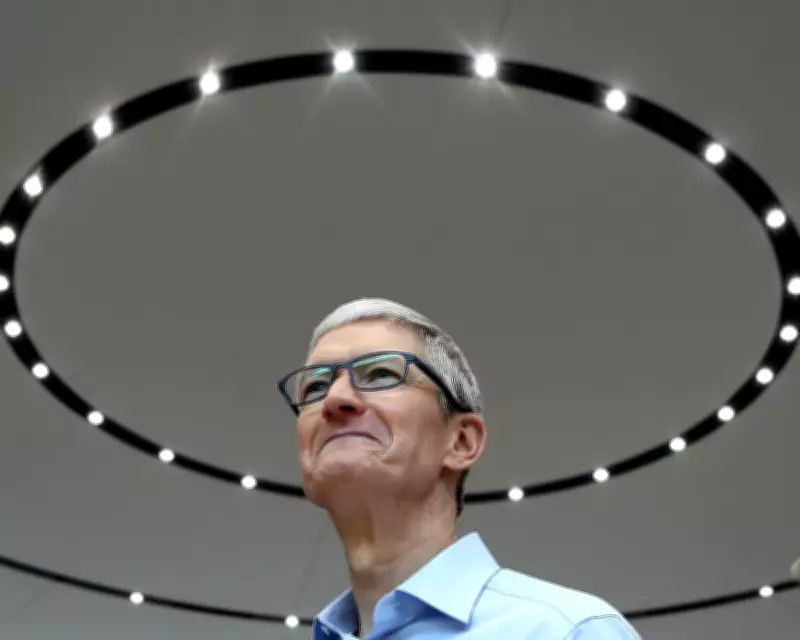
Tim Cook Concludes Historic 15-Year Tenure as Apple CEO
After fifteen transformative years at the helm, Tim Cook is stepping down from his position as Apple's chief executive officer. At 65 years old, Cook departs from a technology hardware juggernaut that he helped evolve into one of the most profitable publicly traded corporations in global history. His leadership saw Apple's valuation skyrocket from approximately $350 billion in 2011 to an astonishing $4 trillion today.
From Operations Expert to Corporate Leader
Cook first joined Apple in 1998, bringing his expertise in logistical management to oversee worldwide sales and operations. His path to leadership began in earnest during 2009 when he temporarily assumed day-to-day control as the company's legendary co-founder, Steve Jobs, took medical leave due to complications from pancreatic cancer. In 2011, just months before Jobs's passing, Cook officially took over as CEO, facing the monumental challenge of succeeding an iconic industry figure.
"Steve Jobs was never going to be an easy act to follow," remarked Dipanjan Chatterjee, a principal analyst at market research firm Forrester. "Yet Tim Cook took Jobs's legacy and transformed Apple into a durable, resilient financial powerhouse with explosive market-cap growth."
Building Upon the Jobs Foundation
When Cook assumed leadership, Apple was already experiencing tremendous success with revolutionary products like the iPhone and iPad. Under his stewardship, the company expanded these product lines dramatically while introducing new hardware categories including the Apple Watch and AirPods headphones. Perhaps more significantly, Cook oversaw Apple's strategic expansion into services, developing Apple Pay, Apple TV, and Apple Music into substantial revenue streams.
This expansion created what analysts describe as a "connected ecosystem of billions of devices" woven together through proprietary operating systems like iOS and macOS. Bob O'Donnell, president and chief analyst of Technalysis Research, observed that Cook "understood the interconnectedness of it all and that, ultimately, is what brought Apple to where it is today."
A Different Leadership Style
Cook's leadership approach contrasted sharply with his predecessor's charismatic showmanship. Where Jobs captivated audiences with theatrical product unveilings in his signature black turtleneck, Cook maintained a more subdued, operations-focused demeanor. While continuing Apple's tradition of live product announcements, Cook never attempted to replicate Jobs's visionary stage presence, instead focusing on methodical business growth and financial stability.
In Apple's official announcement, Cook expressed profound gratitude, stating he loves the company "with all of my being" and that leading it represented the "greatest privilege of my life." He will remain with Apple as executive chair of the board of directors, while John Ternus, the company's 50-year-old senior vice president of hardware engineering, assumes the CEO role.
Challenges and Legacy
Despite tremendous success, Cook's tenure included notable challenges. Apple has faced criticism for being slow to invest in generative artificial intelligence and integrate the technology into its products. The company experienced hardware setbacks including the underwhelming $3,500 Vision Pro mixed reality headset, potential delays with folding smartphone technology, and a cancelled self-driving car project that reportedly cost approximately $10 billion.
Analysts note that while Cook maintained Apple's growth trajectory, he did not oversee the kind of revolutionary innovation that defined Jobs's era with products like the iPhone. "Cook's legacy will be defined by steady, disciplined operational stewardship," Chatterjee explained, "proof that a company can be more than just exciting and visionary; it can also be immensely valuable to all its stakeholders."
Under Cook's operational leadership, Apple transformed from an innovative Silicon Valley disruptor into a financially secure global heavyweight that consistently delivers products expected by an ever-expanding worldwide consumer base. His departure marks the end of an era that saw Apple become the first publicly traded company to reach a $1 trillion valuation and ultimately grow to its current $4 trillion market capitalization.