
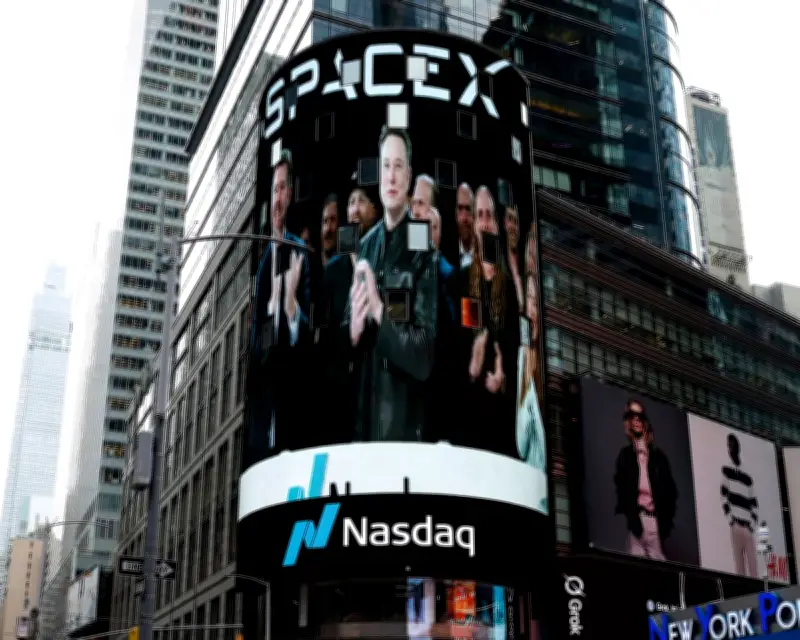
Elon Musk has become the world's first trillionaire after SpaceX went public on the Nasdaq. The company's shares, priced at $135 each, propelled its valuation to around $1.77 trillion, boosting Musk's net worth from $813 billion into the trillion-dollar stratosphere.
A New Era of Capitalism?
According to Robert Reich, former US secretary of labor and a professor of public policy emeritus at UC Berkeley, this event signals a fundamental shift in capitalism. The old rules—prices set by supply and demand—no longer apply. Instead, the market is driven by hype, connections, and arbitrary control.
The Role of Hype
SpaceX's IPO price was roughly 100 times its 2025 revenue, despite consistent negative profitability and missed goals. Much of its perceived value stems from a deal between SpaceX and Musk's AI startup, xAI—essentially a self-deal. Reich compares this to Musk's ill-fated Dogecoin ventures and even Trump's takeover of the US government, calling it arbitrary and built on hype.
Connections and Favoritism
Brendan Carr, chair of the Federal Communications Commission, has been a key ally. Appointed on Musk's recommendation, Carr has approved regulatory requests for SpaceX's Starlink, giving Musk control over two-thirds of active low-Earth orbit satellites. Meanwhile, Carr launched an investigation into rival EchoStar and threatened NBC and ABC over unfavorable Trump coverage.
Total Control
Musk will retain 10 times the voting power of public shareholders, rendering the board powerless. This lack of accountability and checks is a stark departure from traditional corporate governance.
Impact on Ordinary Investors
Reich warns that many Americans with savings in major stock indices will be forced to invest in SpaceX, whether they want to or not. The Nasdaq 100 has implemented a 'fast entry' rule to include top-valued companies like SpaceX, bypassing the usual waiting period. This could artificially inflate SpaceX's value while allowing insiders to sell their shares early, potentially at the expense of ordinary investors.
Reich concludes that this IPO represents a redistribution of wealth from the many to Musk and his allies, highlighting the rot at the core of American capitalism in the Second Gilded Age.




