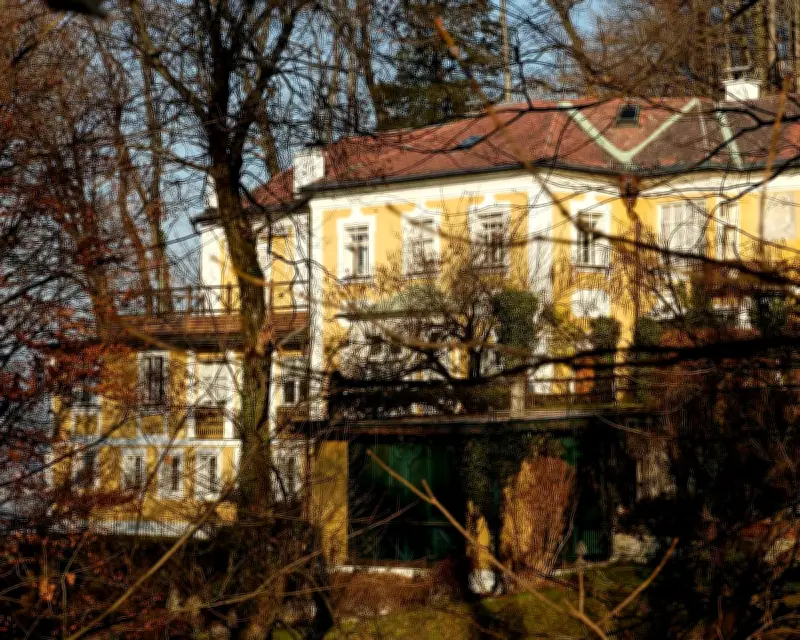
Wolfgang Porsche, the Austrian-German automotive magnate, has put his historic Salzburg villa up for sale after abandoning plans to build a private 500-metre tunnel through the Kapuzinerberg hill, following a public uproar over the project dubbed a 'tunnel for one'. The 17th-century villa, known as the Paschinger Schlössl, was once home to Jewish writer Stefan Zweig, whose memoirs inspired Wes Anderson's film The Grand Budapest Hotel.
Background of the property and tunnel plans
Porsche purchased the villa on the outskirts of Salzburg in 2020 for €8.4 million (£7.2 million). Last autumn, he secured planning permission from city authorities for an estimated €10 million private access road through the rugged limestone hill. The 83-year-old's vision was for the tunnel to lead from a municipal car park in the city centre to a subterranean garage next to the villa, where he could park eight cars.
The proposal sparked incredulity and anger among locals, not least because of the historic nature of the property. Zweig lived in the villa until he was driven out of the city in 1934 by the Austro-fascist regime. He described the house as 'romantic and impractical', writing that among its charms was that it was 'inaccessible to cars' and could 'only be reached by climbing the more than a hundred steps' of the Kapuzinerberg.
Public backlash and protest slogans
The backlash over Porsche's tunnel plans, which protesters called the height of inequality in a city facing a housing shortage and extortionate rents, contributed to his decision to sell. 'A city for everyone instead of a tunnel for one' was one of several protest slogans hung around Salzburg at the height of the protests last year.
While opponents of the tunnel are claiming victory, the Greens in Salzburg are calling on city authorities to go a step further and withdraw the planning permission, suggesting it had contributed to the property leaping in value. 'It cannot be that public land is being used for real estate speculation,' Ingeborg Haller of the Greens told Austrian media. 'This is about equal rights for all. It cannot be that only those who can afford it receive permission for a private tunnel.'
Sale details and tunnel permit
The villa is now on the market for €12.7 million (£11 million), with the estate agents citing the planning permission for the tunnel as one of the property's highlights. Potential buyers are told in the sales pitch that they will be 'seduced by' the accompanying 'remarkable, approved private tunnel project' and 'unique annex for underground garage', which 'elevates the property into a category of its own – an unparalleled feature within historic Salzburg'.
A new owner would be permitted to build the tunnel, although they would have to rush to do so as the planning permission – for which Porsche paid €48,000 – is valid only until the end of 2028. City authorities have dashed hopes that the villa could become a museum dedicated to Zweig. Bernhard Auinger, the mayor of Salzburg, said the city could not afford to buy it.
Porsche's motivation and spokesperson statement
A real estate manager for Porsche confirmed to the Salzburger Nachrichten that the car boss had put the property up for sale. He refused to say what had motivated Porsche to abandon the project, but described the row that had developed around the tunnel as an 'envy-driven debate'. He said it was doubtful that Porsche could have managed to live in the villa as he had originally envisaged along with his new wife, Gabriele zu Leiningen, who was once married to the former Aga Khan. Speaking on behalf of the family and not Porsche AG Holding, a spokesperson said: 'No statement will be made on that matter.'