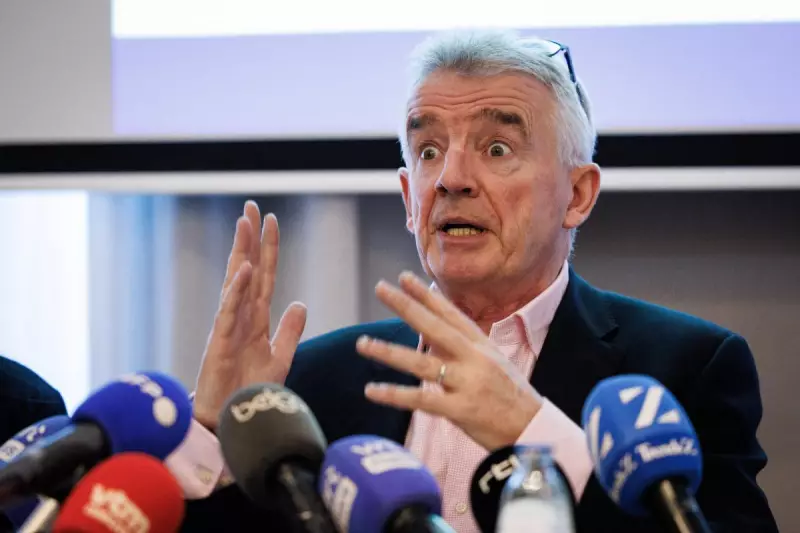
The chief executive of Ryanair, Michael O'Leary, could be in line for an extraordinary cash windfall of up to £1.7 billion should tech billionaire Elon Musk act upon his recent threats to purchase the Irish low-cost carrier. This potential bonanza follows a public spat between the two high-profile businessmen that has captured media attention.
A Stake Worth Billions
Corporate filings reveal that Michael O'Leary, who has led Ryanair for over three decades, has accumulated the sixth-largest shareholding in the company. He currently holds more than 40 million shares, with a combined value of approximately £1 billion based on current market prices.
Furthermore, the outspoken Irish executive is on track to secure an additional 10 million shares through a long-term performance-based bonus scheme. Meeting these conditions would grant him another £150 million in equity, calculated using today's share price and the predetermined option price for the award.
The Musk Premium Factor
Elon Musk, whose net worth exceeds £500 billion, has a well-documented history of making acquisition threats and then following through with substantial offers. His most notable purchase was the hostile takeover of social media platform Twitter in 2022, which he completed at a 38 percent premium to the company's share price prior to his bid.
Should Musk apply a similar premium in a potential offer for Ryanair, it would compel Michael O'Leary to sell his substantial stake. This scenario would result in the Ryanair boss receiving a staggering payout of around £1.7 billion, creating one of the largest executive windfalls in aviation history.
Regulatory Hurdles for a Takeover
However, Elon Musk's vision of acquiring the Dublin-headquartered airline faces significant legal and regulatory obstacles that could prove more challenging than his Twitter acquisition.
As Ryanair is based within the European Union, it operates under strict EU aviation regulations. These rules mandate that airlines must obtain operating licences from member state authorities and be majority-owned and controlled by EU nationals, with a requirement for at least 50 percent EU ownership.
Despite holding South African, Canadian, and American citizenships, Elon Musk possesses no citizenship from any of the 27 EU member states. Consequently, he cannot own a controlling stake in an EU-based airline without jeopardising its operating licence and legal status.
This regulatory framework means Musk could only build up a minority stake in Ryanair. To realistically pursue taking the airline private, he would need to form a consortium with EU-based investors who could provide the necessary majority ownership and control required by European aviation law.
The Origins of the Spat
The unlikely confrontation between these two billionaires began over the weekend on social media platform X, formerly known as Twitter. The dispute centred on the subject of in-flight wifi, after the official Ryanair account quoted a Musk post asking: "What is a propaganda you're not falling for??"
Ryanair responded humorously with: "Wi-Fi on planes", referencing Michael O'Leary's longstanding position that providing internet connectivity on aircraft isn't cost-effective, particularly for short-haul flights where the additional weight and expense would outweigh benefits.
In the days that followed, both men exchanged insults, with each calling the other an "idiot", while the Tesla chief escalated the rhetoric with particularly colourful language. The exchange has highlighted contrasting approaches to technology implementation in aviation.
Broader Geopolitical Context
Michael O'Leary has since framed the disagreement within wider geopolitical tensions, calling for "Europe to stand up to the US" amid growing concerns about former President Donald Trump's threats to acquire Greenland and potential tariff impositions.
The Ryanair CEO commented: "I don't think a trade war would last very long, given the amount of American businesses that are based here in Europe, and given the amount Europe imports from America and vice versa. But we have to have a more belligerent foreign policy towards certainly the Trump administration, and we would hope that eventually common sense will prevail."
This statement positions the personal dispute within broader transatlantic economic relations, suggesting that business conflicts between prominent figures can reflect larger geopolitical tensions between Europe and the United States.