
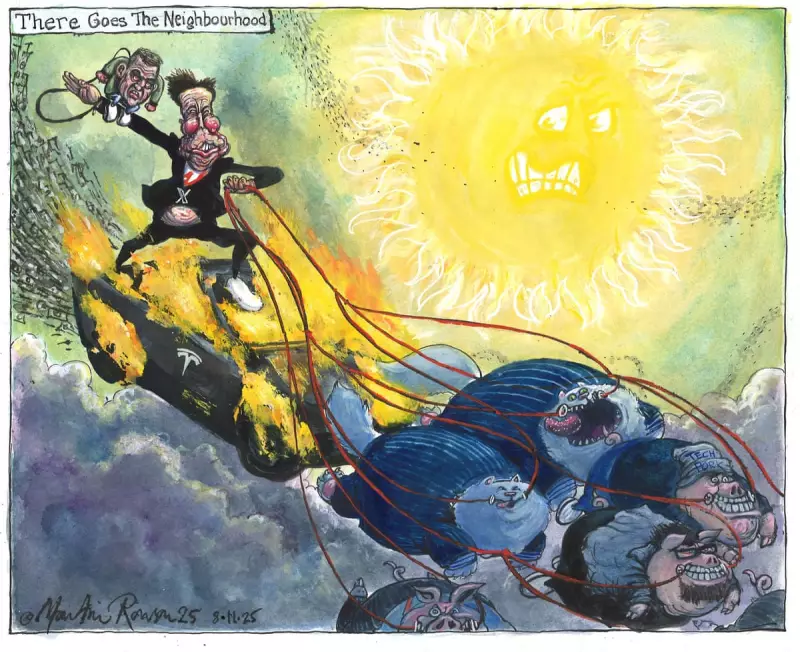
Elon Musk's staggering $56 billion pay package from Tesla has become the subject of sharp visual criticism through the work of renowned cartoonist Martin Rowson. The cartoon, published in November 2025, offers a biting commentary on what some are calling excessive corporate compensation for the world's wealthiest individuals.
The Trillionaire Pay Package Controversy
The cartoon directly addresses Musk's unprecedented compensation deal with Tesla, which amounts to approximately $56 billion. This figure represents one of the largest executive pay packages in corporate history, drawing both support and criticism from investors and the public alike. Rowson's artwork visually interprets the scale of this compensation, placing it in the context of Musk's existing vast wealth.
Martin Rowson, known for his political and social commentary through illustration, uses his distinctive style to question the governance behind such massive pay awards. The timing coincides with renewed shareholder debates about appropriate compensation levels for corporate leaders, particularly those who already possess significant personal wealth.
Corporate Governance Under Scrutiny
The visual satire raises important questions about board oversight and shareholder approval processes for executive compensation. Tesla's pay package for Musk had previously faced legal challenges, with a Delaware judge voiding the original award before it was put to shareholders for a fresh vote.
Rowson's cartoon joins a growing chorus of criticism regarding the concentration of wealth among corporate leaders. The artwork suggests a disconnect between executive rewards and broader economic realities facing ordinary workers and shareholders. This perspective resonates with ongoing debates about income inequality and corporate responsibility.
Broader Implications for Executive Pay
The Musk compensation case sets potential precedents for how other companies might structure pay packages for their top executives. The cartoon serves as a cultural barometer, reflecting public sentiment toward what some perceive as excessive rewards for corporate leadership.
Rowson's work continues a long tradition of using political cartooning to critique power structures and wealth concentration. By focusing on one of the world's most prominent business figures, the cartoon gains immediate relevance and sparks conversation about appropriate limits, if any, on executive compensation in publicly traded companies.
The publication date of November 2025 places this commentary within contemporary discussions about corporate governance reform and shareholder rights. As companies face increasing scrutiny over their compensation practices, visual commentaries like Rowson's play a crucial role in shaping public perception and debate.




