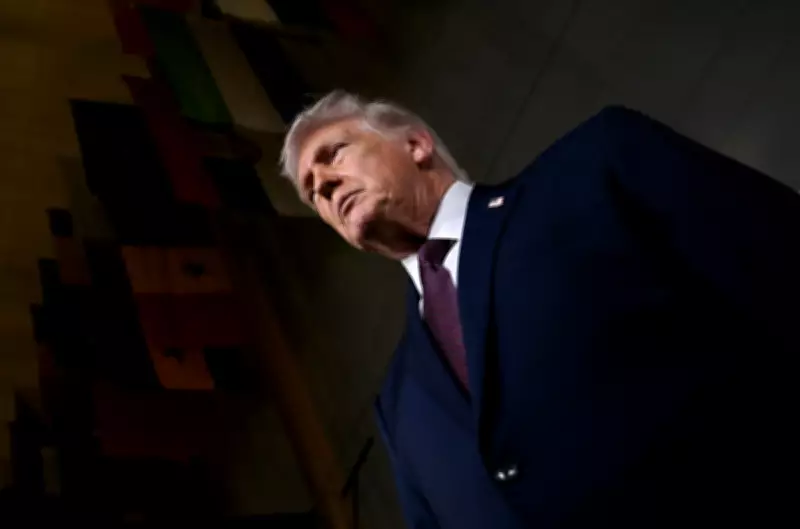
Donald Trump attended the premiere of a documentary about Melania Trump at the Kennedy Center in Washington DC on 29 January, an event that highlighted the ongoing ties between the president and corporate elites. This comes amid a backdrop of escalating tensions over immigration policies and law enforcement actions that are pushing US businesses into a difficult position.
Growing Pressure on CEOs to Respond
During Trump's first term, corporate leaders were often willing to publicly distance themselves from the administration when disagreements arose. However, in his second term, a stark change has emerged. Top CEOs have largely remained silent despite policies that undermine free trade, restrict immigration vital to many industries, and attack institutions like the Federal Reserve.
The administration's handling of immigration raids in Minnesota, particularly the killing of Alex Pretti, a 37-year-old protester, on 24 January, has intensified this corporate reticence. In response, a group of 60 CEOs from Minnesota-based companies, including Target, Best Buy, 3M, and General Mills, issued a joint statement calling for "immediate de-escalation of tension" and urging law enforcement to "work together to find real solutions."
Backlash Against Corporate Statements
The statement, which also referenced the death of Renee Good, an unarmed woman killed by federal agents in Minneapolis, faced significant criticism. Many pointed out that it failed to mention Pretti or Good by name, leading to accusations of being too soft. So far in 2026, at least eight people have died either at the hands of federal agents or while in ICE custody, amplifying public outrage.
Separately, Michael Fiddelke, the incoming CEO of Target, based in Minneapolis, released a statement that avoided naming individuals or criticising law enforcement directly. He emphasised the impact on the community, stating, "What's happening affects us not just as a company, but as people, as neighbors, friends and family members within Target."
Corporate Leaders in a Bind
The pressure on CEOs to address these issues is mounting, yet many have struggled to find an appropriate response. For instance, Apple CEO Tim Cook, who attended a VIP screening of the Melania Trump documentary at the White House, expressed being "heartbroken by the events in Minneapolis" in an internal message to employees, advocating for "de-escalation." This move reportedly angered Apple workers, highlighting the internal conflicts companies face.
According to an analysis by the Wall Street Journal, "de-escalation" has become a common, safe term for CEOs navigating this fraught landscape. Meanwhile, protesters are organising strikes and business boycotts, adding to the corporate dilemma.
Historical Context and Shifting Dynamics
Traditionally, American corporations aimed to stay neutral in politics, presenting themselves as friendly to all sides. However, as political divisions have deepened over the past decade, businesses find themselves increasingly caught in the crossfire. Alison Taylor, a clinical associate professor at New York University's Stern business school, noted, "There's no good decision. That's the kind of era that we're in right now."
In recent years, corporate fears have shifted from liberal consumer backlash to conservative boycotts, and now to direct targeting by the Trump administration. Taylor explained, "The risks are really not theoretical – they're real. The administration is using a mix of public shaming and litigation. Are you going to be exempt from tariffs, or is your industry going to be subject to tariffs? There's a lot of economic levers the administration is using."
Trump's Aggressive Stance and Corporate Alliances
Trump has demonstrated a willingness to use executive powers against perceived enemies, including those deemed too "woke." Many corporate executives have sought to maintain friendly relations, as seen when tech CEOs like Jeff Bezos, Mark Zuckerberg, and Sam Altman attended his inauguration last year.
Financial settlements have also become a tool for managing relations. For example, Paramount and Disney paid millions to settle defamation lawsuits, Meta paid $25 million to Trump after deplatforming him post-January 6, and Amazon acquired the Melania Trump documentary for $30 million.
Changing Corporate Responses Over Time
The current corporate approach marks a dramatic shift from the 2010s and early 2020s, when companies aligned with liberal causes such as Black Lives Matter, LGBTQ+ rights, and climate activism. After events like the Charlottesville rally in 2017, CEOs publicly distanced themselves from Trump, and following George Floyd's murder, many made statements supporting racial justice initiatives.
However, even before Trump's reelection, conservative pushback against "woke" politics began to gain traction, leading to boycotts against companies like Bud Light and Target. Diversity teams formed post-Floyd were quietly disbanded, and Trump's return to power has introduced a new level of corporate fear.
Legal and Institutional Risks
The calculus for speaking out is complex, involving not just consumer and employee backlash but also government retaliation. Elizabeth Doty, executive director of Third Side Strategies, highlighted that key institutions like due process and rule of law are at stake. She said, "The bigger choice right now is, are we going to be an economy based on loyalties and allegiances, or [one] based on institutions?"
Recent actions underscore this tension. Trump filed a lawsuit against JPMorgan and its CEO Jamie Dimon for "debanking" him after the Capitol insurrection, shortly after Dimon defended Federal Reserve chair Jerome Powell. This move signals the administration's readiness to punish dissent.
As protests continue and public anger grows, corporate America faces a critical juncture. The silence of CEOs may no longer be sustainable, but speaking out carries significant risks in an era defined by political polarization and governmental pressure.