
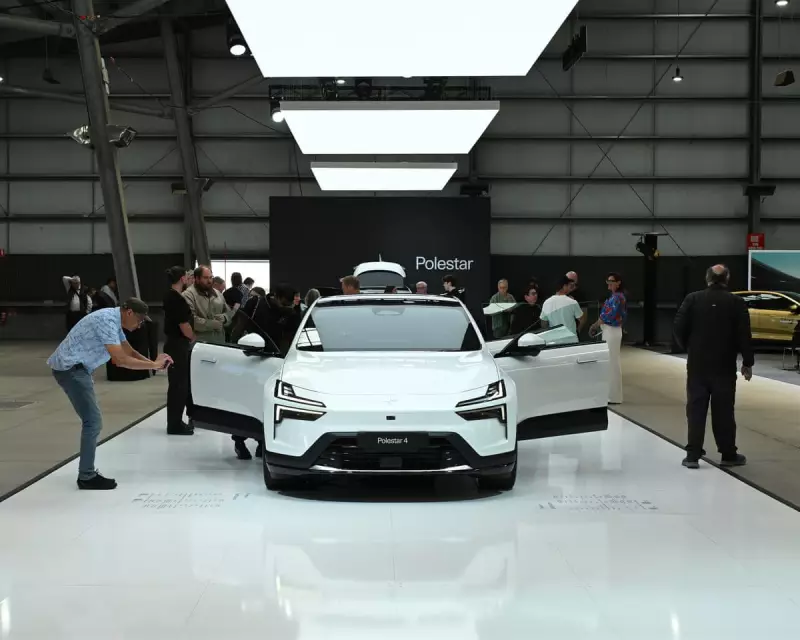
The European Union's landmark decision to ban the sale of new petrol and diesel cars from 2035 has sent ripples through the global automotive industry, presenting a particularly complex challenge for two iconic Swedish brands now under Chinese ownership: Volvo Cars and its electric performance spin-off, Polestar.
A Strategic Pivot Under Chinese Ownership
Both Volvo Cars and Polestar are owned by China's Geely, a relationship that has fuelled investment and ambitious electrification plans. Volvo Cars has publicly committed to becoming a fully electric car company by 2030, a target that aligns with, and even precedes, the EU's 2035 deadline. Similarly, Polestar was launched as a purely electric brand from its inception.
However, this transition is fraught with new geopolitical and economic complications. The brands' deep manufacturing and supply chain ties to China, while a strength for cost and scale, have become a potential liability in the current trade climate. The European Commission is investigating Chinese state subsidies for electric vehicle manufacturers, which could lead to the imposition of significant tariffs on EVs imported from China into the EU.
The Tariff Threat and Production Realities
This probe places Volvo and Polestar in a precarious position. A substantial portion of Polestar's vehicles sold in Europe are built in China. While Volvo Cars also manufactures some models in Europe, including in Sweden and Belgium, it still relies on Chinese production for key electric models like the popular EX30 and EX90 SUVs.
The potential for new tariffs poses a direct threat to their competitiveness and pricing in the crucial European market. In response, both companies are accelerating plans to establish production within Europe. Volvo Cars is expanding its factory in Ghent, Belgium, while Polestar has announced it will begin manufacturing its Polestar 3 and Polestar 4 models at a shared Geely facility in South Carolina, USA, primarily for the North American market, but this also diversifies its global production footprint away from China.
Germany's transport minister, Volker Wissing, has been a vocal critic of the EU's 2035 ban, arguing it discriminates against vehicles powered by synthetic e-fuels. This internal EU debate adds another layer of uncertainty for all carmakers, including Volvo and Polestar, who are betting billions on a pure-electric future.
Navigating a New Automotive Landscape
The journey ahead for these Swedish marques is emblematic of the broader upheaval in the auto sector. They must successfully execute a complete technological transformation to an all-electric lineup while simultaneously navigating shifting international trade policies and supply chains.
Their Chinese ownership provides access to capital and advanced battery technology but also exposes them to geopolitical friction. The success of their European strategy now hinges on a delicate balance: leveraging Chinese industrial prowess while localising production to avoid tariffs and maintain brand appeal in their historic home market.
The EU's 2035 ban is the destination, but the road there is proving to be far from straightforward. For Volvo Cars and Polestar, the race is not just about developing compelling electric vehicles, but also about strategically repositioning their entire global manufacturing and logistics network in a world of increasing economic nationalism.




