
Two major London-listed defence companies shed fresh light on the sector’s performance during the current bout of geopolitical turmoil on Wednesday, offering insight into the reach of the wartime economy into the City.
Babcock International
FTSE 100 constituent Babcock International made it onto the top-tier share index’s leaderboard after it unveiled plans to return £200bn to investors via a share buyback. It announced the payday alongside a 10 per cent rise in annual revenue to £5.3bn. Its nuclear unit, which supports the UK’s fleet of permanently at-sea submarines, increased revenue by 14 per cent to £2.1bn. Aviation revenue rose by just over a third to £431m.
Marine Division Challenges
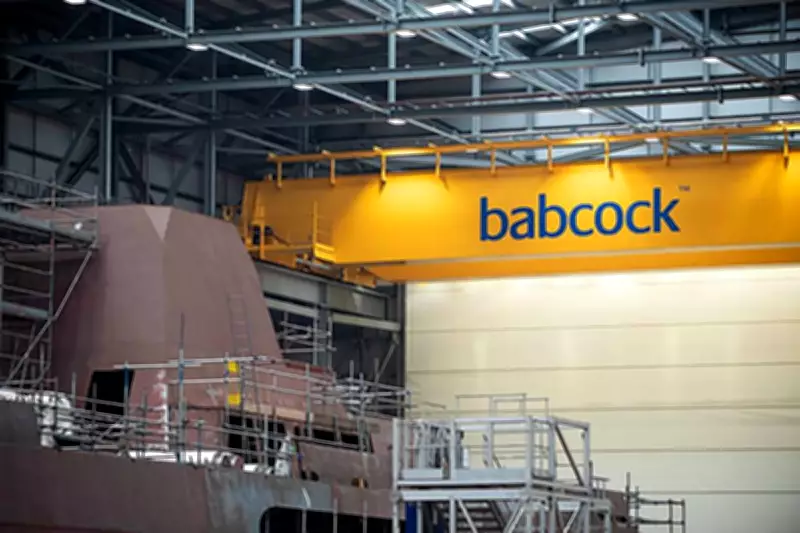
Conditions in its marine division were choppier. There was a one-off charge of over £140m relating to Babcock’s contract with the Royal Navy to supply five Type 31 frigates. Higher-than-expected costs due to design changes and what it called “out-of-sequence build activity” meant work was “being performed in the later stages of completion and therefore is more complex and more costly.”
Two of the ships are nearing completion, with a third and fourth still in early stages of construction. The frigates, costing around £250m each, will operate from Portsmouth and are intended to offer the Navy a flexible response to global crises. The impact of the design changes will be smaller on vessels in the earlier stages of production. The 100-crew ships are planned to be on active service in the “early 2030s” according to the Navy. The charge meant Babcock’s overall headline profit fell 20 per cent year-on-year to £293m.
Avon Technologies
Avon Technologies, which makes battlefield protection kit for soldiers, reported a rise of nearly a third in first-half orders. It pointed out that the number of “active conflict zones” was “at its highest level since the end of World War II”. Jos Sclater, chief executive officer, said: “Against a rapidly changing geopolitical backdrop, demand across our installed base is increasing and our markets continue to grow. We have strong brands and sales channels, long‑term growth visibility and an exciting development pipeline to support expansion internationally and into adjacent markets.”
Financial Performance
Orders received in the six months to the end of March rose almost 32 per cent to $117.9m. Its order book was up over 11% to $219.9m. Revenue rose 6.8 per cent to $160.8m. Operating profit hit $16.5m, up from $6.2m. Profit before tax rose to $13.5m from $6.2m. The Wiltshire-based firm dates back to a Victorian cloth mill. It went on to pioneer rubber diving suits used by the military and now has multi-million dollar contracts with the US Department of War, NATO and the Ministry of Defence. Its market value is around £450m.
Acquisition Strategy
Avon also said on Wednesday that it remained on the lookout for potential acquisitions. While it conceded “that valuations across parts of the defence sector are elevated”, it pledged to “be selective, focusing on businesses with strong strategic fit, scalable products and clear margin and execution upside”, adding: “Our long‑term ambition is to compound value by acquiring businesses in our core markets or close adjacencies and improving them.” Avon’s shares fell 9 per cent on Wednesday to 1,462p.




