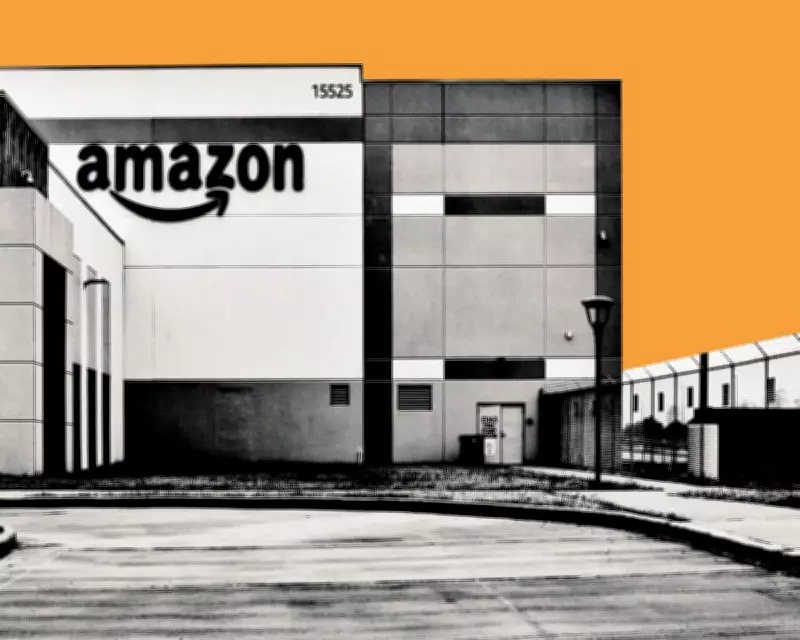
Amazon Faces Price-Fixing Allegations in California Antitrust Case
Newly unsealed court documents reveal explosive allegations against Amazon, with California authorities claiming the tech giant engaged in systematic price-fixing tactics. Hundreds of previously redacted records, including internal emails, deposition testimony, and confidential corporate presentations, show how Amazon allegedly pressured independent sellers to raise their prices on competitor websites.
The Core Allegations
California Attorney General Rob Bonta obtained these documents as part of a civil case launched in 2022 accusing Amazon of large-scale price-fixing. The evidence, filed in San Francisco County Superior Court but not yet publicly available, was reviewed by The Guardian and shows previously blacked-out details now exposed.
According to the allegations, Amazon used automated tools to track how independent vendors priced their goods on competitor sites like Walmart and Target. The company then allegedly leveraged its dominant e-commerce position to ensure those prices didn't fall below Amazon's prices, even though Amazon often charges vendors significantly higher fees.
Specific Examples Emerge
In one particularly striking example, clothing company owner Mayer Handler testified that Amazon suppressed his tiger-themed toddler pajama set from its "Buy Box" feature because it was selling for $19.99 on Amazon—just one cent higher than the Walmart price. The Buy Box is the critical panel where customers see "Add to cart" and "Buy Now" buttons, and losing access to it can devastate sales.
Handler testified that after this suppression, his company "changed pricing on Walmart to match or exceed Amazon's price" or altered product codes to evade Amazon's price tracking system. He criticized Amazon for tracking prices across the internet and "shadow" blocking products, tactics he said deprive consumers of lower prices.
Financial Pressure on Sellers
Another deposition reveals the financial reality facing sellers. Terry Esbenshade, a Pennsylvania garden store supplier, testified that whenever his products lost Amazon's Buy Box due to lower prices elsewhere, his Amazon sales would plummet by approximately 80%. This forced him to raise prices with other retailers.
Esbenshade described discovering one of his better-selling patio tables had "become suppressed" on Amazon. After an Amazon representative suggested checking Wayfair, where the table was priced lower, Esbenshade established a new minimum advertised price on Wayfair to exceed Amazon's price. "Voila, my product came back" on Amazon, he testified.
Internal Communications Revealed
The newly unredacted exhibits allegedly show Amazon employees proactively sought to undermine market competition. In one example, an Amazon engineer described using Buy Box suppression and an internal program called SC-FOD to discourage vendors from working with competitor Temu.
Another internal email from August 2023 describes how Amazon's Buy Box suppressions caused an Indiana-based home goods seller to regularly raise prices on other sites. "When this happens, they claim they search for the lower price, and when they find it, they raise it to match the price on Amazon," the employee wrote.
Amazon's Response and Market Position
Amazon has called the lawsuit's claims "entirely false and misguided." The company stated, "Amazon is consistently identified as America's lowest-priced online retailer, and it is ironic that the attorney general seeks to have us feature higher prices in ways that would harm consumers and competition."
The tech giant argues its practices promote competition and ensure customers see low, competitive prices. "Just like any store owner who wouldn't want to promote a bad deal to their customers, we don't highlight or promote offers that are not competitively priced," Amazon said.
Amazon's market dominance is substantial. By the end of 2022, Amazon accounted for nearly half of US e-commerce retail spending, compared with less than 8% for Walmart. In the third quarter of 2025, Amazon captured 56% of online retail spending versus Walmart's 9.6%.
Legal Proceedings and Broader Context
Attorney General Bonta stated the newly unveiled evidence reinforces claims that Amazon's actions "unlawfully punishes sellers whose products are sold at lower prices by other online retailers." He emphasized, "Especially while consumers face an affordability crisis, there is no room for illegal practices that impede competition and raise prices."
The trial in California's lawsuit against Amazon is scheduled to begin on January 19, 2027. This case emerges as Amazon recently overtook Walmart to become the world's largest company by revenue, maintaining its position as America's dominant online retailer by a significant margin.
Amazon has denied attempting to shield itself from competition through agreements with independent sellers, asserting in legal filings that it doesn't seek to "insulate itself from price competition" or "entrench any position of 'dominance.'"