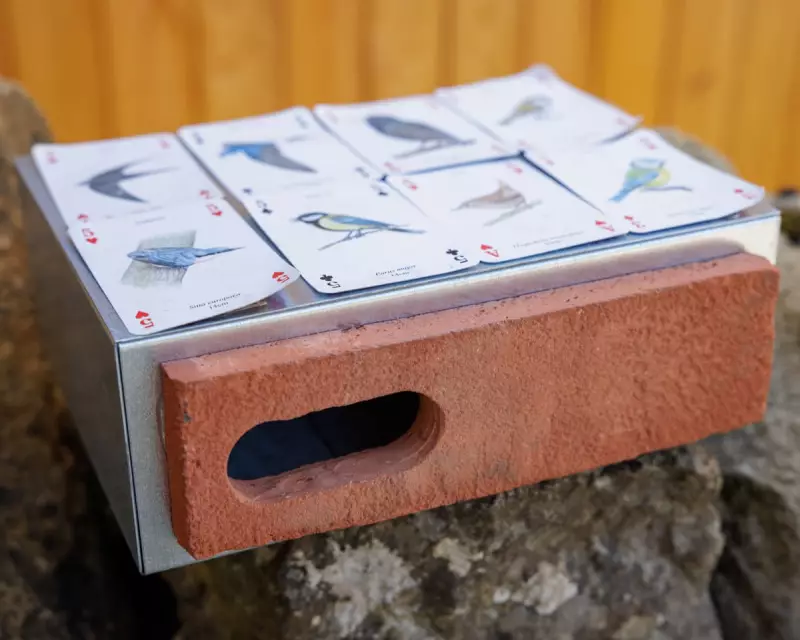
Scotland Leads UK with Mandatory Swift Brick Legislation for New Buildings
The Scottish Parliament has taken a decisive step in wildlife conservation by voting to make swift bricks mandatory in all new residential buildings across Scotland. This landmark legislation, which passed with cross-party support, represents a significant victory for biodiversity and contrasts sharply with approaches elsewhere in the United Kingdom.
Legislative Details and Political Support
The amendment, introduced by Scottish Green MSP Mark Ruskell, requires developers to install swift bricks in all new dwellings "where reasonably practical and appropriate." This legislative move received backing from the Scottish government and MSPs across the political spectrum during Holyrood debates.
Minister Gillian Martin emphasised the urgency of this measure during parliamentary discussions, stating: "This iconic species was once a very common sight across Scotland, particularly in urban areas, but they are under threat, declining by 60% since 1995, which has led to them being on the red list of birds of conservation concern."
Contrast with Rest of the United Kingdom
Scotland's swift action stands in stark contrast to the situation in England, where a four-year campaign for mandatory swift bricks has resulted only in non-binding planning guidance. The Labour government rejected an amendment last year that would have made the £35 hollow bricks compulsory, instead incorporating them into planning guidance without legal obligation.
Mark Ruskell MSP commented on this disparity: "It's been frustrating watching Westminster take years to consider something so simple yet so important. The conversation on this has been good at Holyrood and while there were some challenges to getting this in place the government listened and we found a way through pretty quickly."
Campaigner Reactions and Scientific Evidence
Hannah Bourne-Taylor, who has campaigned nationally for swift bricks for four years, celebrated the Scottish decision: "Scotland has stood united for birds. What a landmark victory! To save Britain's swifts, with fewer than 40,000 pairs remaining and the increasing loss of natural nesting habitat thanks to countless renovations and the massive government-funded insulation schemes that have no mitigation, England, Wales and Northern Ireland must follow Scotland's lead."
Research from the University of Sheffield has highlighted the limitations of non-mandatory approaches. Their study found that 75% of bird and bat boxes required as planning conditions for new housing developments were never actually installed when construction was completed.
Implementation Timeline and Wider Benefits
The Scottish legislation will be implemented following a 12-month consultation period to establish appropriate building standards for the bricks. These specially designed bricks provide nesting spaces not only for swifts but also for other endangered cavity-nesting birds including house sparrows, starlings, and house martins.
Lord Zac Goldsmith, who has tabled amendments in the House of Lords for mandatory swift bricks in England, noted: "It's only taken Scotland one month to decide to mandate swift bricks, proving how easy it would be for England to finally mandate too, after four years of asking, and upgrade the non-statutory guidance to ensure all new builds have swift bricks."
International Context and Conservation Success Stories
The effectiveness of swift brick policies is demonstrated internationally. In Gibraltar, an important migratory stopover point for swifts travelling between Europe and sub-Saharan Africa, mandatory swift brick policies implemented decades ago have helped stabilise and increase swift populations.
Professor John Cortes, Gibraltar's environment minister, observed: "Scotland's decision on swift bricks is a significant step in ensuring the survival of this species, which has come to depend so much on us. On the 'Rock' we have had this policy for several decades and we have seen a declining population of swifts first stabilise and then increase."
Wider Implications for UK Construction and Biodiversity
Wildlife campaigners argue that swift bricks represent a small but essential measure for protecting bird species that have lost access to millions of traditional nesting sites in house roofs due to modern renovations and insulation schemes. The Welsh government rejected similar legislation last year, expressing concerns that developers might use swift bricks to meet biodiversity requirements without implementing other nature-positive measures.
This Scottish legislation establishes a new standard for construction industry practices across the United Kingdom, potentially influencing future policy decisions in England, Wales, and Northern Ireland as pressure mounts to follow Scotland's lead in protecting endangered bird species through practical building modifications.