After years of extensive construction and significant disruption, Melbourne's commuters are set to experience a new chapter in the city's transport history. The highly anticipated Metro Tunnel officially opens to the public this Sunday, marking a pivotal moment for Victoria's infrastructure.
A Phased 'Summer Start' for the New Rail Link
The initial launch phase, dubbed a 'summer start' by the state government, will see a soft opening for the new tunnel. For the first period, trains will only operate on weekdays between 10am and 3pm, running at 20-minute intervals. The service will connect Westall on the Cranbourne-Pakenham line with West Footscray on the Sunbury line.
On weekends, services will run from 10am to 7pm. As a 'thank you' to residents for their patience during the lengthy construction, weekend public transport travel will be free for the first two months of operation.
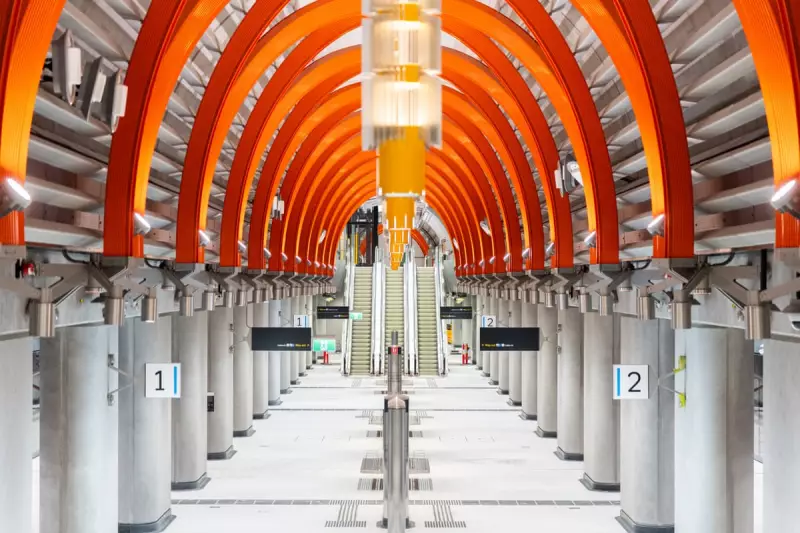
The project features five brand-new underground stations: Arden in North Melbourne, Parkville (providing first-time heavy rail access to the medical precinct), State Library, Town Hall, and Anzac on St Kilda Road. The Town Hall station is notably distinguished by its striking red beams above the platforms.
The Full System Overhaul and Future Benefits
The true transformation is scheduled for Sunday, 1st February, in an event termed the 'big switch'. On this date, the Cranbourne-Pakenham and Sunbury lines will permanently move out of the City Loop and run exclusively through the Metro Tunnel. This change will free up significant capacity in the existing City Loop.
Peak service frequency will dramatically increase to trains every three to four minutes, effectively creating a 'turn up and go' system for these lines. The government has also announced an additional 1,000 weekly services across the metropolitan network as part of a comprehensive timetable change accompanying the tunnel's full integration.
Premier Jacinta Allan acknowledged the scale of the change, stating, "It is a massive change. It will cause flow and effects to the entire system." Commuters should expect transferring between lines and connecting to trams to become a more common part of daily travel.
A Costly Legacy and Future Projects
The Metro Tunnel's journey to completion has been long and expensive. First proposed in 2008, the project was shelved and revived multiple times amid political disputes. After the Andrews government won the 2014 election, the state proceeded without federal funding from the then-Coalition government.
Originally budgeted at $11bn with a 2024 completion date, the project was beset by challenges. Construction was halted when contractors demanded an additional $3bn for cost overruns. The final cost to the state is confirmed at $13.48bn, though the total project cost remains undisclosed.
This infrastructure push continues with the West Gate Tunnel road project, due to open in December after its own series of delays and cost blowouts, which have seen its price tag reach $10.2bn for the state.
Despite the mounting state debt, forecast to hit $194bn by 2028-29, the government is betting that commuters will focus on the benefits. The Metro Tunnel is also designed to serve as the backbone for future expansions, including the long-awaited Melbourne Airport rail link and the ambitious Suburban Rail Loop.