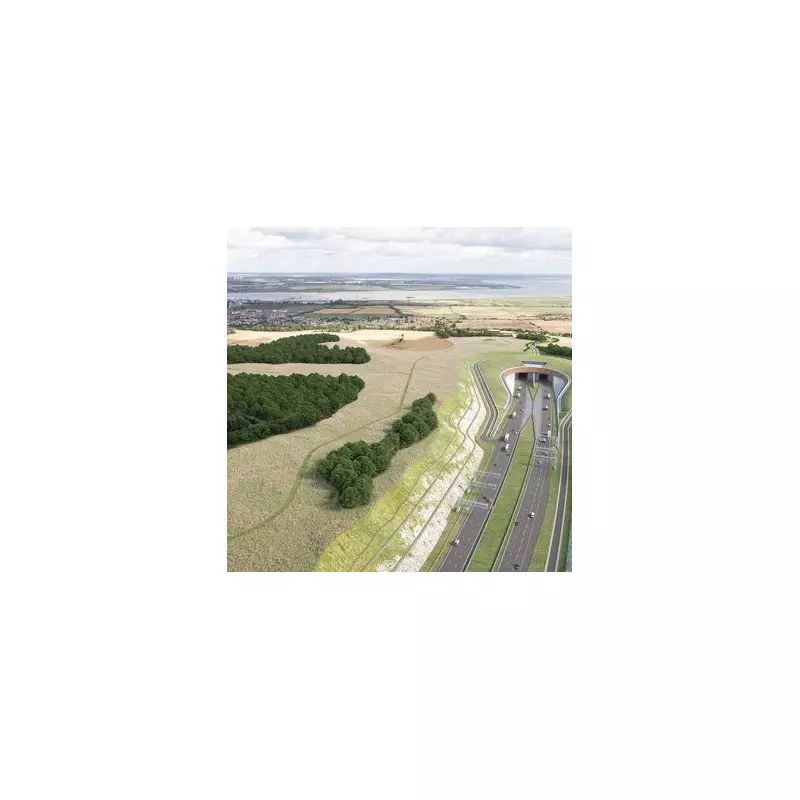
In a significant boost to Britain's infrastructure plans, Chancellor Rachel Reeves has confirmed substantial new funding for the long-awaited Lower Thames Crossing project, setting the stage for construction to begin in 2026.
Budget Commitment Paves Way for Construction
The Chancellor of the Exchequer has committed an additional £891 million to the ambitious Lower Thames Crossing scheme as part of the recent Budget announcement. This financial injection comes just eight months after Transport Secretary Heidi Alexander gave final approval to the project's plans, moving the initiative significantly closer to reality.
Rachel Reeves emphasised the project's importance during her Budget speech, stating: "As we allocate investment for the infrastructure that is the backbone of economic growth across our country, today I will commit investment for the Lower Thames Crossing."
Project Details and Timeline
The Lower Thames Crossing is on track to open in the early 2030s, according to official projections. The 14.5-mile motorway-style road will connect the A2 and M2 in Kent to the A13 and M25 in Essex, featuring a remarkable 2.6-mile tunnel beneath the River Thames that will become the UK's longest road tunnel.
The newly confirmed funding will support publicly-funded works between 2026 and 2029, following a staged approach to development. After this initial phase, private sector partners will take forward the construction and long-term operation of the crossing.
Environmental Innovation and Economic Benefits
National Highways describes the project as Britain's greenest road, with extensive measures to minimise environmental impact. 80% of the route between Gravesend in Kent and Tilbury in Essex will be concealed within tunnels or behind carefully landscaped embankments designed to blend seamlessly with the surrounding countryside.
The project includes several innovative environmental features:
- Seven new green bridges, including one set to be the widest in Europe
- Pre-fabricated bridges to reduce disruption for local drivers
- Low-carbon footbridges constructed without concrete
- Streamlined gantries made without steel
Matt Palmer, the Crossing's executive director at National Highways, welcomed the funding confirmation, previously describing it as "one of the UK's most important infrastructure projects."
Palmer highlighted that "the project will be built by local people and businesses, and leave a legacy of jobs and skills across the region. It's the first of a new generation of projects that will tackle congestion and drive economic growth, whilst redrawing the blueprint for low-carbon construction."
Transport and Economic Impact
Once completed, the Lower Thames Crossing is expected to significantly reduce congestion at the frequently overloaded Dartford Crossing. The new route will also improve connectivity between the south-east, the Midlands, and the North, supporting regional economic development and creating more efficient freight routes.
The project represents a major step in the UK's infrastructure development, combining ambitious engineering with environmental responsibility while addressing long-standing transport bottlenecks in one of the country's busiest regions.