Deadly Hong Kong Inferno Claims 36 Lives
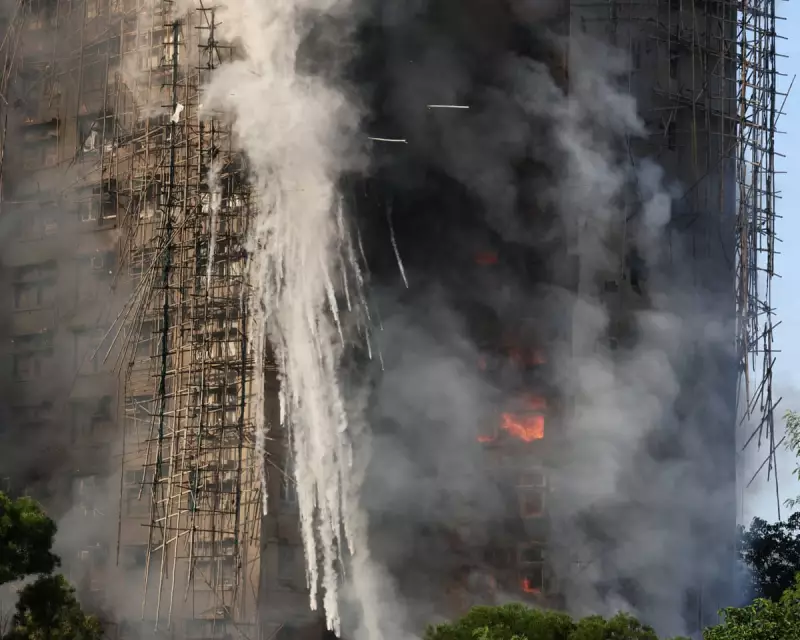
A catastrophic fire has torn through a residential complex in Hong Kong, leaving at least 36 people dead and hundreds more reported missing in one of the city's worst fire disasters in recent memory.
The blaze erupted on Wednesday at the Wang Fuk Court complex in Tai Po, located within Hong Kong's northern New Territories. The devastating incident has raised serious questions about building safety standards across the territory.
Bamboo Scaffolding Suspected in Rapid Fire Spread
Investigators are examining whether traditional bamboo scaffolding and green construction mesh surrounding the buildings contributed to the fire's rapid escalation. The intricate bamboo latticework, while culturally significant, may have acted as a conduit for flames to travel between floors and across building facades.
The affected complex consists of eight 31-storey towers containing approximately 2,000 individual flats that collectively house around 4,800 residents. The sheer scale of the development meant the fire had potential to affect thousands of people.
While the exact cause remains undetermined, fire safety experts have pointed to the combustible nature of bamboo construction materials as a likely factor in the tragedy's severity.
Traditional Practice Meets Modern Safety Concerns
Hong Kong represents one of the final global strongholds for bamboo construction, with skilled workers continuing this ancient building tradition. The distinctive bamboo scaffolds, carefully bound together with zip ties and draped around modern skyscrapers, form an iconic part of the city's architectural landscape.
The material offers significant advantages including lighter weight and lower cost compared to metal alternatives. The craft itself dates back millennia, with historical records showing similar techniques depicted in Han dynasty scroll paintings from 2,000 years ago.
However, this tragic event has intensified scrutiny of bamboo's safety credentials. Official statistics reveal that industrial accidents involving bamboo scaffolds have claimed 23 lives since 2018.
Government Phase-Out Already Underway
In a prescient move, the Hong Kong government announced in March plans to gradually replace bamboo with fire-resistant steel scaffolding due to mounting safety concerns. The transition strategy mandated that 50% of public construction projects must utilise metal frames.
Beyond improved fire resistance, metal scaffolding offers superior durability against Hong Kong's characteristically humid climate, which can weaken bamboo structures over time.
Nevertheless, the proposed changes face opposition from traditional craftspeople. The Hong Kong and Kowloon Bamboo Scaffolding Workers Union has previously expressed concerns about preserving their livelihoods, arguing that their specialised skills in assembling irregular bamboo poles into secure structures represent an irreplaceable art form.
As rescue operations continue and authorities work to identify all victims, this tragedy has ignited urgent conversations about balancing cultural heritage with modern safety requirements in one of the world's most densely populated cities.