
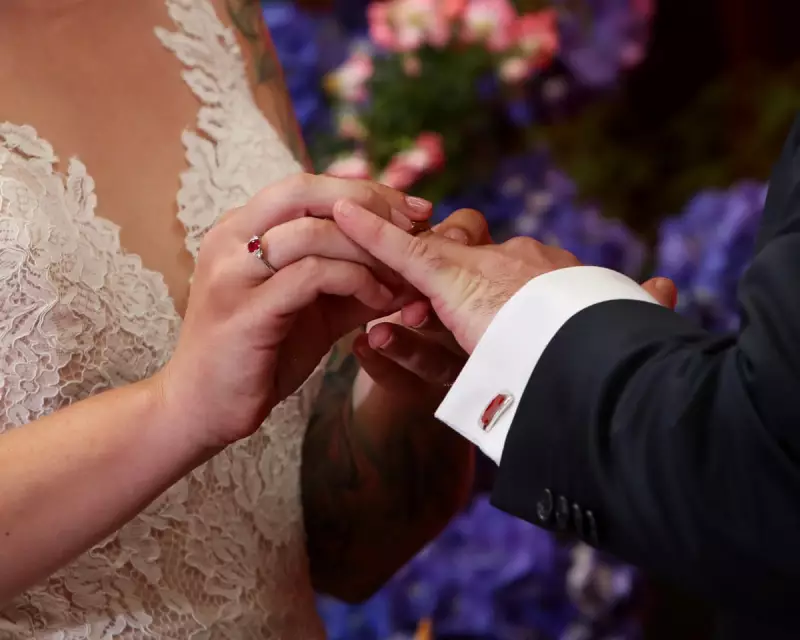
The Changing Landscape of Marriage in Britain
Recent official statistics reveal that marriages in England and Wales have decreased by nearly 9% following a temporary post-pandemic surge. Meanwhile, civil partnerships have seen a corresponding increase of almost the same percentage, indicating a significant shift in how British couples are formalising their relationships.
This trend isn't confined to British shores either, with similar patterns emerging in the United States. The declining interest in traditional marriage has even prompted the Vatican to release a 40-page doctrinal note defending the institution, titled 'Una Caro (One Flesh): In Praise of Monogamy'.
The Growing Gender Divide in Marriage Aspirations
A University of Michigan survey highlights a striking generational and gender divide in attitudes toward marriage. The research found that only 61% of high-school girls envision themselves marrying one day, compared to 74% of boys the same age.
This disparity in marriage expectations has spawned a new genre of opinion pieces where right-wing men lament women's reluctance to date them. As author Naoise Dolan wryly observes, these self-proclaimed libertarians seem curiously resistant to accepting the 'free market' dynamics of modern dating.
When examining what might be deterring young women from marriage, some male expectations provide telling clues. Seventy-nine-year-old baronet Benjamin Slade's criteria for a wife include being 'at least 20 years younger', a 'good breeder', 'taller than 5ft 6in', not a Scorpio, and importantly, someone who doesn't 'read the Guardian newspaper'.
Beyond Marriage: Situationships and Structural Objections
The marriage decline begins earlier in the relationship pipeline, with fewer people entering the committed relationships that typically precede wedlock. YouGov data indicates that half of 18- to 34-year-old Americans have been in a 'situationship' - a romantic arrangement somewhere between friendship and an official couple, where often only one party considers it a work in progress.
More fundamentally, many women object to marriage as an institution. Dolan articulates this perspective, viewing marriage as a form of state authority and coercion that she refuses to endorse through participation. Governments use tax breaks, hospital visitation rights and other legal and financial incentives to privilege marriage over alternative relationship structures like non-monogamy or communal living.
Meanwhile, economic pressures are reshaping how marriage fits into adult life. A New York Times podcast recently explored why 'People Still Want to Marry. Why Aren't They?' One explanation positions marriage as a 'capstone' rather than a starting point for adulthood. In an era of precarious employment and unaffordable housing, couples feel pressured to establish financial security, stable careers and long-term living arrangements before considering marriage.
For some, marriage remains a necessary precursor to having children. However, many young women observed where caring responsibilities fell during the COVID-19 pandemic and have concluded that the burdens placed on them as parents would be impossible to manage.
The optimistic interpretation, as Dolan suggests, is that rather than being excluded from marriage, women are no longer being compelled into it. In this emerging reality, the only people getting married will be those who genuinely want to - which sounds like a happily ever after worth celebrating.




