
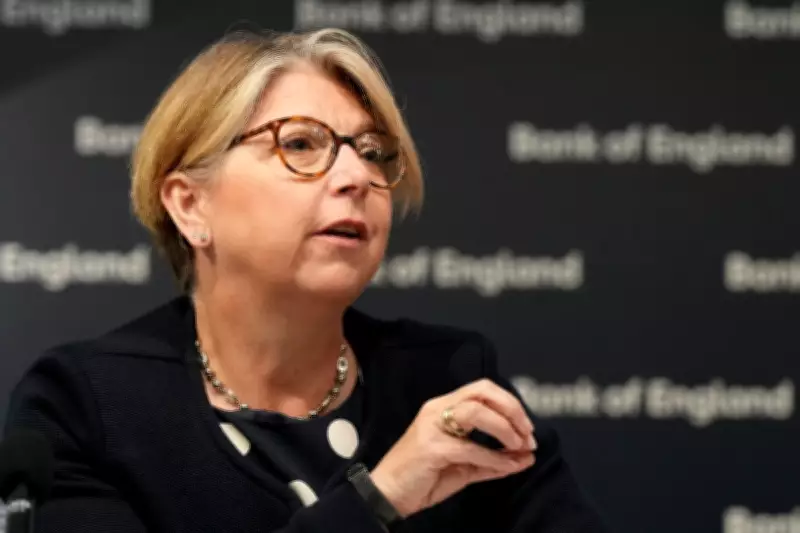
The Bank of England's senior fintech policy lead has issued a stark warning about the United Kingdom's position in the global payments landscape, cautioning that the nation risks being overtaken by international competitors if it fails to accelerate innovation.
UK's Leadership Position Under Threat
Sarah Breeden, who serves as both a monetary policy committee member and deputy governor for financial stability at the central bank, delivered a comprehensive assessment of the UK's payments infrastructure during her keynote address at City and Financial Global's Payments Regulation and Innovation Summit on Monday.
While acknowledging the UK's pioneering role in establishing 24-hour instant bank transfers back in 2008, Breeden emphasised that the innovation frontier did not stop at that point. "Other countries now offer interbank retail payment systems with features not yet available in the UK," she stated bluntly.
International Competitors Forging Ahead
The deputy governor specifically highlighted Sweden's Swish system and Brazil's Pix platform as examples where international competitors have surged ahead of British offerings. These systems have achieved widespread adoption by providing seamless mobile payment solutions and direct retailer integration that currently surpass what's available to UK consumers and businesses.
"The innovation frontier did not stop in 2008," Breeden reiterated, underscoring the urgency for the UK to develop next-generation payment infrastructure that can compete on the global stage.
Vision for a Multi-Money Future
Breeden outlined an ambitious vision where consumers would have multiple options for digital transactions, stating that "people should be able to choose between traditional deposits, tokenized deposits, regulated, systemic stablecoins, and potentially a digital pound."
The Bank of England and Treasury are currently in what Breeden described as a "design phase" for a potential digital pound, with a joint progress report expected later this year that will provide further details about this significant initiative.
Stablecoin Policy Evolution
The deputy governor's comments come amid a notable shift in the Bank's position on stablecoins - digital assets typically pegged to traditional currencies like the pound sterling. Governor Andrew Bailey had previously expressed significant scepticism about stablecoins, telling the Treasury committee he would need "a lot of convincing" about their use case and questioning whether there was any need "to introduce a new form of money."
However, following substantial industry pressure and political lobbying - including criticism from Reform Party's Nigel Farage who branded Bailey a "dinosaur" for his views on digital assets - the Bank has substantially revised its position.
Regulatory Framework Development
In October, Bailey wrote in the Financial Times that it would be "wrong to be against stablecoins as a matter of principle," marking a significant departure from his earlier stance. This was followed by a November consultation paper that industry observers described as a "watershed" moment for UK cryptocurrency regulation.
The proposed framework includes innovative provisions such as allowing the Bank of England to provide emergency liquidity loans to stablecoin issuers facing market panic, creating a financial stability backstop designed to maintain the crucial 1:1 peg that ensures these digital assets maintain their value relative to traditional currency.
Industry Concerns and Opportunities
Ahead of the consultation, industry body Innovate Finance had issued a stern warning that overly "prescriptive" rules risked "killing" London's potential to become a global hub for stablecoins. The global stablecoin market currently exceeds $200 billion, representing a significant economic opportunity that the UK risks missing without appropriate regulatory frameworks.
Breeden's comprehensive address signals the Bank's recognition that maintaining the UK's position as a global financial centre requires embracing rather than resisting technological innovation in payments and digital currency.




