
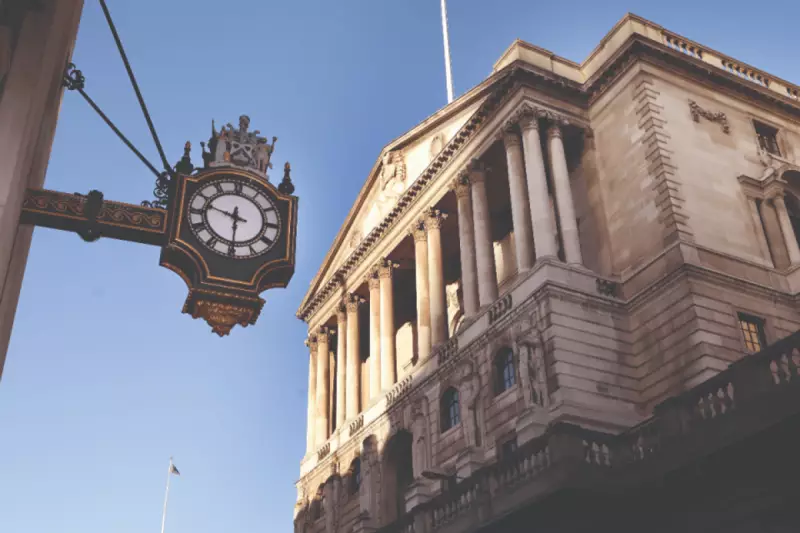
The Bank of England has issued a stark warning about escalating threats to global financial stability, even as it moved to slash key capital rules for British lenders. The central bank's Financial Policy Committee (FPC) stated that risks to financial stability have increased during 2025, pointing to a persistently uncertain global outlook.
Global Threats and AI Bubble Fears Intensify
In its latest assessment, the Bank highlighted that global risks remain elevated, driven by geopolitical tensions, the fragmentation of international trade and financial markets, and pressures on sovereign debt. It cautioned that the UK, as an open economy with a major financial centre, is particularly exposed to worldwide shocks.
The FPC also reinforced its previous concerns about a potential bubble in artificial intelligence. It found that valuations for many AI equities "remain materially stretched" and warned that deepening links between AI firms and credit markets could amplify losses and threaten stability if a major price correction occurs.
Another area of focus was the private credit sector, where the Bank identified potential weaknesses, citing the recent collapses of First Brands and Tricolor as events that had intensified scrutiny. The committee reiterated that stress in one market could easily spill over into others, a phenomenon witnessed in October when the FTSE 100 suffered steep losses amid private credit jitters.
Banking Rules Eased in Deregulation Push
Concurrently, the Bank announced a significant relaxation of capital rules for UK lenders. Following lobbying from industry body UK Finance, which argued that the sector was holding up to £54bn in extra capital, the FPC is lowering the benchmark requirement.
The key Common Equity Tier 1 (CET1) ratio—the cash cushion designed to absorb losses—will be reduced to 13 per cent from 14 per cent. This means banks must hold capital equivalent to 13% of their risk-weighted assets. The move is seen as a major step in the Treasury-backed deregulation agenda, potentially freeing up billions for banks to lend into the economy.
Industry Reaction and Resilience Focus
Karim Haji, head of financial services at KPMG, commented on the balance between resilience and growth. "UK Financial Services firms have proved resilient time and again," he said, but acknowledged that global risks persist. He welcomed the change to the CET1 benchmark as a "helpful step towards maintaining the UK’s resilience whilst also being supportive of growth."
The change aligns with calls from top banking executives, such as HSBC Bank CEO Michael Roberts, who earlier this year told lawmakers that reviewing how capital is measured was crucial to maintaining the competitiveness of UK banks, especially relative to US counterparts.
The Bank of England's twin announcements underscore a delicate balancing act: navigating a riskier world while attempting to stimulate domestic economic activity by easing regulatory pressure on its financial sector.




