A United Airlines flight was forced into an emergency landing after a mystery object shattered its cockpit windshield while cruising at 36,000 feet, an incident investigators now confirm was caused by a rogue weather balloon.
The Mid-Air Collision
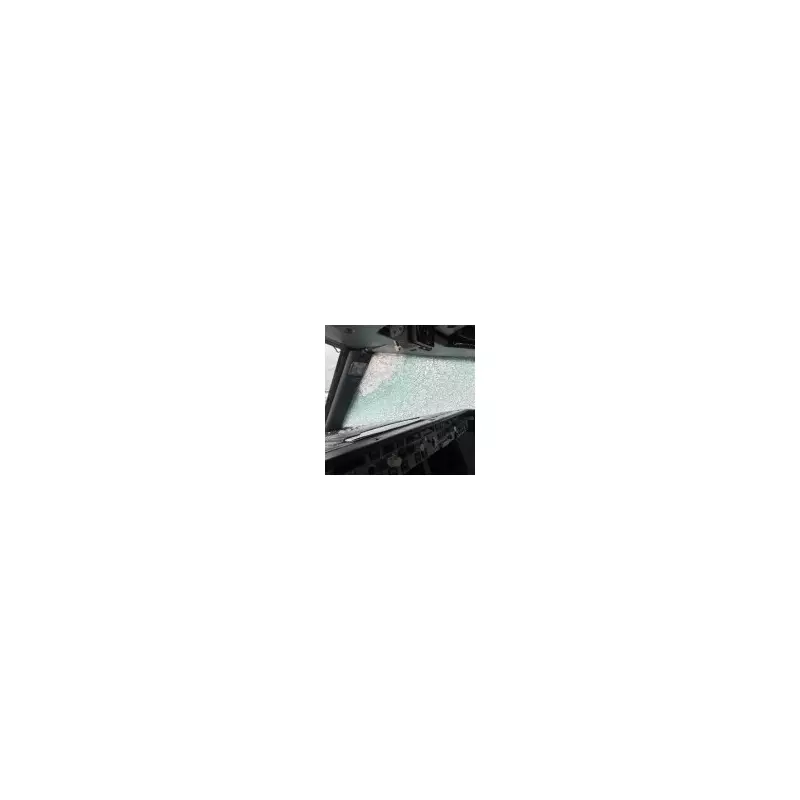
The incident involved United Flight 1093, a Boeing 737 MAX en route from Denver to Los Angeles on October 18, 2025. While flying over Utah, the aircraft collided with an unidentified object, resulting in significant damage to the windshield.
The captain reported spotting a distant object on the horizon but had no time to react before it struck with a loud bang. The impact cracked the windshield and sent shards of glass into the cockpit. The captain sustained multiple superficial cuts on his right arm, though the first officer was unharmed.

Displaying considerable skill, the pilot safely diverted the aircraft, making an emergency landing near Moab, Utah. The plane was carrying 112 passengers and crew, all of whom were later transported to their final destination on another aircraft.
The Mystery Object Revealed
Initial speculation pointed towards space debris, but the mystery was solved by the company WindBorne Systems. The firm suspected one of its long-duration, high-altitude weather balloons was responsible.
The National Transportation Safety Board (NTSB) has since confirmed these suspicions. Their investigation found that the track of a WindBorne balloon was consistent with the flight path of the aircraft. The balloon had been launched from Spokane, Washington a day prior, travelling over Oregon and Nevada before the collision above Utah.
Jennifer Homendy, Chair of the NTSB, stated last month that the incident ‘could have been really devastating for the aircraft and those on board.’
Aftermath and Safety Changes
Following the confirmation, WindBorne Systems has acted swiftly. Company co-founder Kai Marshland noted they learned of the potential link to their balloon and immediately launched an internal investigation, sharing their preliminary findings with the NTSB and FAA within hours.
In response, the company has rolled out four additional safety measures designed to minimise the time its balloons spend in the critical airspace between 30,000 and 40,000 feet, aiming to prevent a repeat of such a dangerous event.
This incident highlights the potential risks posed by high-altitude scientific equipment and the importance of robust safety protocols in increasingly crowded skies.