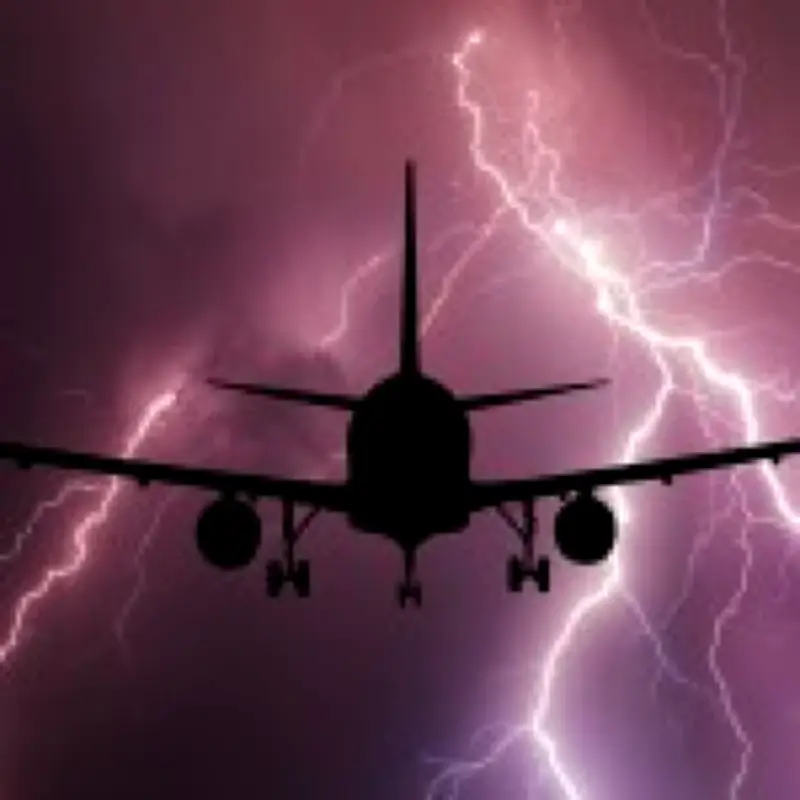
A British Airways flight was struck by lightning during its descent into London Heathrow, with a loud bang and a bright yellow flash startling passengers. The aircraft landed safely, and the pilot later confirmed the strike. Aviation experts explain that planes are designed to handle such events, with the fuselage acting as a Faraday cage to protect occupants.
What happens when lightning hits a plane
Former pilot Andrew McKechnie, an expert in flight operations, explains that lightning strikes produce a loud bang and flash. The metal fuselage conducts electricity, forming a Faraday cage that blocks electrical discharge from reaching the interior. Modern composite aircraft, like the Boeing 787 Dreamliner, embed copper wires for similar protection.
Can lightning damage the plane?
Damage is usually minor, such as small holes where lightning strikes metal, or cracks or charring on non-metal parts. Navigation systems may be affected, but modern avionics are well protected. In rare cases, storm conditions may force a diversion, as McKechnie experienced when his flight from Genoa diverted to Nice due to heavy rain and winds.

Pilot protocol after a lightning strike
Pilots check for damage and verify navigation and communication systems. They report the strike to engineers for inspection. The aircraft cannot resume flights until engineers find both entry and exit points of the lightning, which can be time-consuming. Temporary repairs are made in 99% of cases, with permanent repairs scheduled later.
McKechnie reassures passengers: “When lightning strikes, it’s going to make you jump, but the aeroplane will continue flying just fine.”