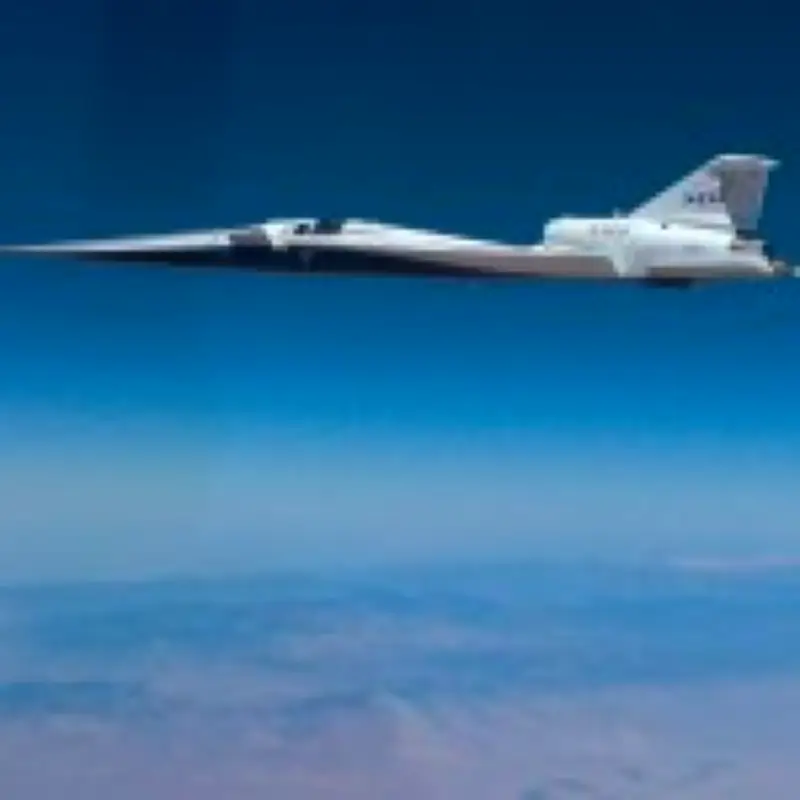
Nasa's experimental X-59 aircraft, known as the 'Son of Concorde', has achieved supersonic flight for the first time. The aircraft completed an 81-minute test flight on Friday, 5 June, reaching Mach 1.1 (approximately 713mph) at an altitude of 43,400 feet, according to the space agency.
Nasa reported that the X-59 performed as expected throughout the mission. Test pilot Jim 'Clue' Less described little sensation of travelling at supersonic speed. 'You know you are supersonic when gauges say you are supersonic. I didn't feel anything,' Less said. 'It went smoothly, and we easily got to Mach 1.1.'
Quieter supersonic technology
The X-59 has been designed to travel at supersonic speeds while producing only a quiet thump on the ground, rather than the loud sonic boom typically associated with faster-than-sound flight. During the test, a Nasa F-15 chase aircraft accompanied the X-59 to monitor its performance. Nasa said the F-15's own sonic booms were loud enough to mask any sound generated by the X-59. Dedicated tests of the aircraft's acoustic profile are planned for a later phase of the programme.

Next mission objectives
With supersonic flight testing now under way, the next major objective will be the aircraft's first mission-conditions flight. During that test, the X-59 will operate at Mach 1.4 (925mph) and an altitude of 55,000 feet – the speed and height planned for future research missions. Those flights will see the aircraft pass over a number of US communities as Nasa gathers feedback from people on the ground about the noise it produces. 'The plane wants to go faster, and we are looking forward to that,' Less said.
Quesst mission
The X-59 is the centrepiece of Nasa's Quesst mission, which aims to demonstrate quieter supersonic flight and support the future development of commercial supersonic travel over land. The latest test also marked the first time the X-59 appeared on Nasa's flight-tracking system.