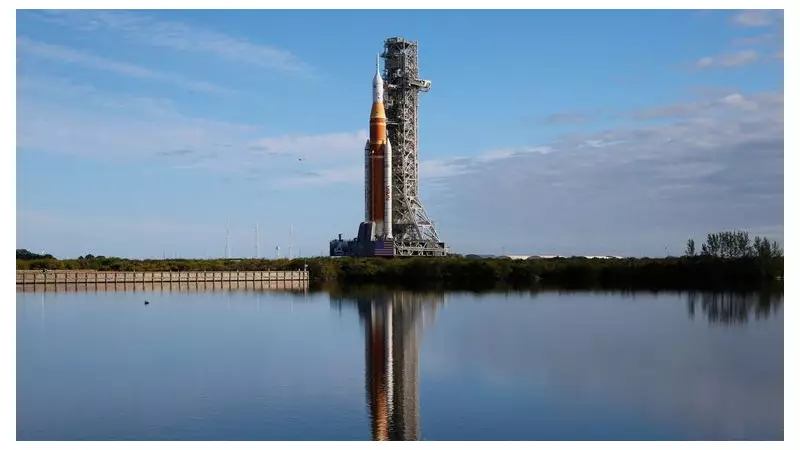
NASA's monumental rocket, destined to carry astronauts back to the moon, has successfully completed its slow-motion journey to the launch pad at the Kennedy Space Center in Florida. The Space Launch System (SLS), carrying the Orion crew capsule, undertook an 11.5-hour, four-mile trek from the Vehicle Assembly Building, marking a critical milestone for the upcoming Artemis 2 mission.
The Monumental Crawl to the Pad
Mounted atop the colossal Crawler Transporter 2, the rocket inched its way to Launch Complex 39B at a speed of just one mile per hour. The transporter itself is a feat of engineering, weighing a staggering 3 million kilograms and roughly half the size of a football pitch. The rocket it carried towers over London's Big Ben. The journey was a thirsty one, with the crawler burning approximately a litre of diesel for every 3.5 metres travelled.
This meticulous move sets the stage for the Artemis 2 mission, currently scheduled for lift-off as early as 6 February 2026. The mission will see four astronauts—Commander Reid Wiseman, Pilot Victor Glover, and Mission Specialists Christina Koch and Jeremy Hansen—travel around the moon, marking the first human voyage to lunar vicinity in half a century.

Personal Tokens for a Historic Journey
As the rocket rolled out, the crew revealed the deeply personal items they plan to take with them into deep space. Commander Wiseman is taking a blank piece of paper with a pen and pencil, wanting to record his thoughts without preconception. Pilot Glover will carry his Bible and family heirlooms.
"For me, it's handwritten notes from people I love," said Mission Specialist Christina Koch, emphasising the emotional connection of holding physical tokens from Earth while orbiting the moon. Mission Specialist Jeremy Hansen has attached four moon pendants, previously worn by his wife and children, directly onto the rocket. "I collected them back this summer and now they're on that vehicle, rolling to the pad," he stated.
The Global Race Back to the Lunar Surface
The mission unfolds amid a renewed and urgent space race. NASA is in a direct competition with China to return humans to the lunar surface and establish a sustainable presence. While Artemis 2 is an orbital mission, the follow-up, Artemis 3, aims to land astronauts near the moon's rugged south pole—a region believed to contain water ice—by 2028. This timeline represents a three-year delay from original plans, partly due to development holdups with the SpaceX Starship lander.
China has its own ambitions, targeting a crewed landing by 2030. The scientific and strategic stakes are high; water ice at the south pole could be used for life support and rocket fuel, enabling deeper exploration of the solar system.
Despite being 13 metres shorter than the legendary Saturn V of the Apollo era, the SLS rocket is approximately 15% more powerful. It generates a colossal 8.8 million pounds of thrust—equivalent to 28 jumbo jets—and can launch 27 tonnes toward the moon. To break free of Earth's gravity, it must accelerate to 24,000 miles per hour.
With the rocket now on the pad, teams will commence a final series of rigorous checks. A critical "wet dress rehearsal" fuelling test is scheduled for 2 February. NASA will analyse the rocket's performance during this test before giving the final go-ahead for a launch attempt on 6 February, heralding a new chapter in human space exploration.