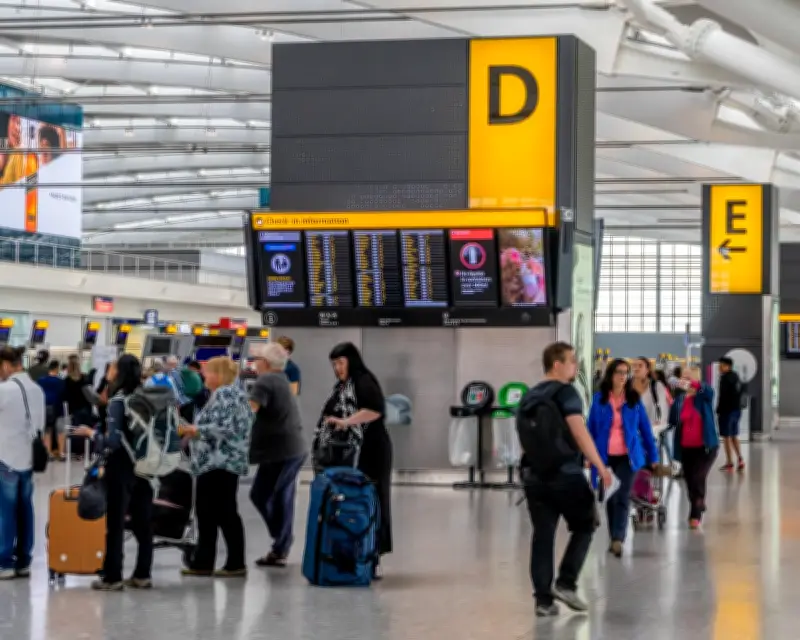
Heathrow Airport has announced that passenger numbers and profits are expected to fall this year, attributing the decline to the ongoing war in the Middle East. Europe's busiest airport forecasts a 1.1% reduction in total passengers to 83.6 million, as the conflict between the US-Israel alliance and Iran disrupts air travel.
Impact of Middle East Conflict on Traffic
In its latest investor report, Heathrow stated: "The ongoing conflict in the Middle East is putting notable downward pressure on traffic. This reflects the risk that continued volatility in the Middle East could dampen traffic volumes, with impacts extending beyond the region to global travel demand over the remainder of the year." Despite this, passenger numbers increased by 0.7% to 32.8 million in the year to the end of May, driven by a rise in connecting passengers as other hubs were affected by the regional conflict.
Profit Forecast Revised Downward
Heathrow also expects profits to decline by £147 million year on year, and £60 million compared with its last forecast published in December. The airport reported adjusted profits of £2.03 billion last year, but now anticipates posting £1.88 billion this year. The company has been "engaging closely" with its regulator, the Civil Aviation Authority, to discuss the cost of its plan to build a third runway.

Third Runway Economic Benefits Questioned
Earlier this month, the Department for Transport (DfT) released documents estimating that the economic boost from a Heathrow third runway could be a tiny fraction of previous estimates. Government analysis shows the runway would only boost GDP by up to 0.05% – 90% less than the 0.5% previously stated – while the overall trade-off from the bigger airport could set the UK back by as much as £62.5 billion.
Heathrow countered that the analysis did not capture all trade benefits. A spokesperson said: "When the benefits of increasing UK trade by £150bn a year and £33bn of private capital to expand Heathrow aren't captured by this economic assessment, it clearly doesn't represent the full picture. The government itself is clear that the model is extremely limited and only designed for publicly funded projects. It doesn't capture any value from increased trade, inbound tourism or massive private investment into UK supply chains, businesses and steel producers. It's not fit for purpose and needs to be reformed to capture these clear benefits."
Health and Environmental Concerns
Analysis for the DfT also found that expanding London's hub airport could have "major adverse" effects on the health and wellbeing of up to 3 million people living locally. The report by consultants Aecom said construction and operation of the third runway would worsen noise and air quality, and could harm access to housing, education, healthcare, open space, and transport.
Project Delays and Stakeholder Engagement
In May, Heathrow's new chair opened talks with airlines and billionaire local landowner Surinder Arora to defuse a row threatening to further delay the project. The spokesperson added: "Our expansion plans are widely supported by businesses and trade unions across the UK because they understand the transformative difference this project will make with improved prosperity and new job opportunities for their communities."