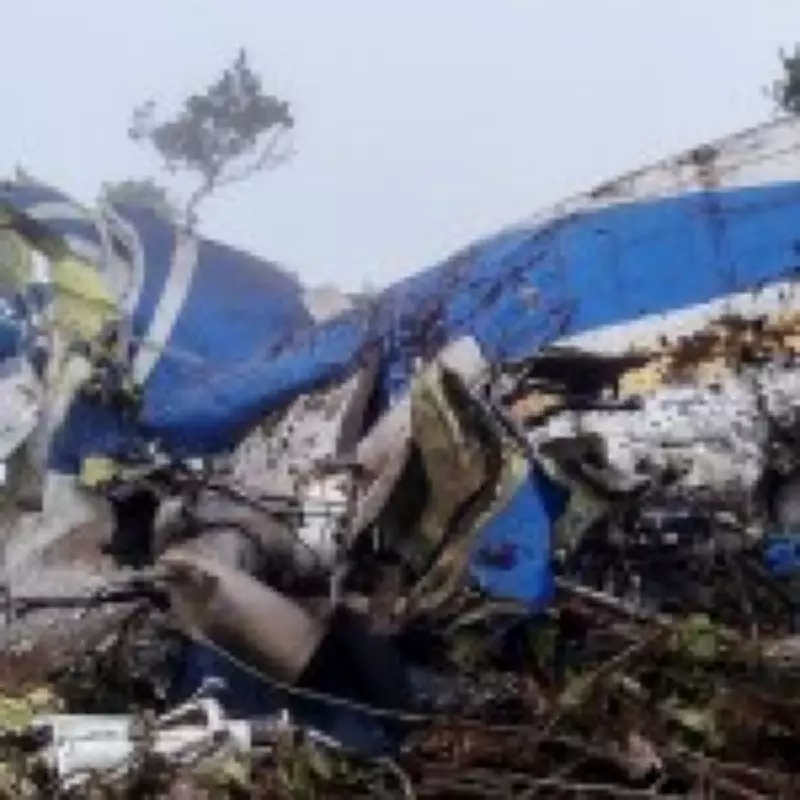
Colombian Aviation Disaster Claims All 15 Lives On Board Including Prominent Politicians
A tragic aviation incident has unfolded in Colombia, resulting in the loss of all fifteen individuals aboard a domestic flight that crashed into mountainous terrain near the Venezuelan border. The Satena Airlines Flight HK4709, operating a Beechcraft 1900 aircraft, suffered what the airline described as a "fatal accident" shortly after departure from Cucuta.
Flight Details and Crash Timeline
The ill-fated flight was en route to Ocana, a journey scheduled to last just twenty-three minutes. Approximately twelve minutes after takeoff, air traffic controllers reported that the plane lost control and subsequently vanished from radar systems. For over three hours, the aircraft remained missing before local residents in the Playa de Belen municipality spotted debris and alerted authorities to the crash site.
This region is notably controlled by the ELN guerilla group, complicating initial response efforts. Colombia's military was promptly deployed to support search-and-rescue operations in the challenging mountainous terrain where the wreckage was located.

Passenger Manifest Reveals Political Figures Among Victims
Colombia's civil aviation authority has confirmed there were no survivors from the devastating crash. The passenger list included two significant political figures: Diógenes Quintero, a serving member of the House of Representatives, and Carlos Salcedo Salaza, a congressional candidate. The flight was carrying thirteen passengers and two crew members at the time of the accident.
Recovery efforts have thus far resulted in seven bodies being retrieved from the wreckage, with operations continuing to locate and identify all victims. This tragedy represents one of Colombia's deadliest aviation incidents in recent years, highlighting ongoing safety concerns in the country's challenging geographical regions.
Context and Investigation
The crash occurred in an area known for its difficult flying conditions and political complexities due to ELN presence. Aviation authorities have launched a comprehensive investigation to determine the exact cause of the accident, examining factors ranging from mechanical failure to potential human error or environmental conditions.
This incident serves as a sobering reminder of the risks associated with air travel in Colombia's mountainous regions, where weather patterns and terrain present unique challenges to aviation safety protocols.