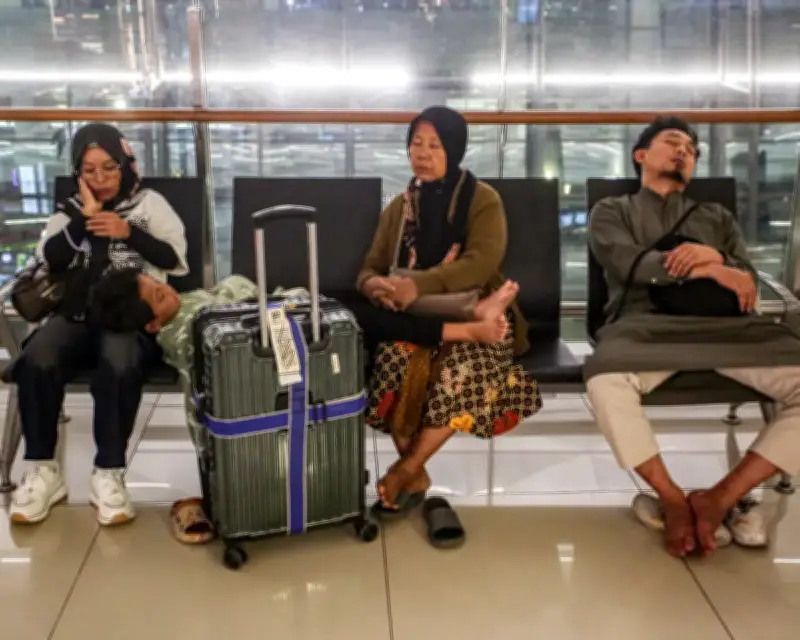
Indonesia suspended operations at its main international airport on Sunday after an ash cloud from the Anak Krakatoa volcano spread into the airspace around Jakarta. The shutdown affected more than 22,000 passengers and 209 flights, according to the transportation ministry.
Eruption details and airport closure
Anak Krakatoa erupted on Saturday, producing lava and booming sounds that could be heard up to 700km (435 miles) away, Indonesia’s geology agency reported. Two more eruptions were recorded on Sunday, and ash was detected in the airspace around Soekarno-Hatta international airport near Jakarta, prompting authorities to suspend operations.
The airport was to remain closed to flights until 1.30pm local time on Sunday, with authorities announcing several extensions of the shutdown. The transport ministry said in a statement: “The latest paper test … showed positive results indicating the spread of volcanic ash in the Soekarno-Hatta international airport area.”

Impact on flights and passengers
Volcanic ash can damage airliners’ jet engines, baking on to hot internal parts and quickly wearing out turbine blades, as well as clogging fuel and air systems. It can also damage pilots’ windscreens, making the suspension a safety precaution.
Flights bound to and from Singapore were particularly affected, along with other international routes including Doha, Sydney, and Kuala Lumpur. At least 16 domestic flights to Bali were cancelled, local airport authorities said.
Volcano background and safety measures
Anak Krakatoa, which means Child of Krakatoa, sits in a strait that separates the islands of Java and Sumatra. The volcano has been sporadically active since it emerged from the sea in the caldera formed after the 1883 eruption of Mount Krakatoa, one of the deadliest and most destructive volcanic eruptions in human history, with an estimated 35,000 people killed.
Port authorities said ships passing through the strait were prohibited from approaching within a 3km radius of the volcano and should be vigilant for danger. The airport shutdown and maritime restrictions highlight the ongoing threat posed by the volcano to travel and shipping in the region.