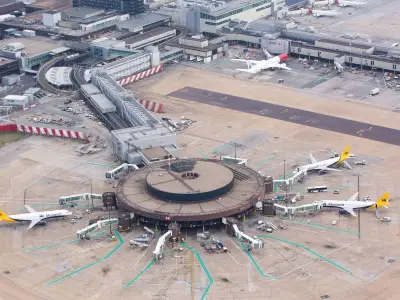
Aer Lingus has confirmed it will be axing all transatlantic flights from Manchester Airport within the next two months, halting ticket sales and cancelling pre-booked trips across three major tourist routes. The budget airline will start to wind down operations from its UK base from mid-February, with up to 60 weekly services being cut completely by March 31.
Specific Flight Cancellations and Timeline
Its popular long-haul flight to New York JFK will take off for the final time on February 23, while those to Barbados and Orlando in Florida will do the same towards the end of the month. In a statement, Aer Lingus said it's currently in the process of notifying any passengers due to travel over the coming weeks directly, but will be providing all those affected with 're-accommodation and refund options' shortly.
'We appreciate our customers' patience and cooperation during this time,' the carrier added. 'If you have already contacted us to request an alternative flight or refund, please be assured that we are working on your request and will be in touch in due course.'

Alternative Arrangements for Affected Passengers
Aer Lingus will run an enhanced service from Dublin to Barbados in April and May to accommodate impacted Manchester travellers willing to fly via the Irish capital. It's not currently clear if these tickets will be put on general sale, or if the airline will rebook passengers directly.
However, short-haul passengers don't have to worry, as services to Dublin and Belfast will continue — at least for now. 'There is no impact on Aer Lingus or Aer Lingus Regional flights between Manchester and Ireland,' the Irish carrier said.
Reasons Behind the Strategic Decision
Sparking speculation further cancellations may be on the cards, it added that the decision was made amid 'a period of uncertainty on transatlantic services' from Manchester, and was intended to 'minimise customer disruption in the event of a closure'.
According to an internal email published in The Irish Times, Aer Lingus told staff that while operations at the air travel hub – the UK's fourth busiest – were profitable, it was underperforming compared to the rest of its business. And despite having 'explored various options' to improve margins as part of an ongoing consultation process, measures looked at so far 'do not appear to be viable'.
Impact on Staff and Industrial Relations Context
Five years on from its first Manchester Airport flight, the firm's future there now appears uncertain, with 200 staff potentially facing redundancy or transfer to other roles within Aer Lingus, or its parent group, IAG (which also owns Iberia and British Airways).
This news follows continued industrial action at the airline's northern England base. Cabin crew belonging to trade union, Unite, went on strike for several days in October and November due to a dispute over pay, impacting thousands of travellers.
Aer Lingus then clashed with the Irish Airline Pilots' Association (IALPA), when a captain was suspended for refusing to move non-union crew from economy to empty business class seats on a repositioning flight from Barbados to Manchester, citing the aircraft's weight balance.
Broader Implications for UK Regional Aviation
Although there has been no confirmation of plans to cease operating out of Manchester entirely, it's been a rumoured possibility for some time. In a November briefing, bosses then officially announced that 'the long-term viability' of further investment was being considered.
Commenting on what the move could mean for the industry, Anton Radchenko, aviation expert and founder of AirAdvisor, tells Metro: 'Aer Lingus's Manchester closure is not just about one airline pulling out of one city. It is a warning signal that regional long‑haul aviation in the UK is far more fragile than most passengers realise.'
'When an airline like Aer Lingus, which had a profitable operation, decides the margins are not high enough, it tells you that the economics of running transatlantic flights from secondary UK bases are becoming unsustainable under current cost pressures, industrial relations challenges and the strategic pull back to main hubs.'

'This is part of a broader pattern: airlines are consolidating their networks, retreating to core hubs where they can fill planes more reliably and avoid the higher operating costs of UK airports. For UK travellers, that means the convenient direct flight you booked because it saved you a trip to London could disappear with barely a month's notice, as we have just seen.'