The 2026 World Cup has been framed as a tournament of superstars, but this narrative risks ignoring the complexity of team football, according to a critical analysis by Jonathan Liew. The irony, Liew argues, is that the focus on individual brilliance actually underscores the importance of the collective.
Star Power Over Team Achievement
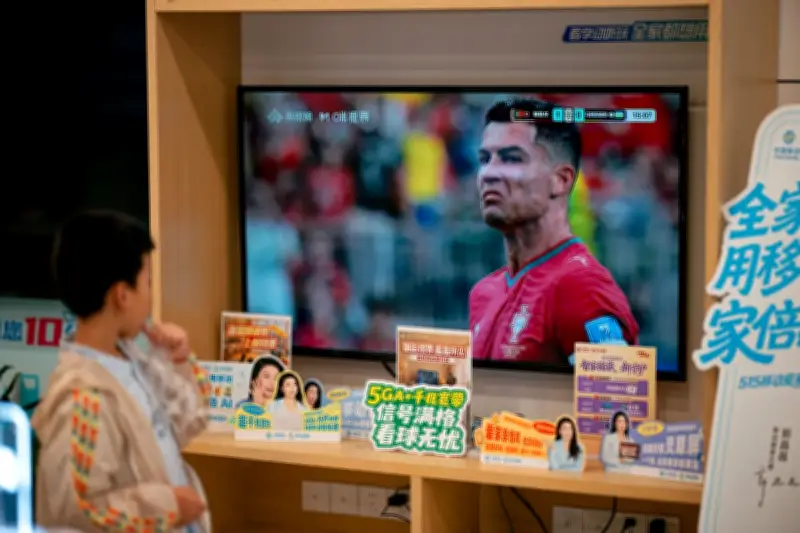
Reports from the group stage have highlighted individual narratives, such as Cristiano Ronaldo's record-equalling sixth World Cup, which began with a disappointing draw against the Democratic Republic of the Congo. This focus on star players, like Kylian Mbappé and Lionel Messi, often overshadows the broader team context. For instance, France's victory over Iraq is framed as Mbappé challenging Erling Haaland and Harry Kane, rather than a team effort. Google searches for Miroslav Klose's goals record have spiked, indicating the Golden Boot race has become a central storyline.
This shift is driven by both on-pitch events and media industry pressures. The group phase is sometimes seen as a distraction from the real business of individual accolades, such as Messi's quest for the one trophy he hasn't won.
Individual Glory vs. Team Success
Historically, individual achievement facilitated team glory, but now the reverse seems true. Messi is perceived as winning the World Cup for Argentina, rather than Argentina winning it for him. A Portugal triumph would be a monumental achievement for a country of 10 million people, reflecting a rich footballing culture and coaching tradition. Yet, such success would likely be reduced to Ronaldo's individual story.
The veneration of individuals extends beyond headline players. Unsung heroes like Cape Verde's Vozinha and Eloy Room are anointed as sole architects of their teams' achievements. Even former stars like David Beckham and Zlatan Ibrahimovic (who scored zero goals in two World Cups) are prominently featured in media coverage.
Media and Technology Fueling the Trend
This hyperfixation on individuals is not accidental. It results from decisions like the rise of cinema-style television cameras that blur backgrounds and focus on single objects. The last 32 will introduce more isolated player cameras, and directors frequently cut away to show celebrities or individual fans. Stoppages like VAR, substitutions, and hydration breaks make the game more likely to be defined by single acts of brilliance.
Liew suggests this mirrors a narcissistic age, with athletes as influencers and fans as participants. FIFA President Gianni Infantino is portrayed as the director of his own movie, conceiving football in a hyper-individualized form.
The Cost of Individual Focus
While the customer is always right, this prism of the individual leaves stories untold and angles underexplored. The irony is that superstar-heavy narratives embellish rather than diminish the collective's importance. Ronaldo's 2016 triumph, Mbappé's 2018 victory, Messi's 2022 win, and Haaland's 2023 success with Manchester City all relied on teams greater than the sum of their parts. Diego Maradona's cultural worship has led to underrating his 1986 teammates like Jorge Burruchaga and Sergio Batista.
Liew concludes that the cult of the individual is a form of wilful stupidisation, simplifying football into 'Player X does Player X things.' Explaining the complexity of 22 players interacting, tactics, relationships, and history is harder but more rewarding. The more one looks, the more one finds and understands, deepening love for the sport. But this requires a willingness to look beyond the individual.