The 2026 World Cup final pitted Spain against Argentina, but for the 98.9% of humanity not from either nation, choosing a side became a whimsical exercise. Fans cited reasons ranging from kit aesthetics to political stances, reflecting a tournament where national allegiance has morphed into a single-use consumer brand.
Global Fan Behaviour Defies Nationalism
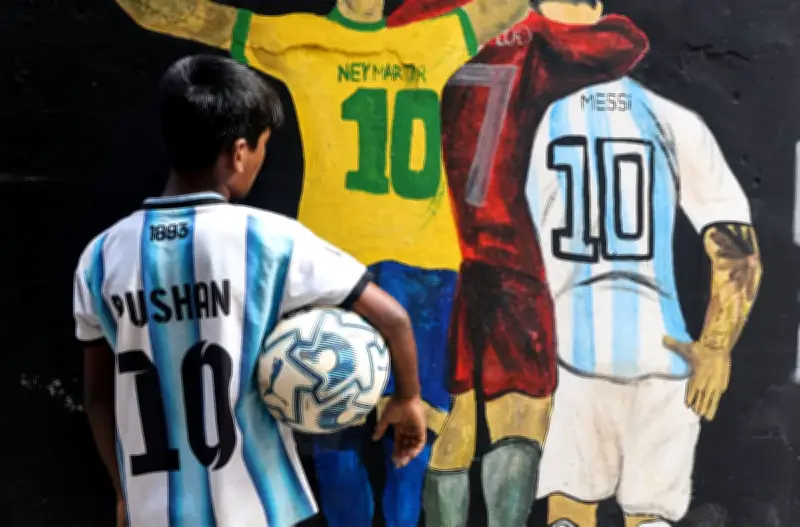
In Dhaka, Bangladesh, a boy in an Argentina jersey gazed at a mural, epitomising the nation's widespread support for the South American team. Similarly, central Asian friends in north London united behind Uzbekistan, while the Arab diaspora rallied for Morocco and Egypt. This phenomenon challenges the traditional view of the World Cup as a nationalist playground, instead highlighting the fragility of nationhood.
Banal Nationalism Becomes Disposable
Social psychologist Michael Billig's concept of banal nationalism—the subliminal symbols of nationhood—has become so routine that it is now disposable. National identity, once deeply rooted, can be slipped on and off like a football shirt. The MetLife Stadium crowd exemplified this, with American fans predominantly filling seats, and celebrities like Mike Tyson and Trevor Noah donning Argentina and Spain shirts respectively.

Complexities of Modern National Identity
The tournament also exposed contradictions in nationalism. Far-right voices in western Europe preach nationalism while criticising their national teams for diversity. In Colombia and Brazil, leftwing fans reject national shirts appropriated by rightwing populists. Moreover, 40 of 48 competing nations had players born overseas, with Curaçao's squad featuring only one native-born player and Cape Verde's team having more Rotterdam-born players than those from its capital.
Multiple Identities and Globalised Communities
The modern World Cup forces a reckoning with multiple identities that cut across national boundaries. It interrogates the criteria for allegiance, often reduced to a binary choice for each match. Historian Eric Hobsbawm's notion of an 'imagined community of millions' now describes a community without defined borders, drawing members from across the globe for 90 minutes.
Political Nuances in Allegiance
Nationalism is no longer the preserve of the populist right, nor internationalism of the left. Today's rightwing agitators may pledge allegiance to Donald Trump or wave an Israeli flag over their own country. The Trump administration showed more solidarity with white South Africans than Black Americans, and conservative outlets forge cross-border alliances while denouncing fellow citizens.
Limited Nation-Building Role of Football
Football's power as a nation builder is often overstated. France's 1998 World Cup win was hailed as a vindication of multiethnic identity, yet Jean-Marie Le Pen reached the presidential runoff four years later. Argentina's 1978 victory boosted the military dictatorship's popularity, but it collapsed by 1983. England's 2021 European Championship run did not prevent a descent into gutter politics.
A Mirror to a Fragmented World
Yet the World Cup can hold up a mirror. It reflects a messy hope: that hardening physical borders will disintegrate on contact with reality. Nationality, with all its flags and pageantry, is ultimately a brand, a consumer choice, a mask worn for six weeks and then easily shed. According to journalist Jonathan Liew, this tournament shows how flimsy national allegiance has become.