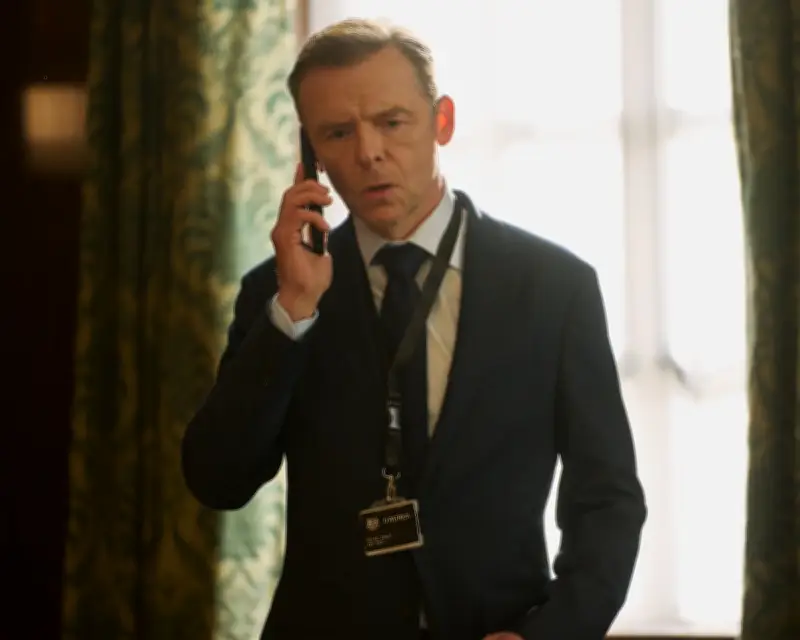
Channel 4's cyber-attack drama The Undeclared War has returned for a second season, with Simon Pegg stepping into the lead role of Danny Patrick, head of GCHQ operations. Despite a faster pace and a new director, the show still struggles to make digital warfare compelling television.
A New Director and a Faster Pace
The first season, directed by Peter Kosminsky, was criticized for being slow, quiet, and dingy. The new season, directed by Paul McGuigan, opens with a kinetic single-take scene as Danny Patrick strides through corridors, barking orders and dealing with bad news. The show aims to be a thriller, but the inherent challenge of depicting cyber-attacks—people typing at computers in a bunker—remains.
According to the review, the opening scene follows Danny as he bursts into conference rooms and raises his voice at underlings, signaling a shift in tone. However, the review notes that the show still "fails to push any of the right buttons."

Character Changes and Home Life
Danny Patrick is now the unquestioned lead, replacing the young computer science undergraduate Saara (Hannah Khalique-Brown), who was the focus of season one. Saara is still present, implausibly bypassing British and Russian surveillance by direct-messaging her friend Vadim in a gaming server's chatroom, but she is no longer the main driver of the story.
The show explores Danny's home life for the first time. His wife Barbara (Siân Brooke) turns out to be the head of the China team at GCHQ, and his best friend Charlie (Danny Sapani) is the head of security, tasked with finding a traitor within Danny's team. This creates a stressful intersection of personal and professional relationships.
Political Dynamics Remain One-Dimensional
The politics of the show have not evolved. Writer Colin Teevan repeats the dynamic between idealistic Danny, his pragmatic boss David (Alex Jennings), and the gung-ho cabinet minister Richard Marston (Ed Stoppard), who always wants to retaliate against Russia. Danny repeatedly warns that a symmetric attack would be "highly escalatory," a line that the review notes was overused in season one.
The review concludes that the show's threat level is still too low and that "The Undeclared War could use a bit of escalation."
Conclusion
While the second season of The Undeclared War has more zip than the first, it still fails to compensate for the inherently unsexy nature of cyber warfare. The show remains a missable drama that struggles to make digital threats feel thrilling.